
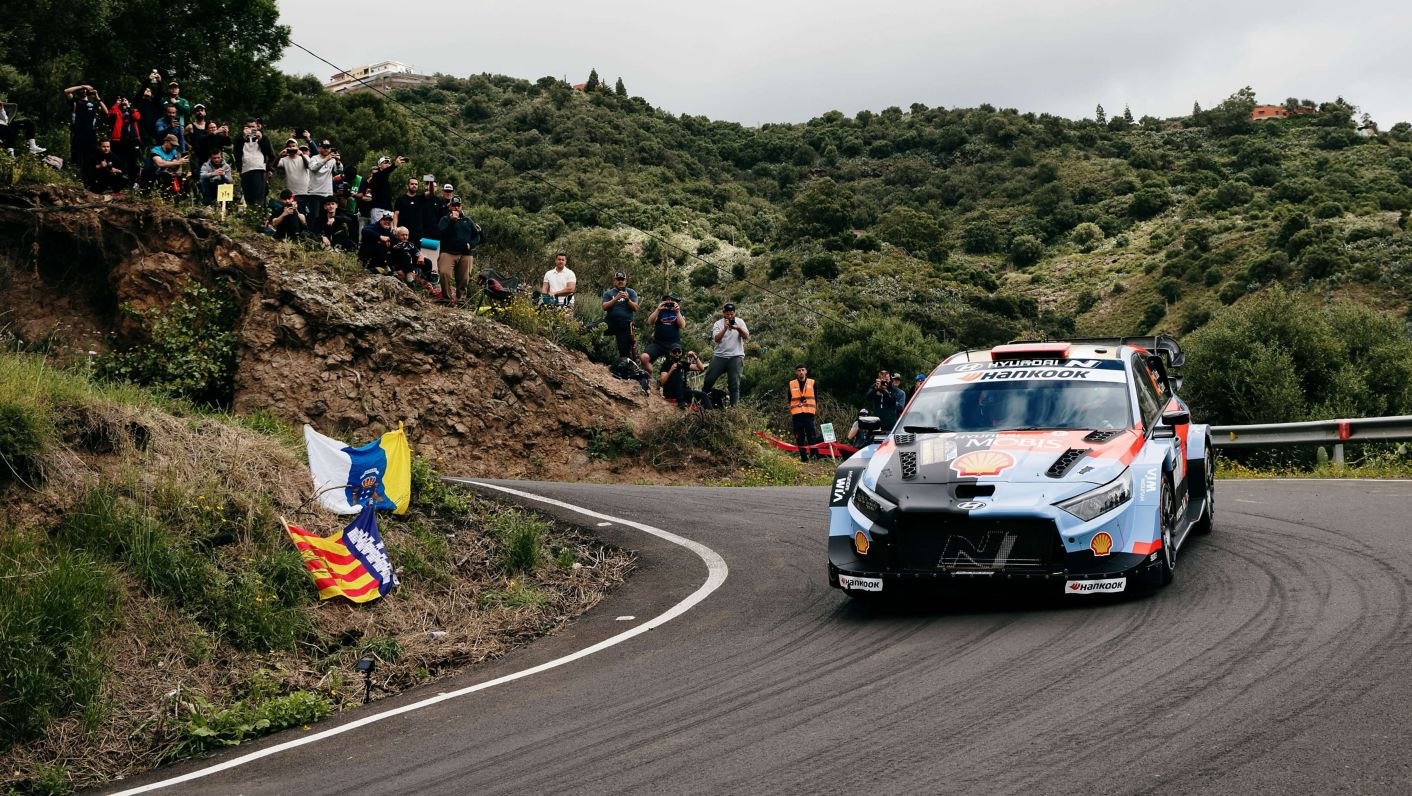
Team Profile
From the 2014 return to titles in both championships
Hyundai returned to the WRC in 2014 and secured a one-two finish in Germany that year, delivering the first victory for this manufacturer programme. Thierry Neuville has been part of the line-up since the first season of the return, while Dani Sordo has also been a long-standing participant in the programme. Their careers with the team span its progression from an early challenger to a title contender.
The manufacturers’ world titles in 2019 and 2020 were major milestones for Hyundai, followed by Neuville’s drivers’ world title in 2024. The manufacturers’ and drivers’ titles measure the team’s combined points haul and an individual’s performance over a season respectively; neither can substitute for the other. This also explains why Hyundai places importance on both its regular crews and its round-by-round plans for the third car.
Why the 2026 line-up features five drivers
Neuville and Martijn Wydaeghe, and Adrien Fourmaux and Alexandre Coria, are the two regular pairings. Lappi, Sordo and Paddon share the third Hyundai i20 N Rally1, with the team allocating appearances according to surface experience and the requirements of each round. The five drivers listed on this page do not mean that the team fields five cars at every event.
Lappi brings experience of Nordic rallying and victory in Sweden, Sordo has extensive experience of gravel events such as Sardinia, and Paddon has competed in a range of events in New Zealand, Australia and Europe. The rotating crews are tasked with pursuing results at individual rounds and scoring manufacturers’ points. For the 2026 Sardinia round, Sordo switches to Patricia Saiz Ruiloba as his co-driver, an arrangement specific to that event.
Car development and testing priorities
Hyundai uses the Hyundai i20 N Rally1. Ahead of the 2026 season, the team moved its testing base from Finland to southern France, aiming to gain easier access to a variety of surface conditions and continue refining the car. Official communications specifically highlighted preparations for rough gravel events. This is a development priority; its actual effectiveness still needs to be assessed against the car’s pace, reliability and tyre use at each round.
How the regular and rotating crews contribute to the points total
The third car is not simply there to make up the numbers: the rotating crews also compete for event placings and contribute to the manufacturers’ points tally according to nominations and the rules. Nor can the team’s total be calculated by simply adding together the full-season individual points of the five drivers on this page. When looking at the manufacturers’ standings, it is necessary to consider the crews entered for each round, their eligibility to score points and the results they achieve.
What to watch
Editorial analysis: the two regular crews can serve as a consistent benchmark for comparison, while the third car’s contribution can be assessed across different surfaces. Neuville’s long experience, Fourmaux’s development and the event-specific assignments of the three rotating drivers each offer points of interest. If a crew posts very quick stage times but finishes low in the overall classification, it is worth checking for punctures, repairs or time penalties rather than judging the car solely by its final position.
Driver Line-up
Last checked: 1 October 2026 · Historical statistics and current points are maintained separately