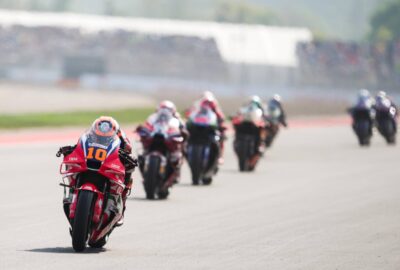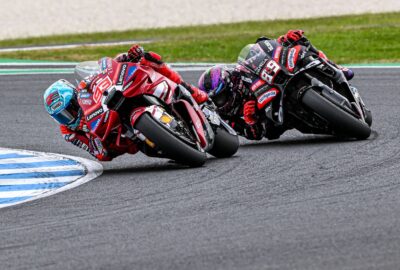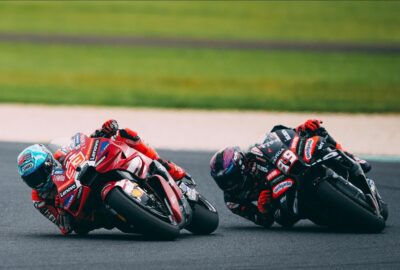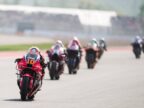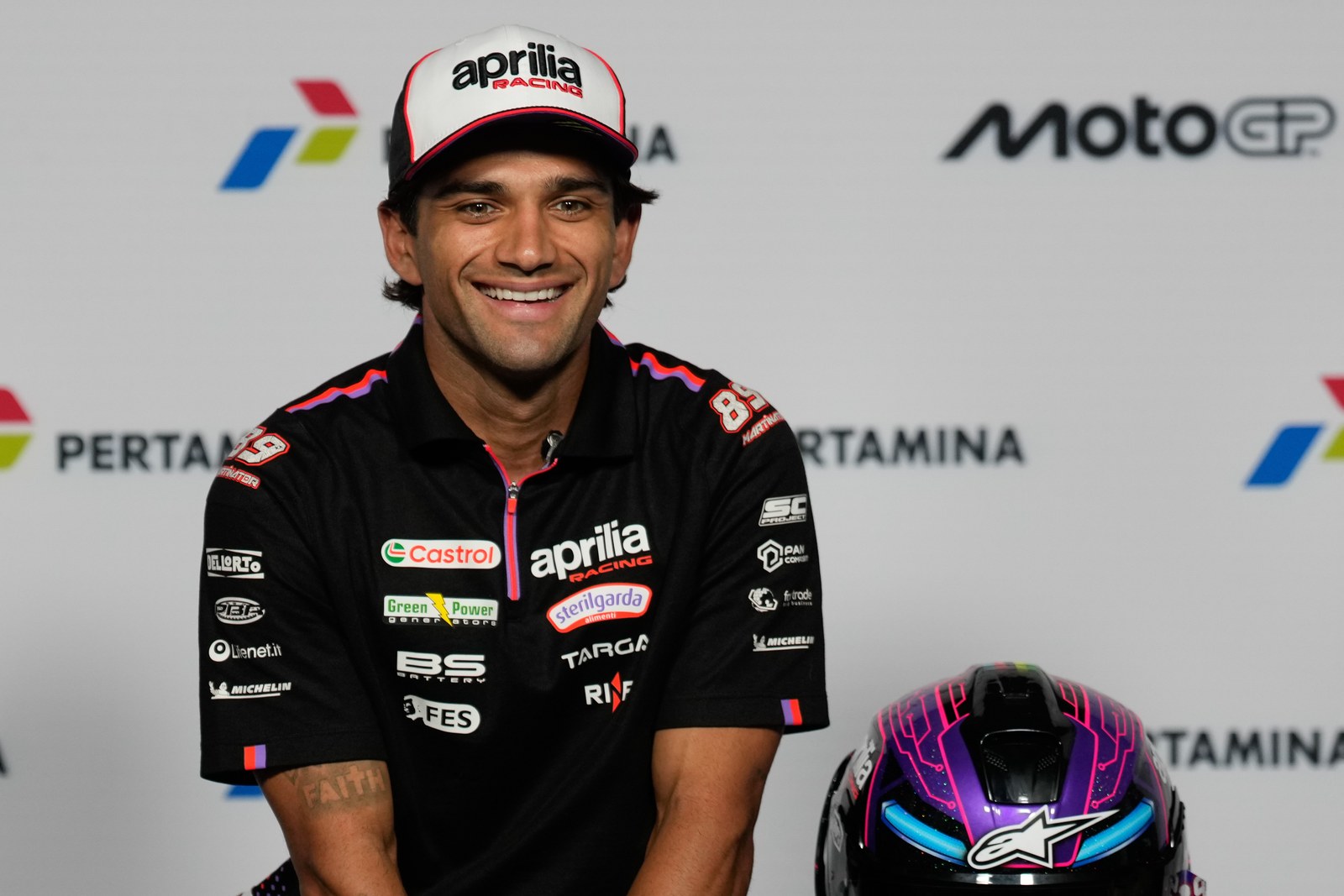
Friday's timed Practice for the 2026 Australian MotoGP Grand Prix concluded on October 23 with Jorge Martín fifth in 1:27.030, securing direct Q2 access. Four Aprilias occupied four of the top five places, but he was last among them. His post-session feedback revealed riding habits still being adapted.
Four Aprilias separated by about a quarter of a second
The official results showed Marco Bezzecchi fastest in 1:26.775, Raúl Fernández second, Ai Ogura fourth and Martín fifth. Martín was 0.255 seconds slower than Bezzecchi and 0.129 seconds behind Ogura, whose 1:26.901 matched third-placed Marc Márquez.
Those gaps compare individual fastest laps and describe this session's single-lap performance. Fifth achieved Martín's direct-Q2 target, but the other three Aprilias ahead offered clear reference points. Strong overall team speed can coexist with an individual not yet extracting everything.
Martín explains the entry–throttle trade-off
Speaking to Motorsport.com, Martín explained that he was accustomed to using his Ducati approach at Phillip Island, pushing too hard on entry and increasing front-tire wear. Seeking too much entry speed delayed throttle application, especially significant at a circuit demanding fast exits. He was trying a gentler braking and entry rhythm and had already felt an exit benefit.
Aprilia's same-day report added specific feedback: Martín said he had missed the previous year's event, pushed the front tire too hard on Friday morning and gradually adapted in the afternoon, improving his feel. He still felt speed was missing, but considered his rhythm consistent and was getting quicker late in the session.
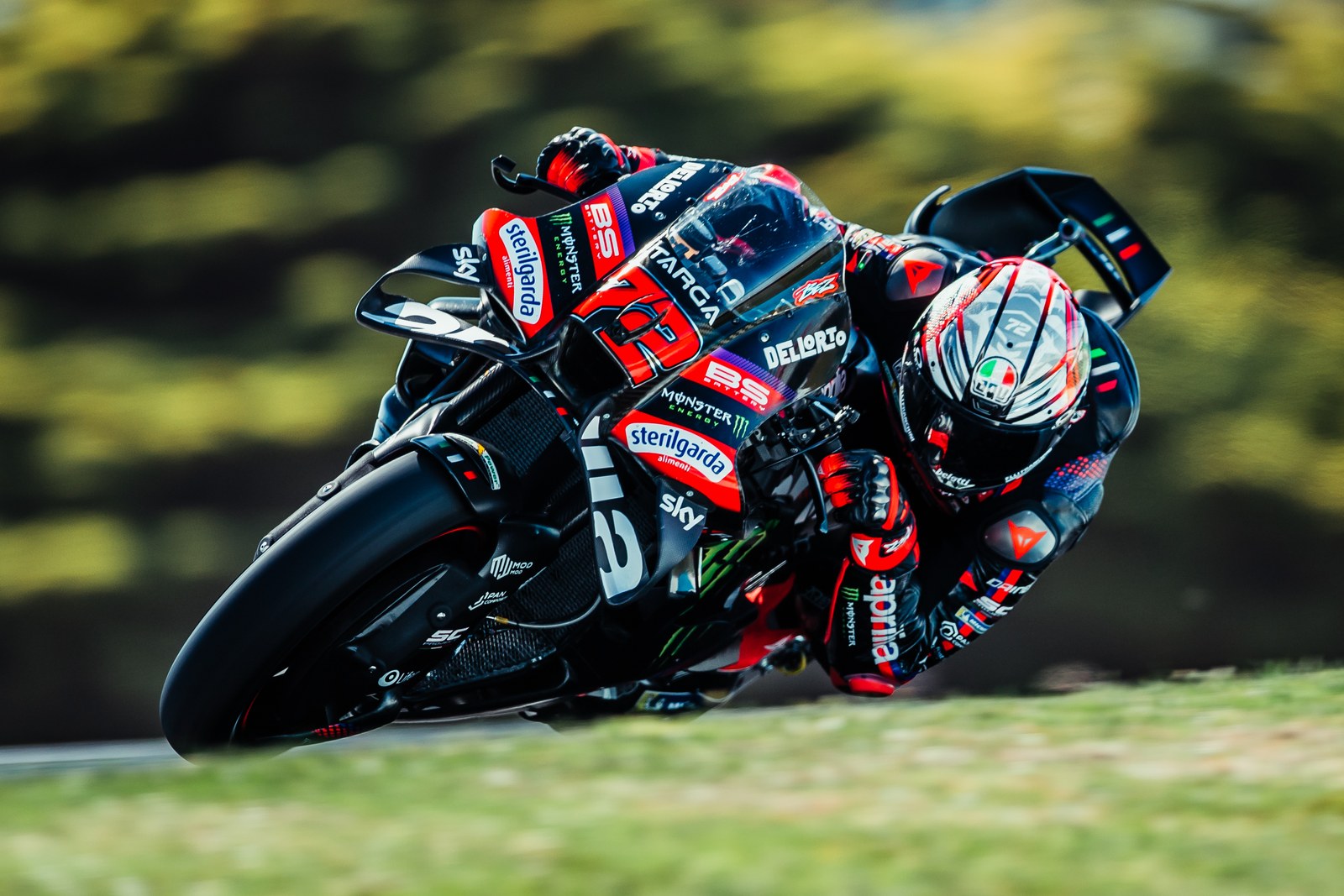
Teammate Bezzecchi also noted in the team report that wind made riding difficult and tire behavior needed further understanding. Martín completed 29 laps, setting his personal best on lap 28, consistent with his account of late improvement. Friday's results did not finish Aprilia's setup work.
INKA SPORTS analysis: Turning entry margin into exit gains
Martín locates the problem at opposite ends of a corner: pressing too hard for entry speed delays acceleration afterward. His account suggests reallocating aggression between phases to balance entry gains against exit losses.
Four Aprilias in the top five provide same-session reference points for that adaptation. Martín also mentioned in the interview that Bezzecchi and the other Aprilia riders were fast, giving the team data to compare. His most useful next step is to examine how the same machinery connects entry and exit and find a transition suited to him. The 0.255-second fastest-lap gap defines the deficit, while improvement still depends on riding details.
His fastest lap on lap 28 corresponds with his account of better late balance and increasing speed. Current evidence chiefly comprises lap timing and rider feedback; Bezzecchi also identified tire behavior as unresolved. Extending the adjusted rhythm into longer consecutive runs, balancing front feel and exit acceleration, would give Friday's direction greater value.
Conclusion
Martín's Friday secured direct Q2 entry and provided a clearer improvement target than position alone: connecting corner entry and acceleration differently. Aprilia's collective performance supplies reference points. Whether his late improvement continues over longer runs is the key test of the adjustment's value.