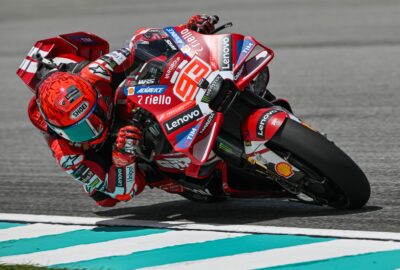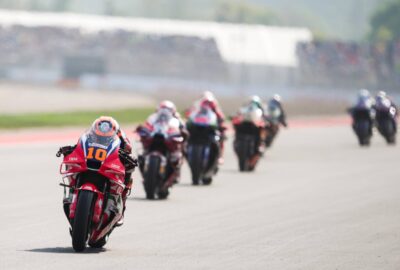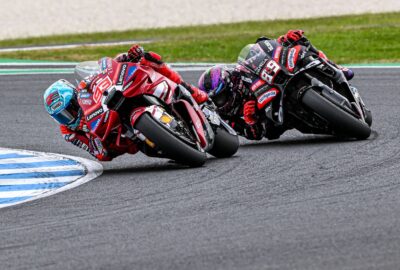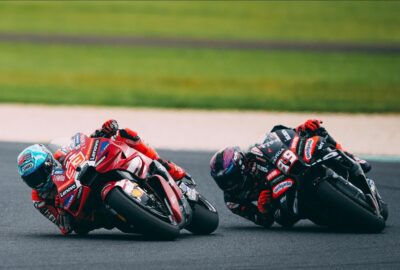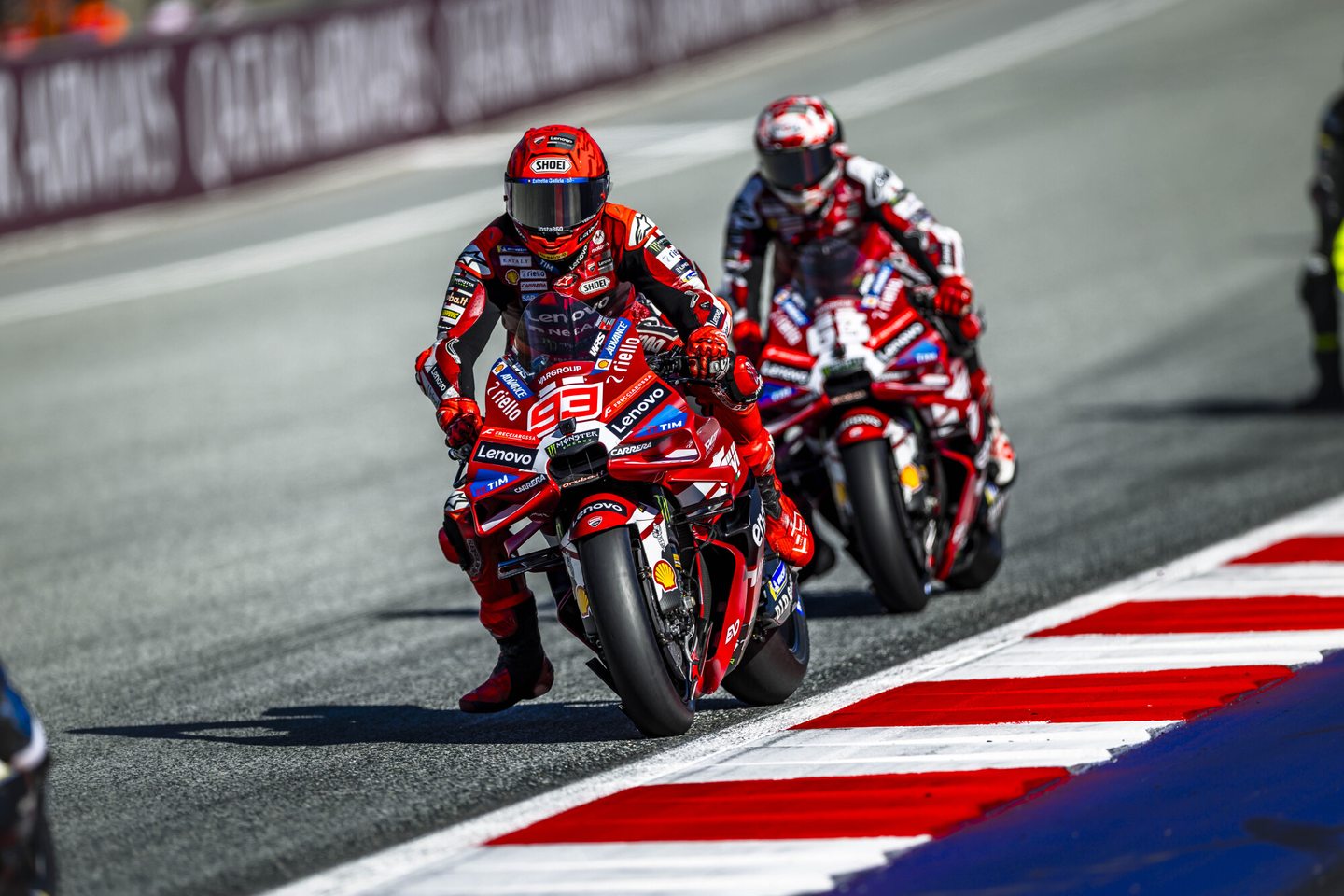
Marc Marquez finished fifth in the MotoGP Austrian Grand Prix on 20 September. In Ducati’s official race report, he said brake problems had troubled him from the opening lap, making consistency difficult and bringing him very close to retiring at one point. His eventual fifth place also reflected a recovery after those setbacks.
According to Ducati’s official account, he started second, dropped to fifth on the opening lap and then moved up to fourth, before running wide sent him back to seventh. He regained positions later in the race and finished fifth as the highest-placed Ducati rider, with team-mate Francesco Bagnaia seventh.
How inconsistent lever feedback affected the race
In a post-race interview published by Motorsport.com, Marc Marquez explained that the front-brake lever did not respond consistently at different braking points. He said it failed to react as expected when he needed to brake for Turn 1, causing him to run well wide. On the opening lap, he had also spent time assessing how the lever would respond and lost considerable time. Only after the brake began working normally at a later point in the race was he able to increase his pace and regain positions.
Marc Marquez also acknowledged in the official race report that his rivals had been faster that weekend. He told Motorsport.com that, under normal circumstances, second or third might have been his best result that day. That was the rider’s assessment of his potential performance. His actual result remained fifth: the pace he recovered later cannot simply be converted into a podium finish he was certain to have achieved.
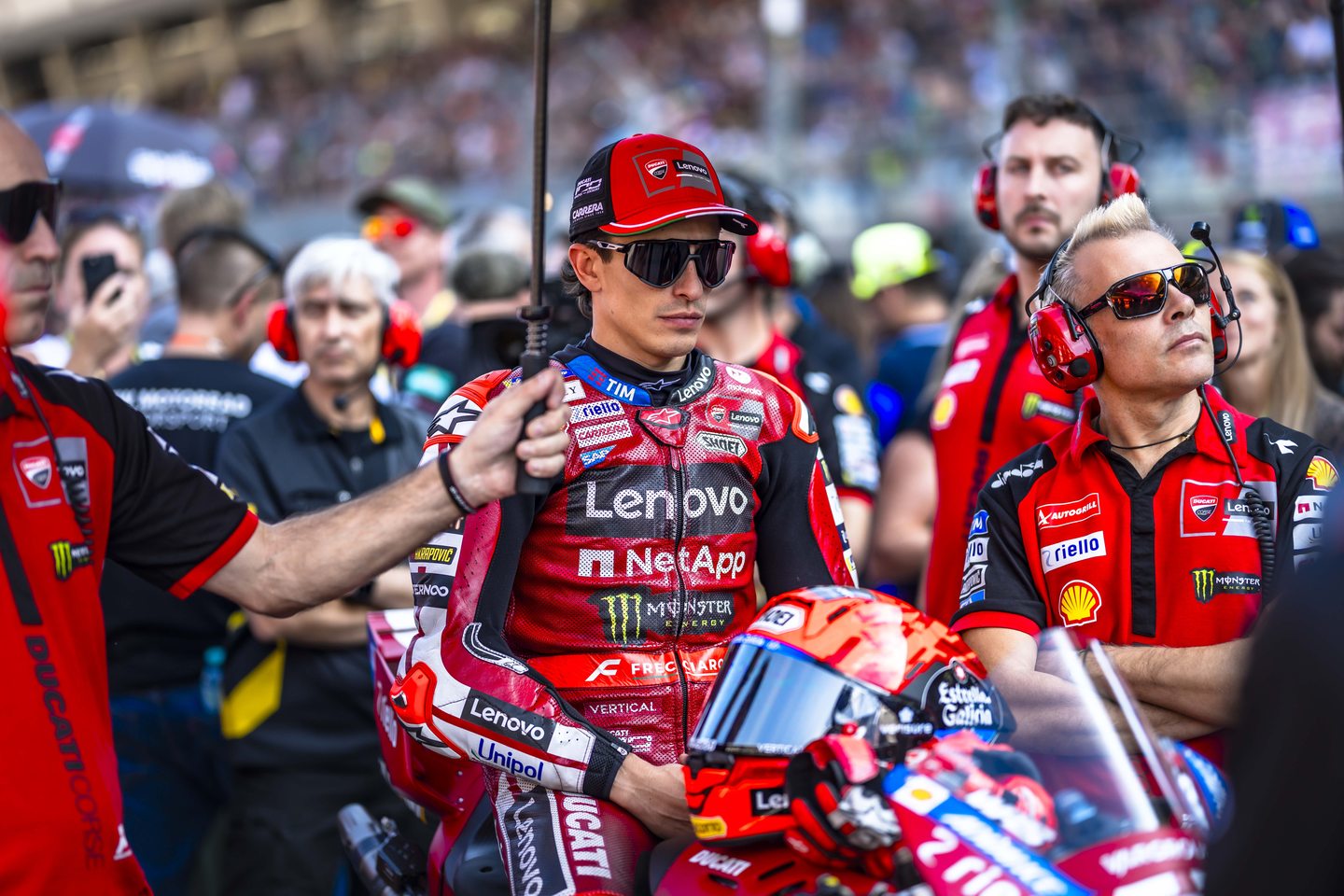
The front-brake problem and rear-tyre adaptation were separate issues
Marc Marquez had discussed the difficulties caused by the special rear-tyre construction the day before, but addressed that separately from the brake problem in his race interview. He did not use the tyre as an excuse, saying the conditions were the same for everyone and that Ducati still needed to adapt better. As for the front brake, he said the cause had not yet been identified, although the anomaly was visible in the data and could be analysed further by the team. That did not amount to confirmation that a particular component or supplier was at fault.
INKA SPORTS Analysis: Why tyre performance alone cannot explain fifth place
The key evidence from this race comes from two accounts that fit together. The official report records the positions he lost before recovering to fifth; the rider explains the inconsistent lever feedback, the run off his intended line and the brake subsequently returning to normal operation. Together, they support the conclusion that a front-brake problem affected the course of his race, rather than his simply being slow throughout. They do not, however, quantify the time lost in each incident or establish that removing the problem would necessarily have put him on the podium.
It is equally necessary to distinguish evidence that an anomaly existed from confirmation of its cause. A rider can identify changes in feedback and describe what happened on track, while the data can help the team investigate, without the fault having been traced. Adapting to the rear tyre was another issue he discussed separately. The fact that both arose on the same weekend does not establish that the special tyre caused the front-brake problem.
Conclusion
Marc Marquez’s fifth place encompassed both the disruption early in the race and his recovery once his pace returned later on. His feedback explains why tyres and overall race pace alone cannot account for the result, but it does not establish the root cause of the problem. Reaching the finish and identifying the cause are separate tasks; the team still needed to use the relevant data to complete the latter.