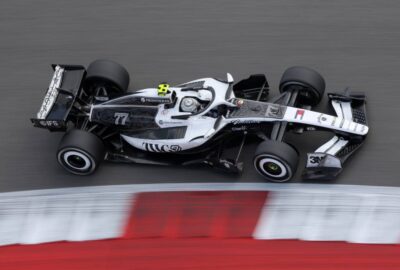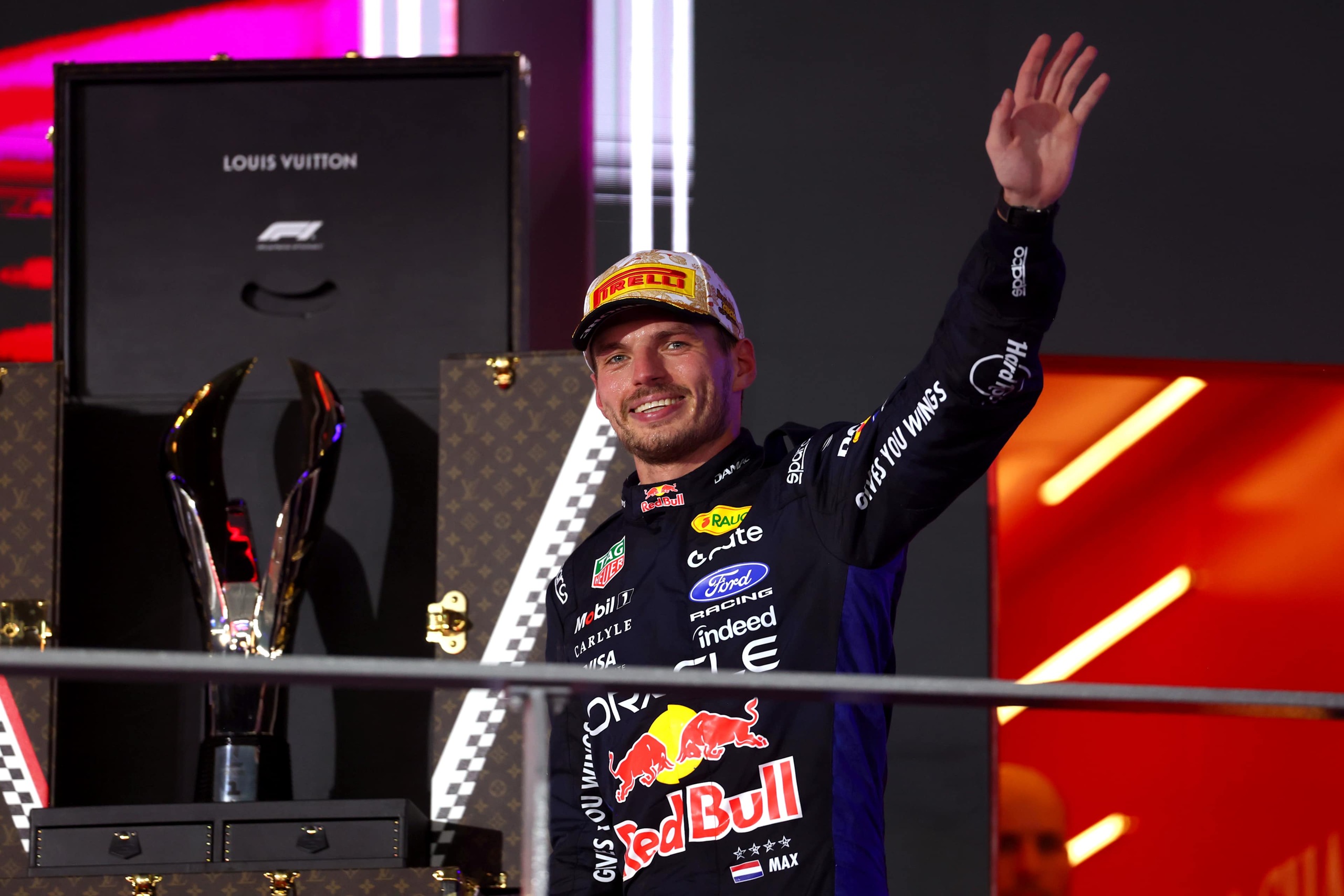
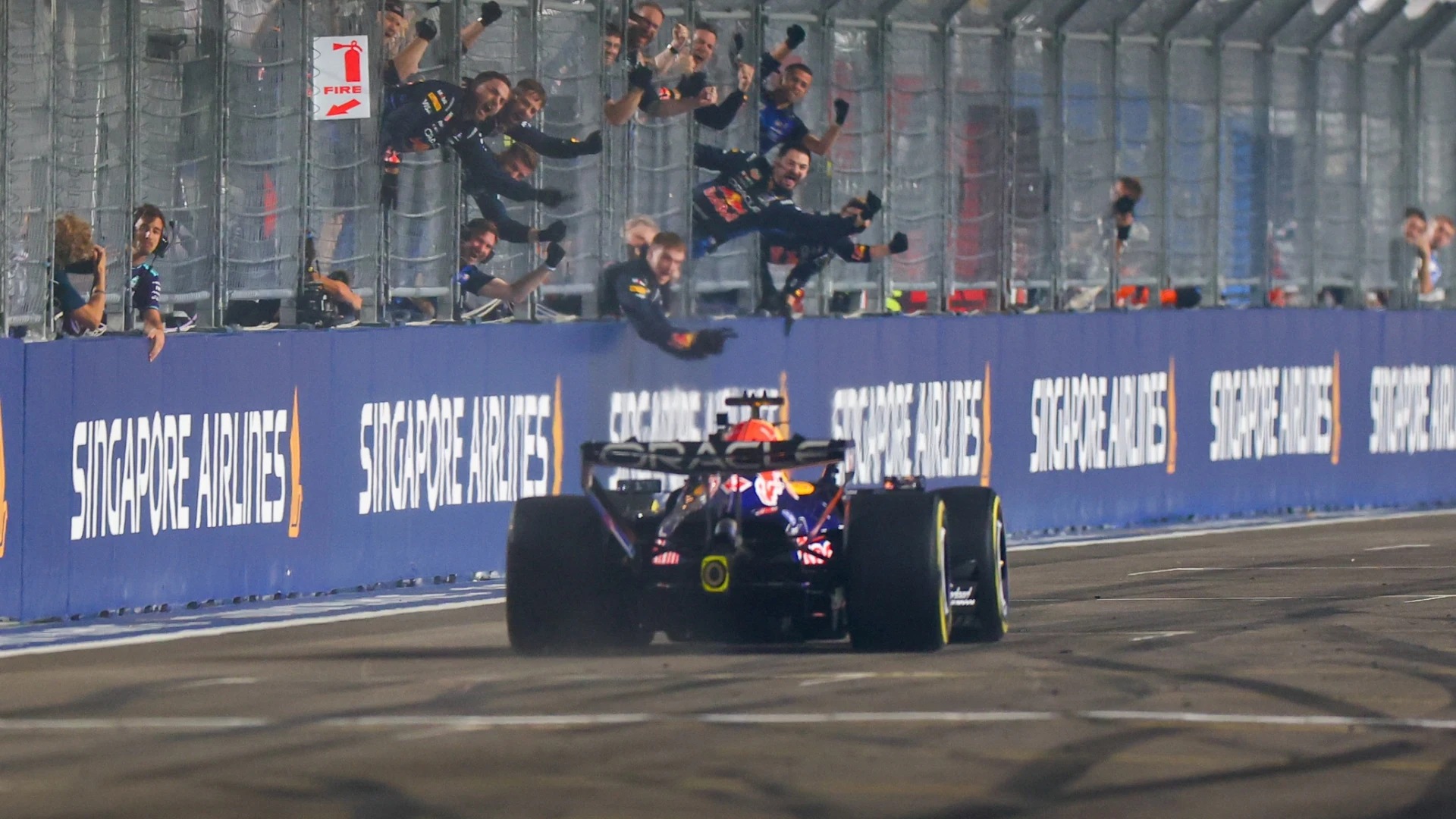
Verstappen won the Singapore Grand Prix by 7.335 seconds, with Leclerc second and Hamilton sixth. Starting second and third and putting its drivers on different compounds gave Ferrari the option of splitting its stops and pursuing the leader through two different strategies. The race never developed into sustained pressure from both cars. The reasons become clear across three phases: the start, the first tyre changes and the second Virtual Safety Car. Full results are in the race report.
Ferrari never had both cars close to the leader at once
Leclerc started well, but Verstappen held the lead through Turn 1. Both were on soft tyres, while Hamilton started on mediums. At the end of lap 17, Leclerc trailed Verstappen by 3.829 seconds and Hamilton by 10.269 seconds. The Ferraris were already in different positions in their pursuit: Hamilton first needed to recover more time before he could threaten the leader.
Hamilton fitted softs on lap 18 and emerged behind Lawson, whom he subsequently passed. Antonelli and Leclerc switched to mediums on laps 23 and 24 respectively. Verstappen extended his opening stint to lap 32 and still led after changing to mediums. At the end of lap 35, Leclerc was 5.051 seconds behind the leader and Hamilton 7.151 seconds back. The order of the leading two remained unchanged.
The Virtual Safety Car offered a chance to close, but also brought position changes
During the Virtual Safety Car triggered by Stroll’s retirement, Leclerc and Antonelli stopped again on lap 39, while Hamilton stayed out. That difference in strategy temporarily promoted Hamilton to second, but Leclerc used his fresher tyres to repass his team-mate. Antonelli also initially lost a position to Norris, then seized his opportunity as Norris and Hamilton battled, passing both in succession to reach the podium.
In the post-race trackside interviews carried by F1, Leclerc said the car had performed well initially before suffering degradation. He had chosen a different strategy from Verstappen and felt he had done everything he could. Verstappen said the car delivered the speed he needed on both softs and mediums, and his start was good enough to retain position. Their feedback corroborates how the gaps changed after the first round of stops.
Comparison of key phases
| Checkpoint | Leclerc’s gap behind Verstappen (seconds) | Hamilton’s gap behind Verstappen (seconds) |
|---|---|---|
| End of lap 17 | 3.829 | 10.269 |
| End of lap 35 | 5.051 | 7.151 |
| Finish | 7.335 | 53.188 |
INKA SPORTS analysis: why did two strategies fail to create pressure from both cars?
For a split strategy to force the leader into an early response, the chasing cars must first be close enough to challenge for the lead through fresher tyres or a longer opening stint. Hamilton was already some distance behind Verstappen before his first stop and then had to pass Lawson after changing tyres. Leclerc remained behind the Red Bull throughout. Red Bull therefore had time to extend its own opening stint and retain the lead after stopping. Ferrari’s two approaches never created enough pressure within the same window to change the leader.
Comparing the gaps at the ends of laps 17 and 35, Leclerc’s deficit grew from 3.829 to 5.051 seconds, an increase of 1.222 seconds. Hamilton reduced his deficit from 10.269 to 7.151 seconds, recovering 3.118 seconds. Their gaps moved in opposite directions: Hamilton did close on the leader, but not enough to change who held first place. By the second Virtual Safety Car, Verstappen had already made his first stop and retained the lead.
Hamilton’s result shows that track position gained by making one fewer stop still has to be defended with the tyre performance available afterwards. He briefly rose to second, but his old softs could not support repeated defensive battles through to the finish, and he eventually fell to sixth. Leclerc and Antonelli gave up track position for new tyres, then recovered places by overtaking. Hamilton’s softs, fitted on lap 18, had to cover a longer run to the finish, while Verstappen did not fit mediums until lap 32. Both stopped only once, but faced different compounds, tyre ages and pressure from chasing cars in the closing phase.
Conclusion
The foundations of this victory were in place before the second Virtual Safety Car. Verstappen held position at the start, extended his opening stint while still leading after his stop, and retained tyre performance for the second half. Ferrari’s split approach offered ways to pursue him, and Leclerc did secure second, but it could not substitute for the speed and track position needed to get close to the leader.