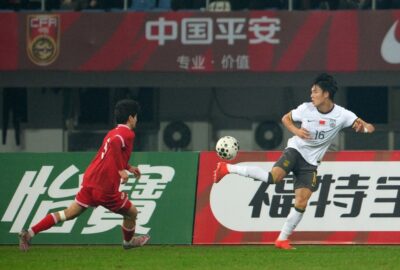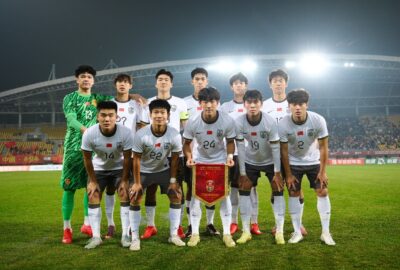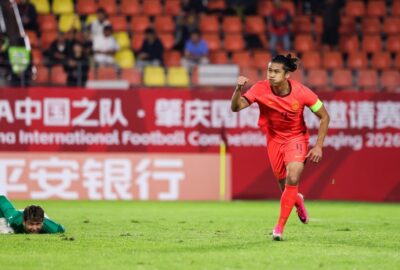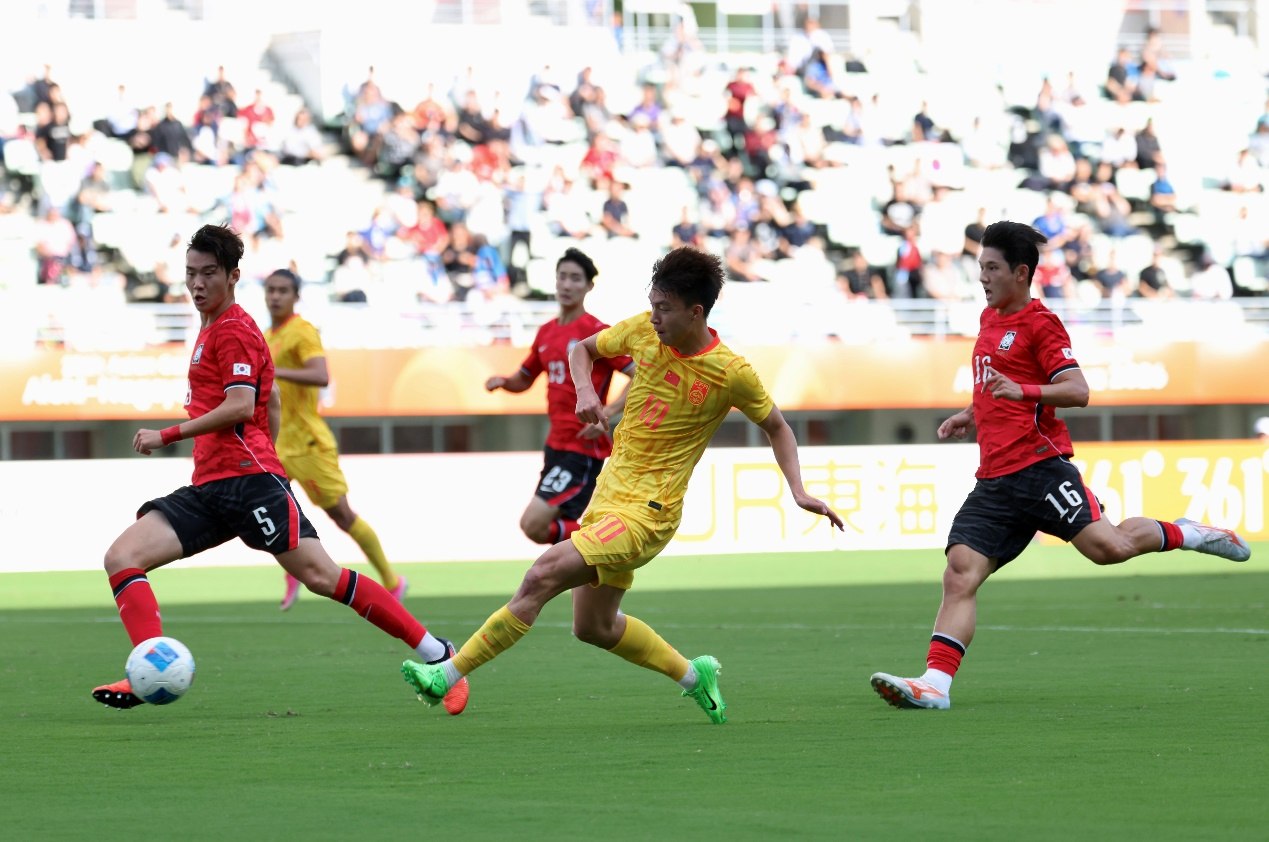
China won the men’s football bronze medal at the Aichi-Nagoya Asian Games on 3 October, beating Uzbekistan 4–3 on penalties at Toyota Stadium. Hu Hetao and Wang Yudong had twice put China ahead before an 89th-minute rebound made it 2–2 after 90 minutes. Li Hao saved Uzbekistan’s first and third penalties and Peng Xiao converted the decisive fifth kick. It was China’s first Asian Games medal in men’s football since Bangkok in 1998.
Hu scores from the left and Wang restores China’s lead
Hu drove in from the left in the 15th minute, exchanged passes with Kuai Jiwen and finished from the left side of the area. Uzbekistan drew level shortly before half-time when Sardorbek Bakhromov arrived in front of goal to finish.
China made two changes at the interval. One of the substitutes, Mutellip Iminqari, found Wang from the centre circle in the 53rd minute. Wang carried the ball forward and curled it into the far corner from just left of the arc. He nearly helped make it 3–1 when his chipped pass found Zhang Yuning inside the box. Zhang met it with his left foot and struck the right post.
An 89th-minute rebound sends the match straight to penalties
Uzbekistan put together a succession of shots as time ran out. Li Hao and Zhu Chenjie made blocks and Li then stopped a fierce effort from the right of the box. Shodiyor Shodiboev reached the loose ball in the six-yard area and scored. Under the bronze-medal match rules, a draw after 90 minutes meant an immediate shootout.
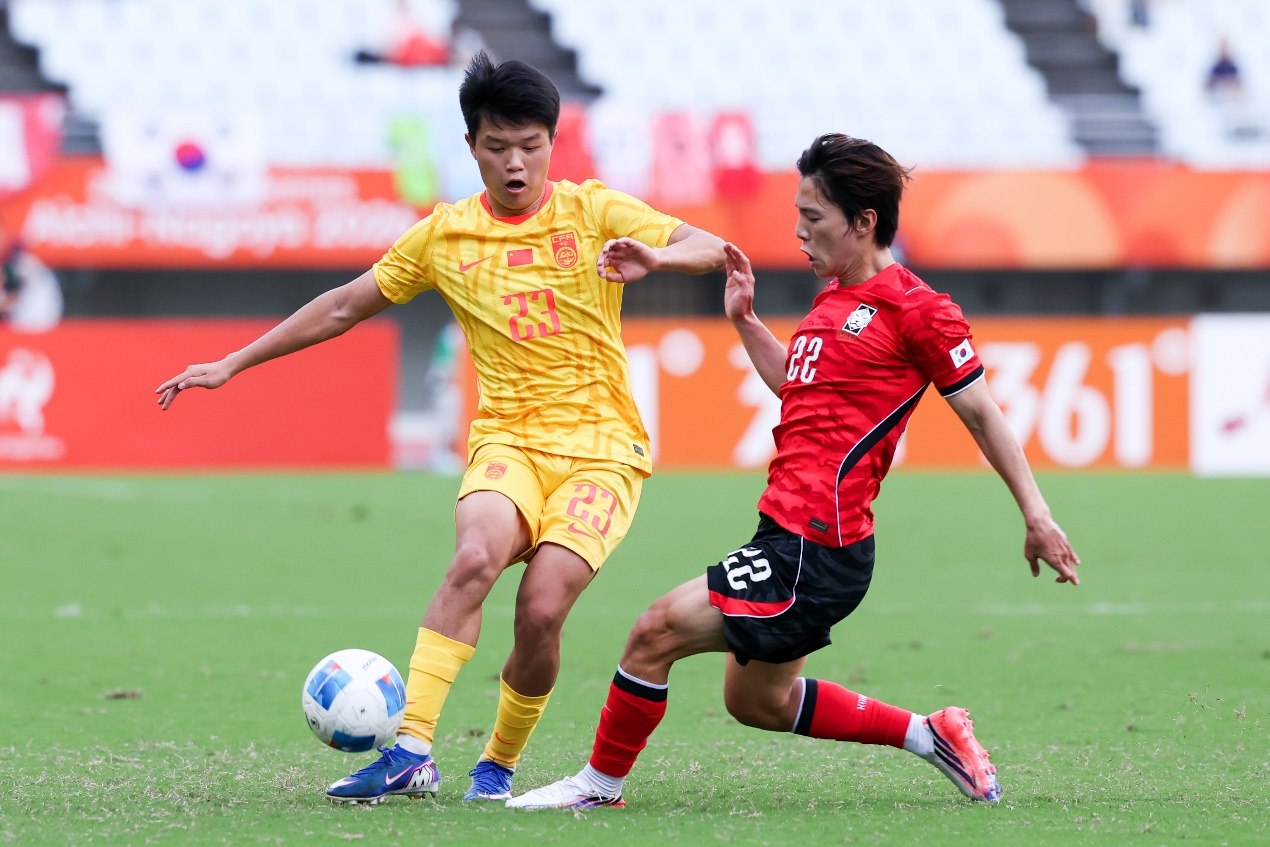
Li saved the opening kick, only for Liu Haofan to see his effort saved at the other end. Both sides scored in round two. Li’s second save, in round three, gave China an opening. Zhu Chenjie, Xiang Yuwang, Imran Memet and Peng Xiao all converted from the second round onwards. Peng’s fifth-round finish finally settled the medal.
China’s route to the bronze-medal match
China beat DPR Korea and drew with Iran and the United Arab Emirates to top their group with five points. A 3–0 quarterfinal win over Thailand was followed by a 2–1 semifinal defeat to the Republic of Korea. The bronze-medal match was China’s sixth game of the tournament.
| Stage | Opponent | After 90 minutes | Outcome |
|---|---|---|---|
| Group stage | DPR Korea | 2–1 | Win |
| Group stage | Iran | 0–0 | Draw |
| Group stage | United Arab Emirates | 0–0 | Draw |
| Quarterfinal | Thailand | 3–0 | Advanced to semifinals |
| Semifinal | Republic of Korea | 1–2 | Entered bronze-medal match |
| Bronze-medal match | Uzbekistan | 2–2 | Won shootout 4–3 |
INKA SPORTS analysis and summary: two jobs for the substitutes
The changes first made a difference in open play. Mutellip’s pass from the centre circle gave Wang room to carry the ball and pick his spot before Uzbekistan could reset. In the shootout two substitutes, Xiang and Imran, converted consecutive kicks. Those finishes helped China retain the advantage created by Li’s third-round save.
China had also led in the semifinal. The Republic of Korea equalised with a header from a corner and later won the game with another header at the far post. Against Uzbekistan it was a loose ball after a series of blocks that cost China the lead. The goals called for different defensive responses. What decided the medal was China’s response after the 89th minute: Li made two saves and, after the opening miss, his teammates converted every remaining kick.