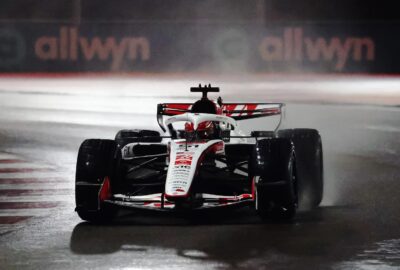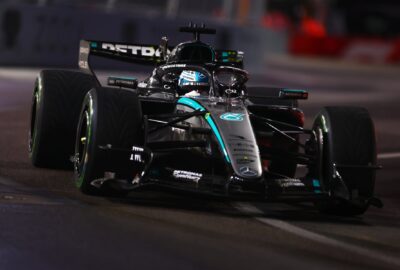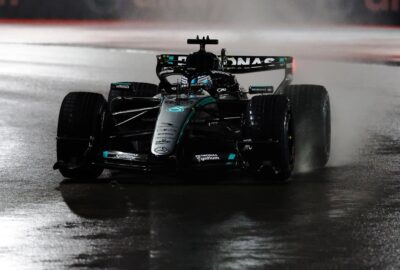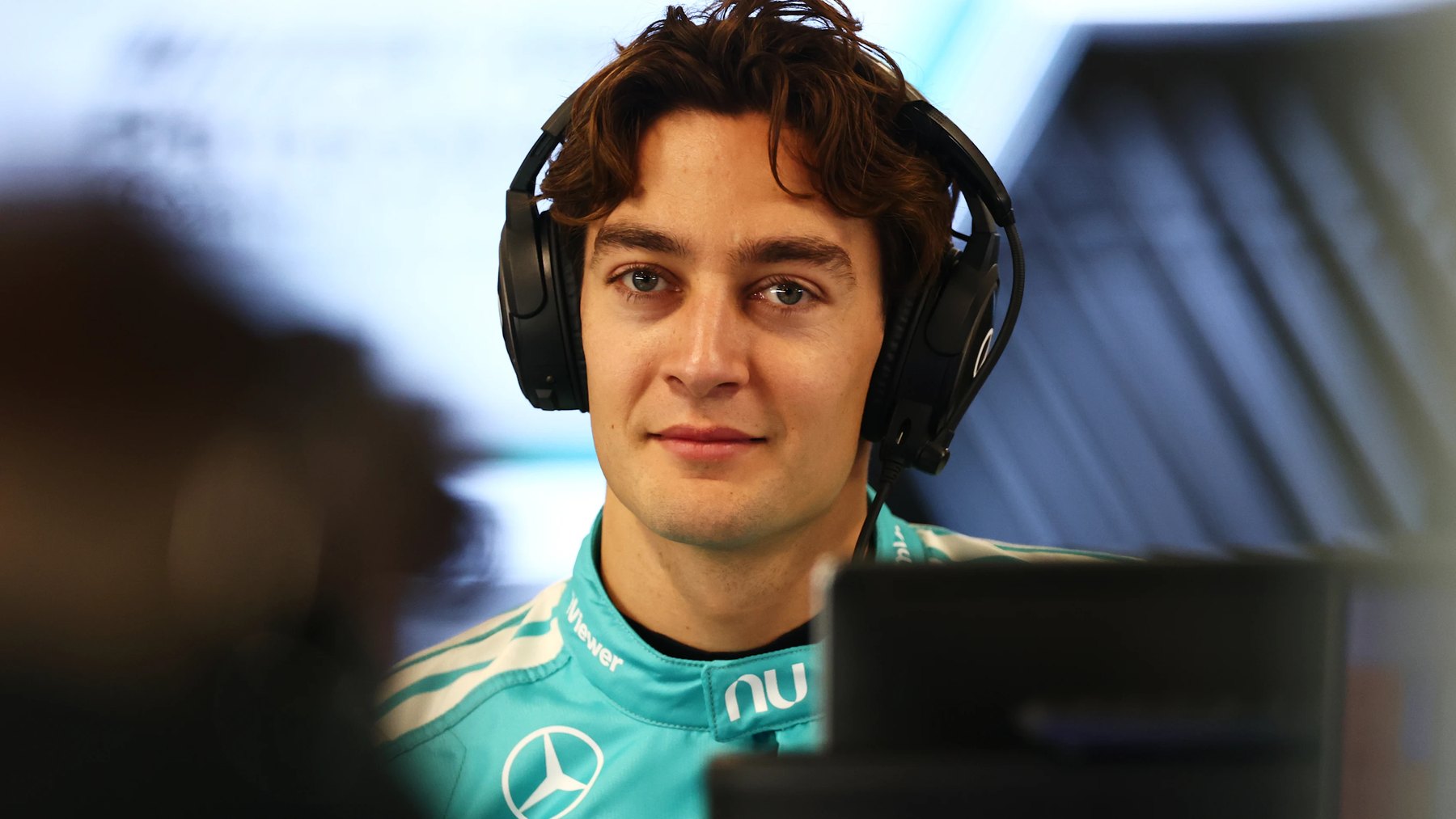
George Russell left second practice in Las Vegas with the fastest lap and doubts about whether Mercedes had the best pace. His wet-weather 1:47.272 led a timesheet that combined laps from either side of a red flag. To compare Mercedes with McLaren and Red Bull, it helps to look at when the drivers finished their quickest laps. See the Las Vegas FP2 report for the full classification and session chronology.
Norris and Hadjar were quicker before the stoppage
The red flag came at 20:49 local time so marshals could clear debris. Lando Norris had recorded a 1:48.837 and Isack Hadjar a 1:48.407. Russell’s pre-stoppage best was a 1:49.189, leaving him 0.352s behind Norris and 0.782s behind Hadjar at that point. Almost five minutes separated those three laps as the track continued to dry.
After the 20:54 restart, Russell took 1.917s off his own benchmark. McLaren confirmed both cars went back out on intermediates for the closing laps, but Norris kept his pre-red-flag best. Hadjar’s post-restart 1:49.496 was slower than his earlier time. The final gaps therefore also reflect who managed to improve in the last six minutes.
Verstappen had fewer late laps to work with
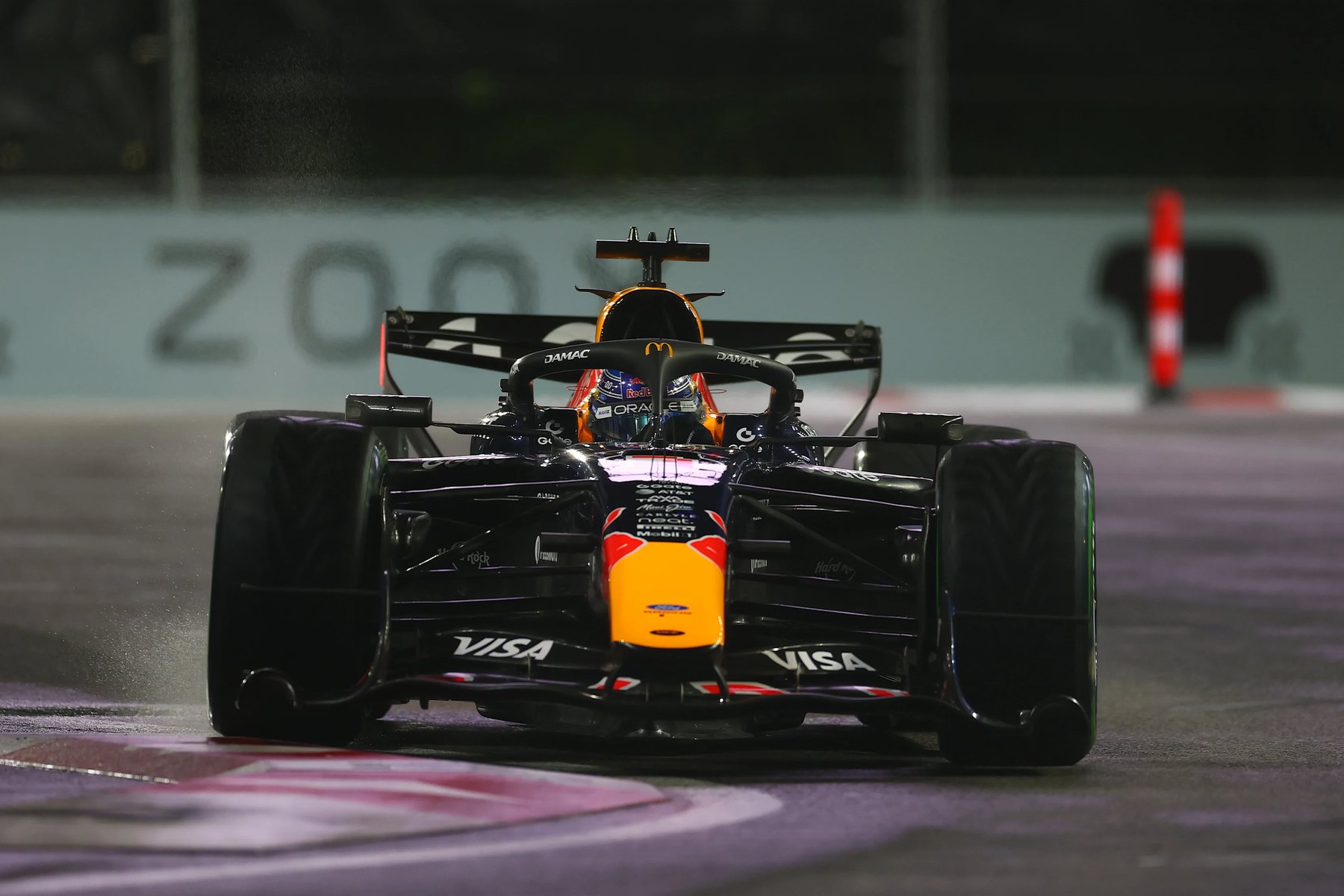
Red Bull technical director Pierre Waché explained that the team checked its systems while the track called for full wets and did not plan timed running for Verstappen on that compound. The red flag then interrupted the move to intermediates. Waché said there was an issue getting the energy management systems to work together, followed by a more substantial balance problem.
After the restart, Verstappen recorded consecutive laps of 1:50.981 and 1:50.141, an improvement of 0.840s. Hadjar had already had a chance to build a series of laps before the stoppage. The classification gave them nine and 20 laps respectively. Different amounts of running, different timing and Verstappen’s reported handling difficulties all affect that comparison. Timing alone cannot quantify their individual effects.
INKA SPORTS Analysis and Summary: What data does FP3 need to provide?
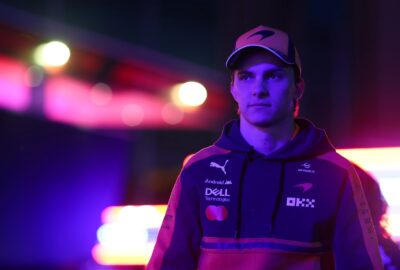
The wet session shows which drivers improved from one phase to the next and which parts of the run plans the teams got through. Russell found a faster lap after the restart, while Norris and Hadjar were already in the 1:48s before it. Piastri improved to fifth late on, with McLaren’s new floor still unfitted. The team hoped to try it in FP3 while fitting single-lap and longer runs into the same hour.
If the circuit is dry for FP3, the teams need laps on slicks in comparable conditions. Mercedes needs a read on tyre warm-up, Red Bull needs to see whether Verstappen can string together timed laps, and McLaren needs to decide whether to keep the new floor for qualifying. FP2 identified where those questions arose. FP3 offers the first opportunity to collect the missing dry-weather evidence.