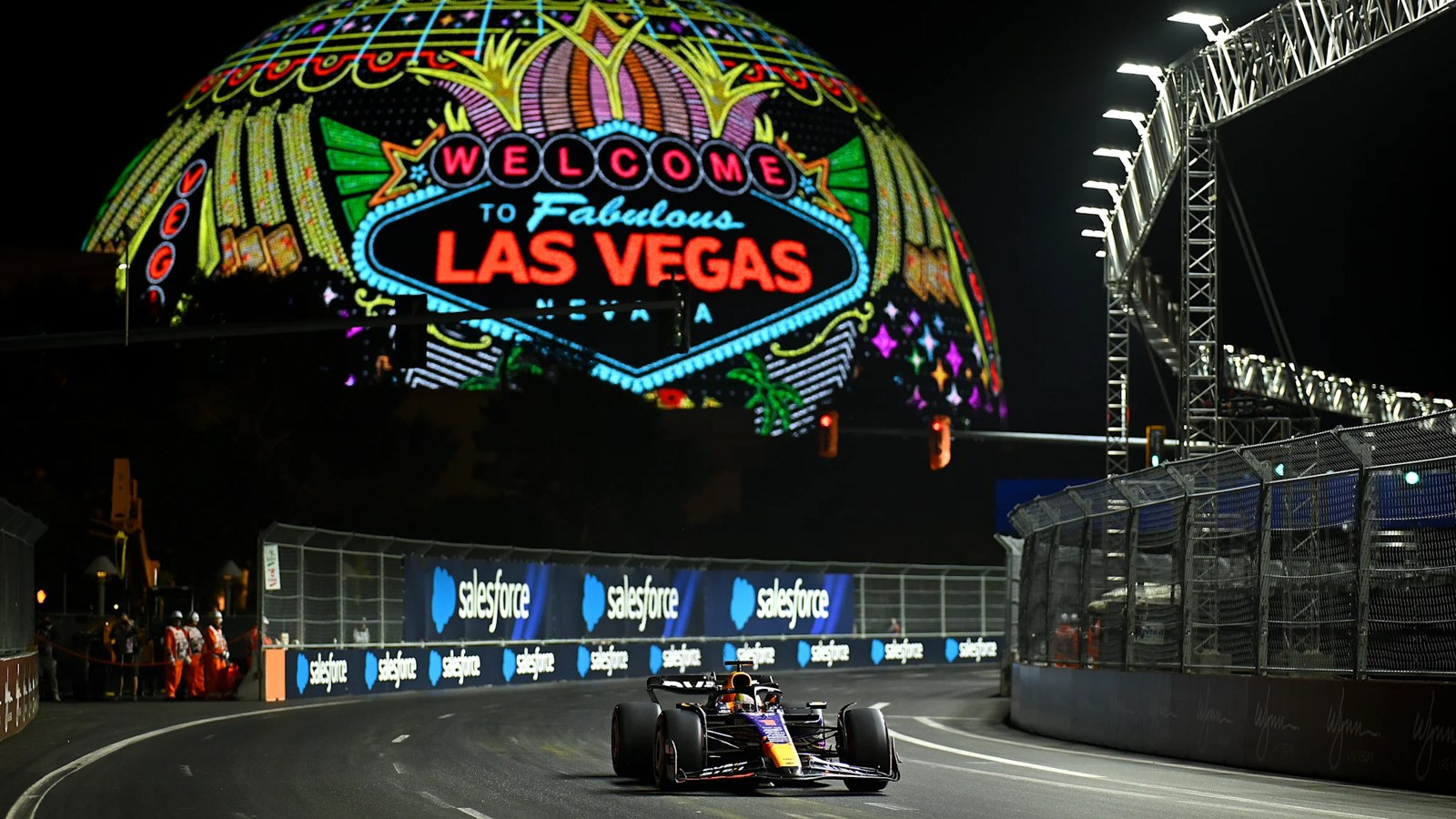
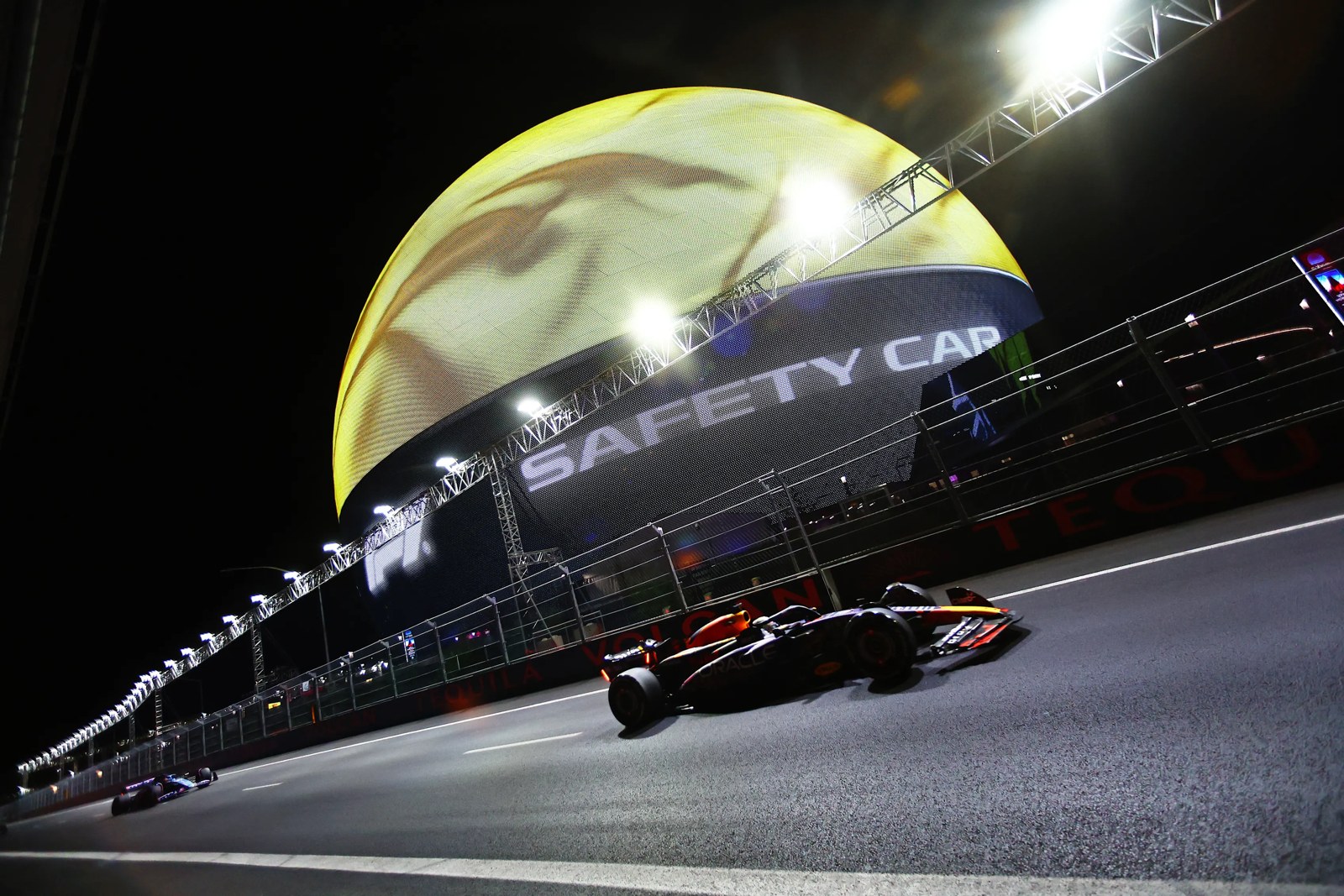
The Sphere turns yellow and a safety car message wraps around the display. For a spectator at the Las Vegas Grand Prix, that is also an update from the track. Austin Brown, the event’s vice-president of marketing, says the broadcast crew and the venue team prepare material together and switch what the public sees as an incident or a change in the timing data occurs.
The Sphere opened on 29 September 2023, and Formula 1 returned to Las Vegas that November. Its exterior has about 54,000 square metres of LEDs and sits beside the 6.201-kilometre circuit. The display used official circuit calls for yellow flags, safety cars and red flags from the beginning. Onboard footage became a regular feature in 2025.
How an update reaches the screen
The production crew prepares graphics before the race, including flag messages, driver material and podium celebrations. If a safety car is deployed or a session stops, the broadcast crew can cue the venue team to switch to a matching graphic. That turns a track signal into a message spectators can read at a distance.
Some updates come from data. Brown gave fastest laps as an example of what can be tracked in the feed sent to the venue. Graphics for particular drivers can be ready in advance. Timing changes and race results determine when a particular graphic is relevant.
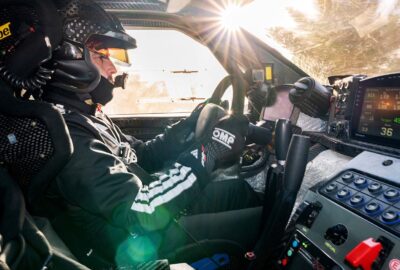
Onboard footage serves a different purpose. A spectator in a grandstand can see one stretch of track directly, while a camera can follow a car into the next sector. The display brings that perspective into the physical venue alongside flags and fastest lap updates.
What the live display depends on
A night race makes a high display easy to spot. Keeping pace with the event takes more than screen area. Flags need to match the state of the track, fastest laps need a timing feed, and onboard pictures still need a cue at the right moment.
The crowd can see a direct message during a safety car period and a driver’s perspective during normal running. Those uses draw on different inputs. Preparing the material in advance and coordinating it live is what lets one display serve both functions.