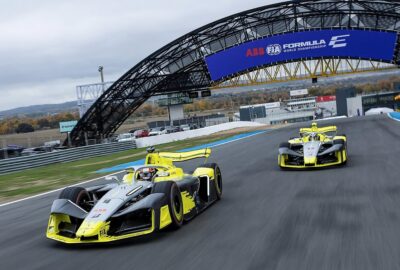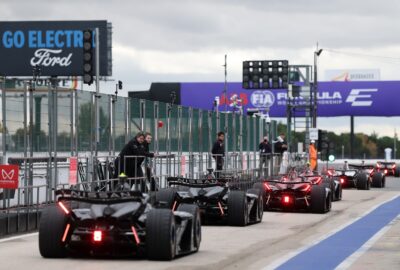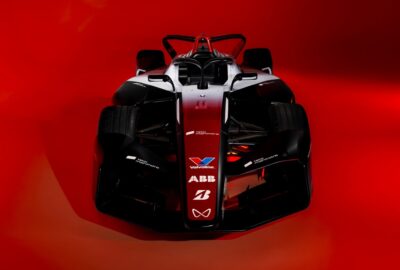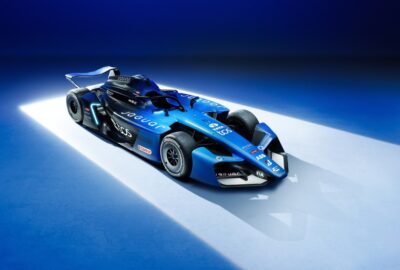
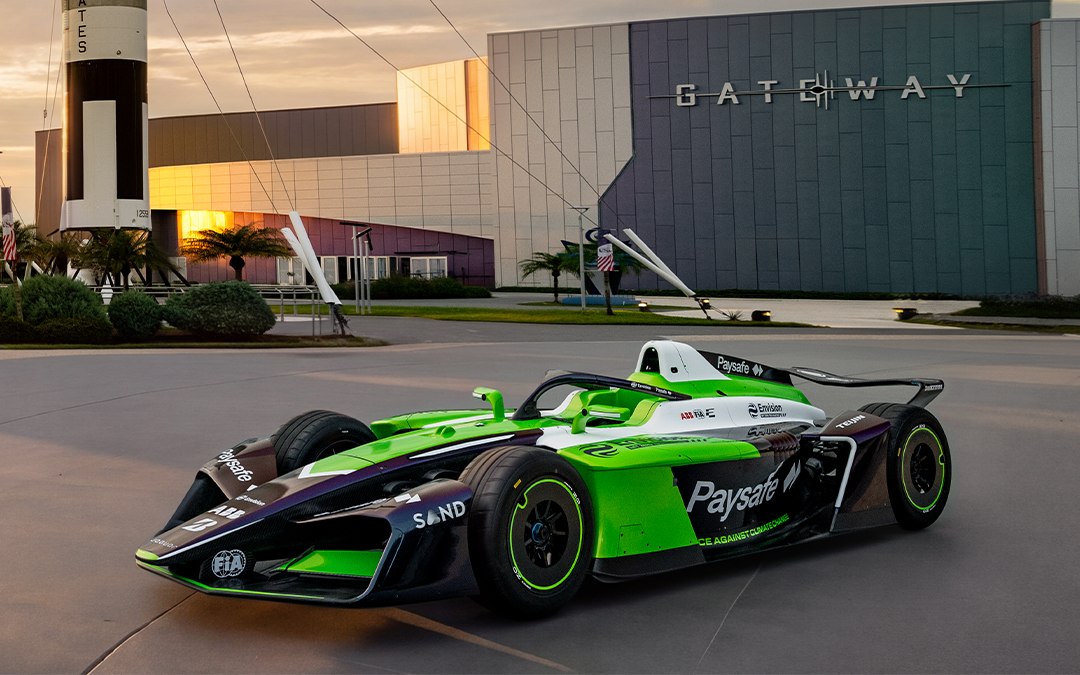
Paysafe Envision Racing revealed its blue, white and green Formula E livery on October 2. Blue and white bring the new title sponsor’s colours to the car, while green preserves Envision’s identity. Maximilian Günther and Zak O’Sullivan will both make their team debuts in the new colours as Formula E switches to GEN4 for 2026/27.
Envision keeps its green with a new name and driver pairing
The launch took place in Jacksonville, Florida, home to Paysafe’s US headquarters. The team photographed the car at the space launch complex in Cape Canaveral. Envision Racing CEO and board chair Franz Jung said green remained an important part of Envision’s identity and that the Paysafe colours gave it a fresh look for the new season.
At the time of the launch, Envision’s programme called for pre-season testing in Madrid before the opening race weekend in Jeddah, Saudi Arabia, on December 18–19. Alongside the extra power, the drivers will have to adapt to permanent all-wheel drive and make the most of the energy available under braking.
Permanent all-wheel drive and a 150 kW step in Attack Mode
The outgoing GEN3 Evo delivered 300 kW in race trim and 350 kW in Attack Mode. It used all-wheel drive for qualifying duels, race starts and Attack Mode. GEN4 drives all four wheels throughout the race, with 450 kW available in race trim and up to 600 kW in Attack Mode.
Formula E quotes roughly 1.8 seconds from rest to 100 km/h and 4.4 seconds to 200 km/h, the latter 1.5 seconds quicker than the previous car. Top speed exceeds 335 km/h. Those figures describe the GEN4 platform. Envision’s pace relative to other teams will have to be measured on track.
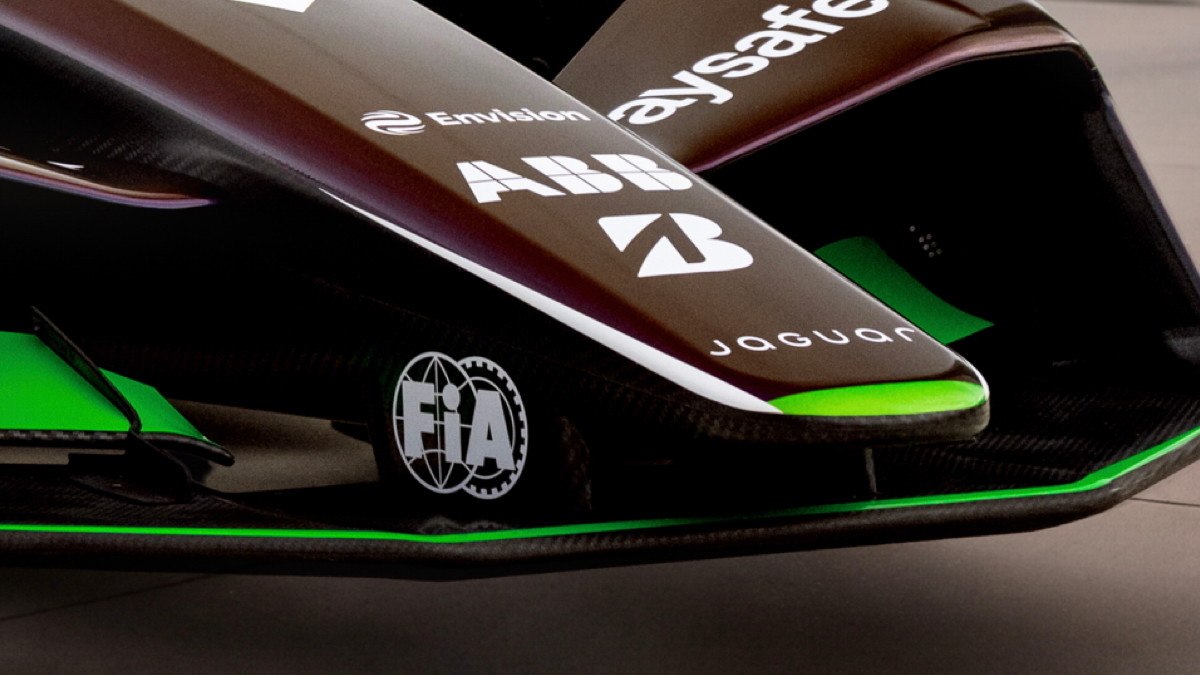
Under braking, the motors convert some of the car’s kinetic energy back into electrical energy. The 700 kW regeneration figure measures how quickly that energy can be recovered. The 55 kWh race energy figure measures an amount of energy. The first matters over a braking zone, the second over a race distance.
Double-headers bring two different ways to spend race energy
The efficiency race pairs low-downforce bodywork, which reduces drag, with a Pit Boost charging stop. The shorter performance race uses high-downforce bodywork to press the car harder against the track and has no Pit Boost stop. The aerodynamic configuration for each event is to be confirmed 21 days beforehand.
INKA SPORTS analysis and summary: what changes when the driver activates Attack Mode?
On GEN3 Evo, activating Attack Mode gave the driver all-wheel drive and an extra 50 kW. With GEN4, all-wheel drive is already available. The change the driver can exploit is a much larger step in power, from 450 to 600 kW. Turning that extra 150 kW into a pass will mean choosing a section where the power can be put down and leaving enough energy for the rest of the race.
In the efficiency race, a driver can weigh an attack against the timing of the charging stop. In the performance race, the cost comes straight out of the remaining race allocation. For Günther and O’Sullivan, that makes a long run in testing valuable in a way a single fast lap cannot be: it shows where an attack is worth the energy it costs.