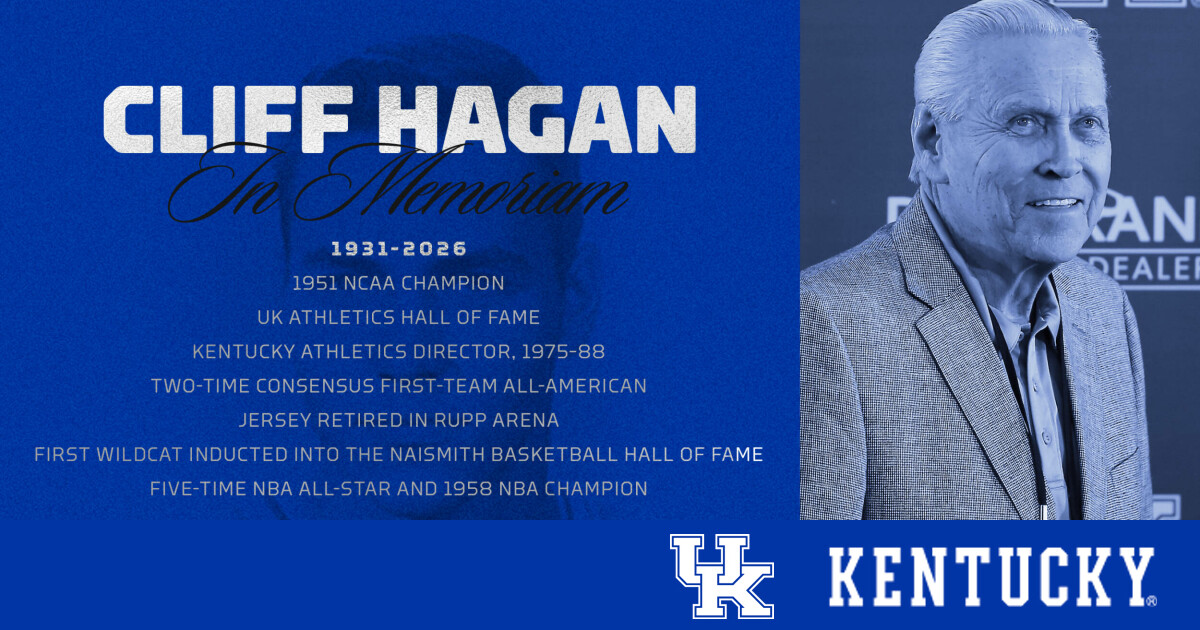
Kentucky announced the death of former star and athletics director Cliff Hagan, aged 94, on October 16. The Naismith Basketball Hall of Fame confirmed October 15 as the date of death. He won the 1951 NCAA title with Kentucky and the 1958 NBA title with St. Louis, entering the Hall of Fame in 1978.
A 1951 title, then an unbeaten 1954 without tournament participation
Hagan, from Owensboro, Kentucky, enrolled in fall 1949. In his first varsity season he helped Adolph Rupp's team win the 1951 national title. Kentucky recalled 86 wins, five losses and three SEC regular-season titles across his three varsity seasons.
The 1953–54 team went 25–0 and ranked No. 1 nationally, with Hagan averaging 21.6 points and 16.5 rebounds. It was not another NCAA championship: he and two other leaders had graduated and were ineligible for the tournament under that era's rules. Kentucky declined its invitation, distinguishing an unbeaten regular season from a national title.
A Russell-related trade links Hawks and Celtics
After college, Hagan served two years in the US Air Force and entered the NBA in 1956–57. Initially selected by Boston, he was traded with Ed Macauley to St. Louis for Bill Russell's draft rights.
Hagan played ten years for the Hawks, made five NBA All-Star teams and twice earned All-NBA Second Team honors. He won the 1958 title against Boston. The Hall of Fame also lists NBA playoff averages of 20.4 points and 8.3 rebounds, reflecting his major-game performances.
After his NBA playing career, he worked as a Hawks television and radio commentator, then joined the new ABA's Dallas Chaparrals as player-coach in 1967–68 and made the first-season All-Star team. He ended that phase of playing and coaching in 1969–70.
Back at Kentucky, bringing playing experience into administration
Hagan became Kentucky athletics director in July 1975 and served until 1988. Its obituary recalled facilities developed in that period, including football training, aquatics and indoor tennis facilities, extending his impact beyond basketball.
Academic support was another contribution. He hired the university's first athletics academic adviser and founded the Center for Academic and Tutorial Services, CATS, in 1981 for student-athlete development. Kentucky's remembrance thus covers trophies and conditions for learning and growth beyond the court.
INKA SPORTS analysis: Rules and services extend the championship story
Hagan connected college basketball, the NBA and ABA, and the identities of athlete and administrator. The unbeaten 1954 season without tournament entry shows the importance of contemporary eligibility rules when comparing honors. Academic support on his return extended his contribution from results to student-athletes' daily services.
Conclusion
His playing record includes the 1951 college title, 1958 NBA title and 1978 Hall of Fame induction. Kentucky's longer-term inheritance also includes facilities and academic support during his 1975–88 tenure. Together, those concrete experiences explain the university's remembrance.