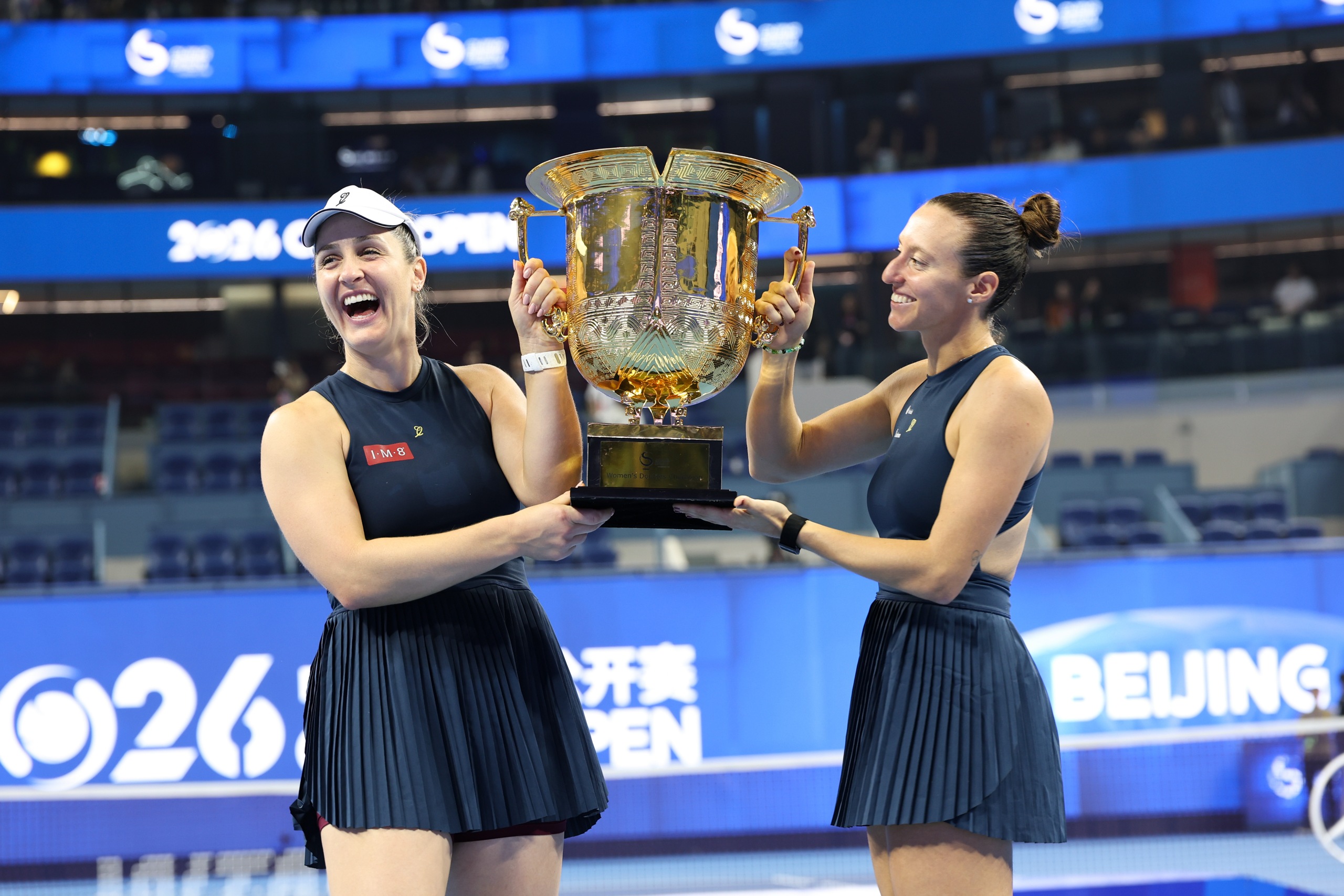
Top seeds Zhang Shuai and Siniakova finished runners-up in the China Open women’s doubles on October 11, losing the final 1–6, 2–6 to second seeds Dabrowski and Stefani. The match lasted 59 minutes and ended Zhang and Siniakova’s 13-match winning streak together this year.
First China Open final ends with runners-up finish
Zhang Shuai and Siniakova had beaten Routliffe and Sutjiadi 6–4, 6–2 in the previous day’s semi-final. The China Open confirmed that both were appearing in the event’s women’s doubles final for the first time in their careers. Against another high-seeded partnership on Sunday, they could not extend their winning run.
This was Zhang and Siniakova’s sixth tour event as a team. They won in Guangzhou on their first appearance together in 2024 and added titles in Adelaide and Toronto this year. After the China Open final defeat, their overall record stood at 19 wins and 3 losses, including 13 wins and 1 loss together this year.
Dabrowski and Stefani claim fifth title of the season
Dabrowski and Stefani secured their seventh title together in Beijing. It was their fifth of the season, following Dubai, Strasbourg, Eastbourne and Sao Paulo. They also reached this year’s Wimbledon final.
Siniakova praises opponents’ serving and net play
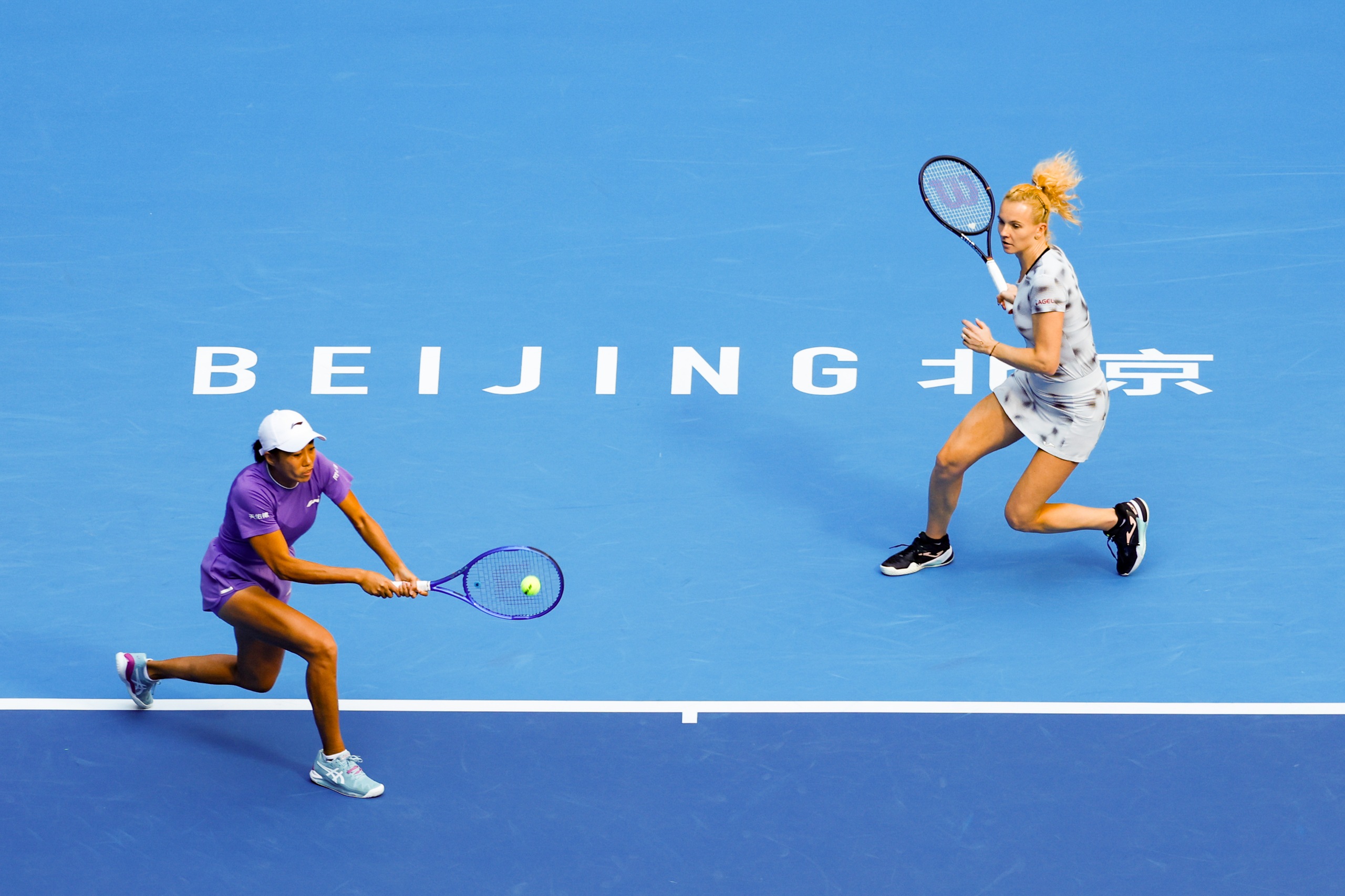
According to the WTA’s post-match report, Siniakova felt the opponents served extremely well and both posed a major threat at the net. She said her team had tried everything but kept falling just short. With their opponents playing fluently, it was difficult to find an opening to change the match.
INKA SPORTS analysis: serving and net play combined to restrict return options
Siniakova’s description suggests Zhang’s team had to solve two successive problems when returning: first handle a threatening serve, then prevent the return from being controlled by an opponent at the net. Putting the return back in play was only the first step; its direction also needed to create room for their own next shot. Pressure from both the serve and the net reduced the returning team’s scope to change direction proactively and rebuild an attack. That explains why she stressed how difficult it remained to find a breakthrough despite attempted adjustments.
Conclusion
Zhang and Siniakova’s 13-match winning streak ended in Beijing. The post-match feedback identified the opponents’ combined pressure on serve and at the net as an important reason for defeat. They attempted adjustments but could not effectively broaden their return options. Siniakova also acknowledged that some of their own execution fell just short, so the available interview material is insufficient to separate the effects of opponents’ pressure and their own errors on the score.