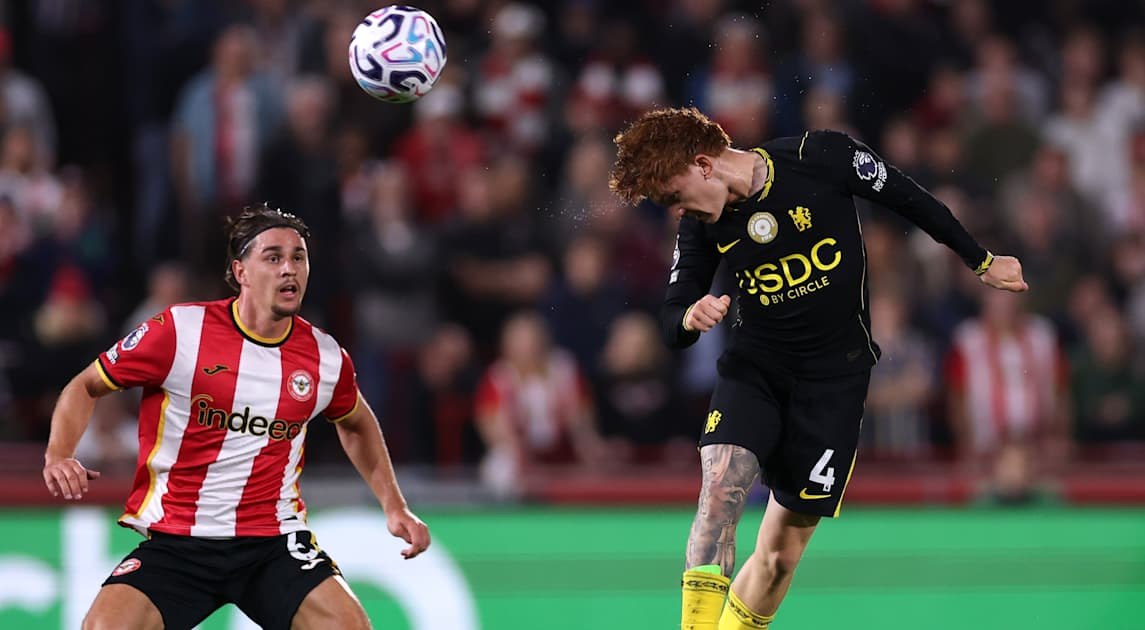
Chelsea lost 3-0 away to Brentford in the Premier League on September 18. After a goalless first half, Jaidon Anthony broke the deadlock in the 61st minute, before Igor Thiago scored in the 83rd and Fabio Carvalho added another in the fourth minute of stoppage time. The visitors had failed to turn their first-half chances into a lead. Sustained pressure after falling behind brought no equaliser, and they instead conceded twice more late on.
Chelsea’s official match report said Xabi Alonso made five changes to his starting line-up. Jordan Henderson made his first appearance for the club; Chavarria, Barco and Welbeck made their first Premier League starts of the season, while Lacroix also came into the side. The unavailability of Reece James and Joao Pedro prompted two of the changes, with Gusto, Hato and Lavia moving to the bench.
First-half chances go unrewarded before a corner breaks the deadlock
Chelsea’s early threat came from the left. In the tenth minute, Chavarria crossed and Welbeck laid the ball off for Neto, whose first-time shot was saved by Kelleher. Chelsea also tried to create openings through the middle, with Schuster blocking Rogers’ effort behind after he received Chavarria’s pass. The official report noted that chances were relatively scarce in the half, which ended 0-0.
After the break, Chavarria shot wide from Martinez’s diagonal pass before Brentford took the lead at the other end. In the 61st minute, Damsgaard delivered a corner from the left, Schuster headed the ball back across goal and the unmarked Anthony headed in from close range. Chelsea had defended Brentford’s set pieces and throw-ins in the first half, but this time failed to deal with the close-range chance following the headed return.
Shots blocked under pressure, then late counterattacks inflict further damage
Chelsea then went close from a corner themselves. Kelleher came off his line for Henderson’s delivery but failed to reach the ball; a deflection in front of goal did not fall kindly for the visitors, and Brentford cleared. Chelsea maintained the pressure and won a series of corners, with five shots blocked by opposition players between the 66th and 80th minutes. The ball repeatedly reached attacking areas without producing an equaliser.
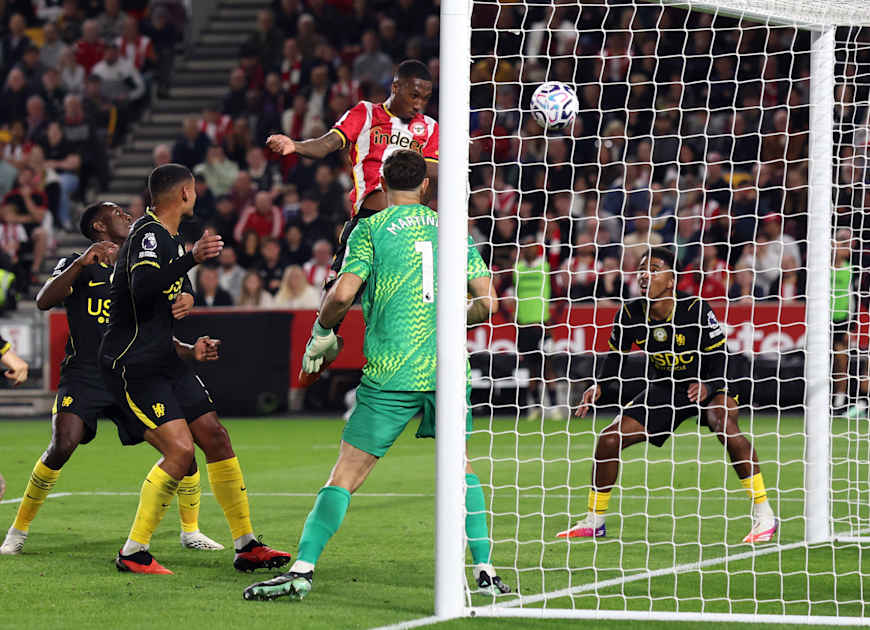
Brentford had already threatened twice on the counter before Chelsea intensified their pressure, and eventually extended their lead. In the 83rd minute, Schade was played through to shoot. Martinez made the save, but Thiago followed up to score. In the fourth minute of stoppage time, Schade’s cross was deflected and Carvalho finished at the far post to make the final score 3-0.
Chelsea remained on 7 points after five rounds. The official report listed their next league game as a home meeting with Bournemouth on October 10, following an international break extending into the second week of October.
Goals
| Minute | Brentford scorer | Score |
|---|---|---|
| 61 | Jaidon Anthony | 1-0 |
| 83 | Igor Thiago | 2-0 |
| 90+4 | Fabio Carvalho | 3-0 |
INKA SPORTS analysis: Why sustained pressure still ended in a heavier defeat
The five blocks between the 66th and 80th minutes show that Chelsea’s key obstacle while chasing the game was more than simply advancing towards the opposition goal. Although players got their shots away, those five attempts were stopped by outfield defenders before the goalkeeper had to deal with them. Compared with Neto’s first-half chance, which forced a save, pushing Brentford back merely created the conditions for an attack. Beating the defensive blocks and producing an effective shot was what mattered to the search for an equaliser. More attempts alone could not automatically overcome that obstacle.
Chasing the game also required Chelsea to keep defending until each opposition attack was truly over. The opener came from an unmarked Anthony after a corner was headed back across goal; the second followed Martinez’s save from the initial shot. Both involved a subsequent close-range opportunity. The official report linked the late counterattacks to Chelsea’s pursuit of an equaliser, while two earlier counterattacking threats showed that the danger had already emerged. Chelsea needed to keep track of receivers after headed returns and rebounds while committing more to attack. These specific passages reveal the problem in connecting attack and defence more clearly than a general demand for more shots.
Conclusion
Chelsea’s defeat began with a failure to defend the second phase of a set piece. Blocks frustrated their response, before a counterattacking rebound and a far-post finish extended the deficit. Maintaining pressure up front and protecting the space behind were simultaneous tasks. The next question is whether Chelsea can turn pressure into shots that get past defenders, while continuing to track receivers after headed returns from corners and goalkeeper saves. Shot totals or an individual save alone cannot establish the effectiveness of the team’s overall attacking and defensive work.