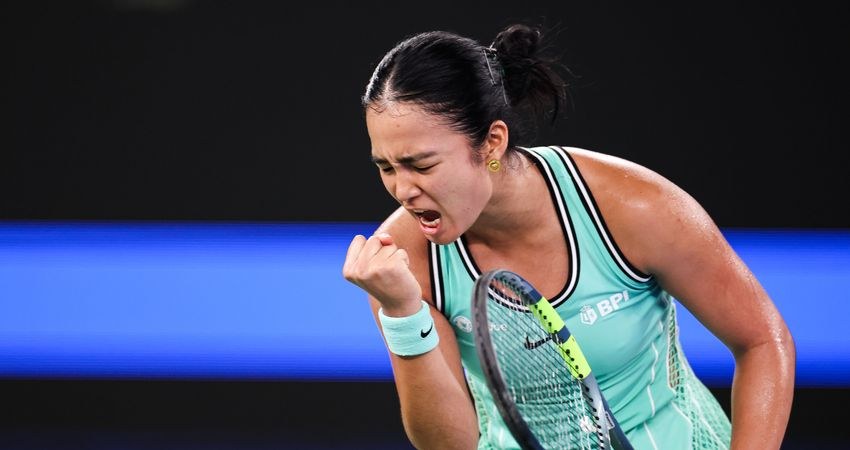
Alexandra Eala returned to winning ways in Ningbo. On October 19, the 21-year-old Filipina beat France's Parry 6–3, 6–1 in one hour seventeen minutes to reach the WTA 500 event's last sixteen. She ended a three-match losing streak and earned her 34th tour-level win of the season.
Seven straight games from 3–3 establish control
Both players broke early in the opener. At 3–3, Eala took over, winning three games to close the set and four to begin the second. The seven-game sequence transformed parity into a 4–0 second-set lead.
Parry then took one game but could not recover the deficit. Eala won the second 6–1 and the match by twelve games to four. From 3–3 in the opener to the finish, she won nine of ten games.
Errors create the separation
WTA's statistics showed twelve Eala winners and nine unforced errors, compared with eleven and 25 for Parry. Only one winner separated them, but sixteen unforced errors did. Their winner-to-unforced-error ratios were approximately 1.33 and 0.44 respectively.
Eala praised her first-round performance and Parry's year afterward. She thanked the crowd for support that helped her enjoy competing even in difficult moments. After first-round exits in Singapore and Wuhan, Ningbo restored advancement.
| Player | First set | Second set | Winners | Unforced errors |
|---|---|---|---|---|
| Eala | 6 | 6 | 12 | 9 |
| Parry | 3 | 1 | 11 | 25 |
INKA SPORTS analysis: Where the score gap formed
Similar winner totals but a wide score mean attacking points alone cannot explain this match. Eala reduced self-inflicted losses and carried her opening-set run into set two. Seven straight games locate when control formed; the sixteen-error difference provides another measure of consistency.
Within the season, this was both an opening win ending a losing run and continued accumulation of tour victories. Before 2026, Eala had fifteen tour-level career wins; this season alone now brings 34. The periods differ, but clearly show growth in her winning experience.
Conclusion
The key was turning 3–3 into consecutive leads and retaining control through fewer errors. Game progression and error comparison explain the finish better than the two-set score alone, giving this end to the losing run specific, checkable match content.