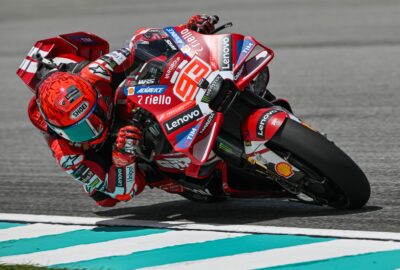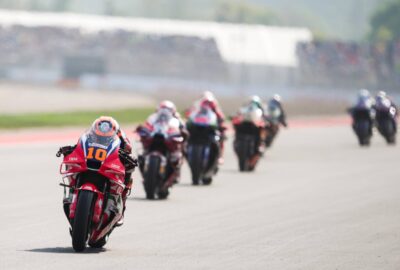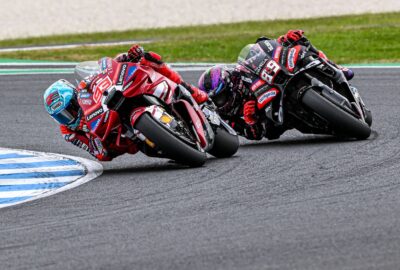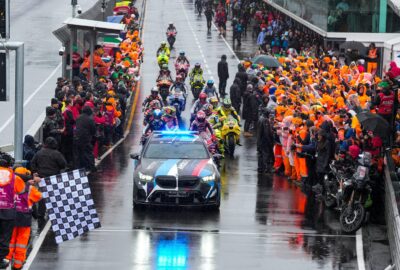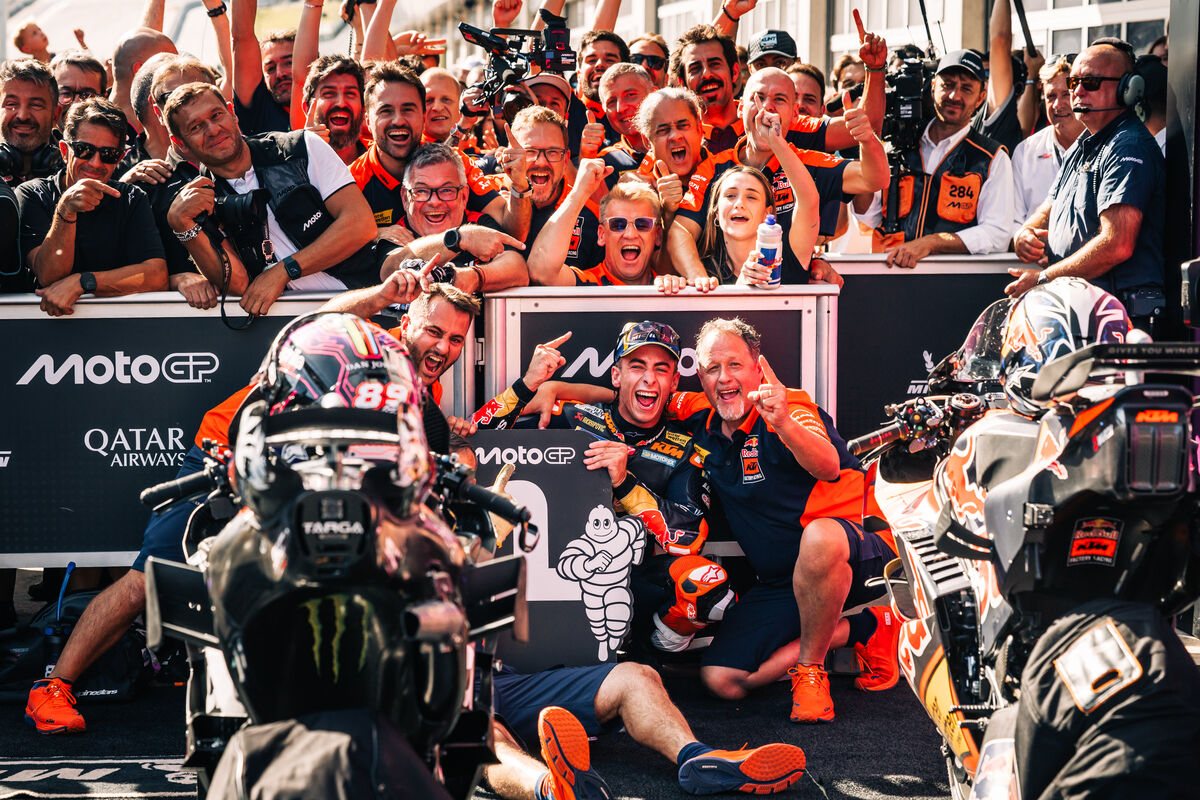
After Pedro Acosta took his first premier-class MotoGP win at the Austrian Grand Prix on 20 September, Marc Marquez included him among his rivals for the 2026 title. According to Motorsport.com, Marquez considered all four leading riders capable of fighting for the championship and expected the Red Bull KTM factory rider to contend for victory again at the next round in Japan.
The 72-point gap remains, but the title assessment has changed
KTM’s official post-race standings showed Jorge Martin leading with 306 points, followed by Marquez on 294, Marco Bezzecchi on 264 and Acosta fourth on 234, 72 behind the leader. Seven rounds remain. With 12 points for a Sprint win and 25 for a Grand Prix victory, complete remaining weekends theoretically offer 259 points. Acosta is not mathematically eliminated, but that does not mean closing the deficit is easy.
Marquez’s reasoning concerned KTM’s recent competitiveness. In the report, he linked restored KTM power performance with Acosta’s return to the front and recalled his speed on his previous two Motegi visits. In his rookie season, he took pole but crashed while leading the Sprint and while fighting near the front of the Grand Prix. That history encouraged Marquez’s view of his chances next time, while leaving the question of converting speed into a complete result.
Martin’s assessment was conditional: if Acosta continued winning through the Asian rounds as he had in Austria, he would join the title fight. Acosta himself was more cautious in MotoGP’s official post-race review, saying he was not fighting for the championship but was the rider with nothing to lose. His rivals’ comments show that they were beginning to take his threat seriously; his own stance did not equate a first win with a title target.
Beyond the first win, the whole weekend matters
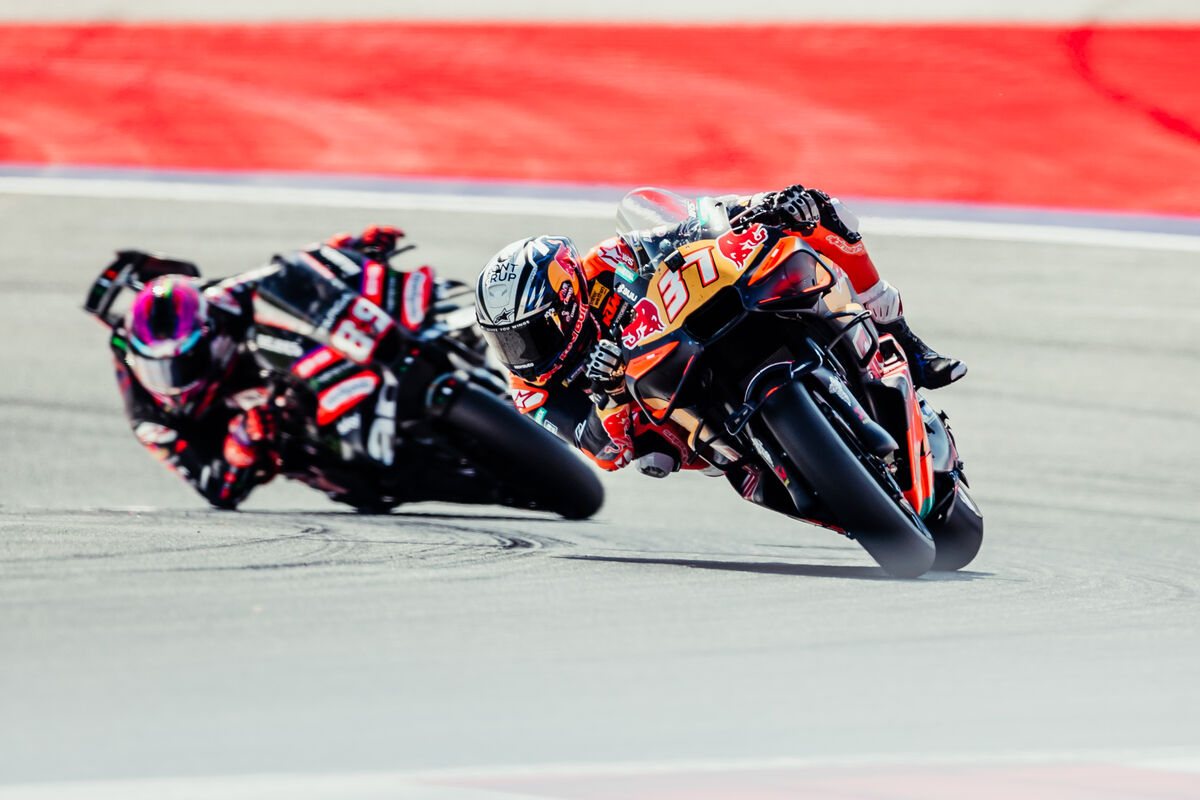
Austria also showed that winning the Grand Prix does not necessarily reduce the gap to the championship leader. Acosta led much of Saturday’s Sprint but crashed and scored no points. He then won from third on Sunday for 25 points. Martin won the Sprint and finished second in the Grand Prix, taking 32 over the weekend. Acosta therefore lost a net 7 points to him across the event.
INKA SPORTS analysis: a points chase requires net gains
With the leader on 306 and Acosta on 234, the current gap is 72 points. If all seven remaining rounds take place, drawing level requires an average net gain of around 10.3 points per round (72 ÷ 7), not merely scoring 10.3 each time. The leader will continue to score, so Acosta’s win count alone cannot establish the rate of recovery. This calculation illustrates the size of the deficit; it does not predict results or address tie-break rules.
That clarifies the focus at Motegi. Alongside whether Acosta can sustain winning speed, the question is whether he can convert both Sprint and Grand Prix opportunities into points and genuinely close on Martin across their combined results. Austria’s Sunday proved his ability to win, but the weekend total showed that the title fight also depends on his rivals’ scores. Individual performances and net gains over a full round must both be considered.
Summary
Marquez’s inclusion of Acosta among the contenders recognises his recent competitiveness; Martin’s assessment still depends on continued winning. A 72-point gap with seven rounds left gives KTM room to chase but sets a demanding task. Japan will first test whether Acosta can combine his Motegi speed with scoring across a complete weekend. Whether a four-rider title fight persists will depend on the races that follow.