
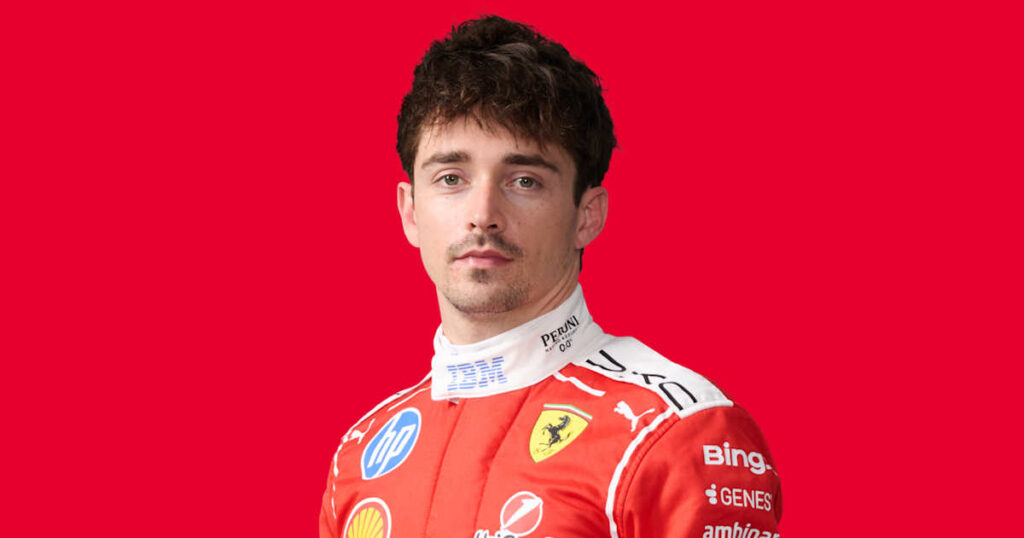
Driver profile
Born in Monte Carlo, Monaco, Leclerc entered F1 with Sauber in 2018 and joined Ferrari the following year. He continues with car number 16 in 2026 alongside Hamilton. From successive junior titles to a long-term leading role at Ferrari, his career includes outstanding qualifying results and experience of challenging for the championship.
Early development and progression
Leclerc won the GP3 title in 2016 and the F2 title in 2017. One season of performances at Sauber earned him a Ferrari seat, replacing Räikkönen. For a young driver, such rapid promotion brings not only a faster car but also significantly greater competitive pressure: working alongside a world champion, facing expectations of victory and providing more intensive technical feedback all become new responsibilities.
Career timeline
- 2016—2017Won successive GP3 and F2 titles.
- 2018Completed his rookie F1 season with Sauber.
- 2019Joined Ferrari and took his first two victories in consecutive races in Belgium and Italy.
- 2022Took three wins, nine poles and second place in the drivers’ championship.
- 2024—2026Won his home race in Monaco in 2024; partnered Hamilton from 2025 and drives the SF-26 in 2026.
2026 season snapshot
The following figures were checked against official F1 pages on 2026-9-23. They are a snapshot, not live standings or the final season result.
- Season position
- Position 5
- Season points
- 167
- Official Grand Prix count
- 14
- Grand Prix wins
- 1
- Grand Prix podiums
- 4
- Grand Prix poles
- 0
- Sprint points
- 28
- Sprint wins
- 0
Season points already include Sprint points and must not be added again. Grand Prix and Sprint wins are listed separately; the season position here and historical honours at the top have different statistical scopes.
Landmark races: a first win at Spa followed by victory at Monza
The 2019 Belgian Grand Prix was Leclerc’s first victory; his win in Italy immediately afterwards came at Ferrari’s home race. Winning on consecutive weekends quickly established his place within the team. Finishing runner-up in 2022 added another layer of experience: a title challenge is not the sum of a few fastest laps, but requires the driver, reliability and strategy to work together over a longer period. His poles and wins should be presented alongside each other, rather than treated as interchangeable achievements.
How to read the racing
When watching Leclerc, consider whether a qualifying advantage carries into the race and whether the car remains balanced at different fuel loads and stages of tyre use. Losing a win from pole can involve the car, strategy, incidents or driver errors; the same explanation should not be applied without examining the actual sequence. Comparisons with Hamilton should likewise use equivalent conditions, rather than historical title counts alone.
This section is editorial interpretation based on career history and racing patterns, intended to help viewers understand the action. It does not represent published team setup or telemetry findings.
Results and statistical scope
Within the statistical scope used on this page, the record as of verification comprises 185 Grand Prix entries, 1839 points, 9 Grand Prix wins, 54 podiums in the official count, 27 poles and 0 drivers’ world titles. The best finish is position 1 (9 times).
Career figures include results from previous teams, rather than belonging only to the current team. Grand Prix entries are not the same as actual starts or finishes. Cumulative points are affected by changes to scoring systems over the years and are unsuitable as a standalone basis for ranking drivers across eras.
Related profiles and frequently asked questions
Why do many poles not necessarily mean many wins?
Qualifying establishes an advantage at the start; the race also depends on long-run performance, the getaway, tyres, reliability and strategy. Pole and win totals measure different parts of a race weekend.
Last verified: 2026-09-23