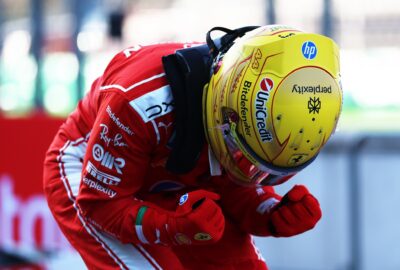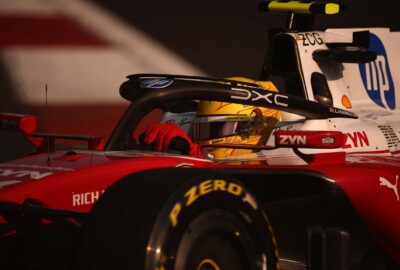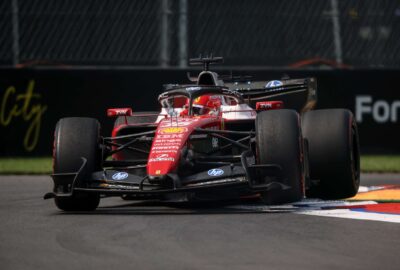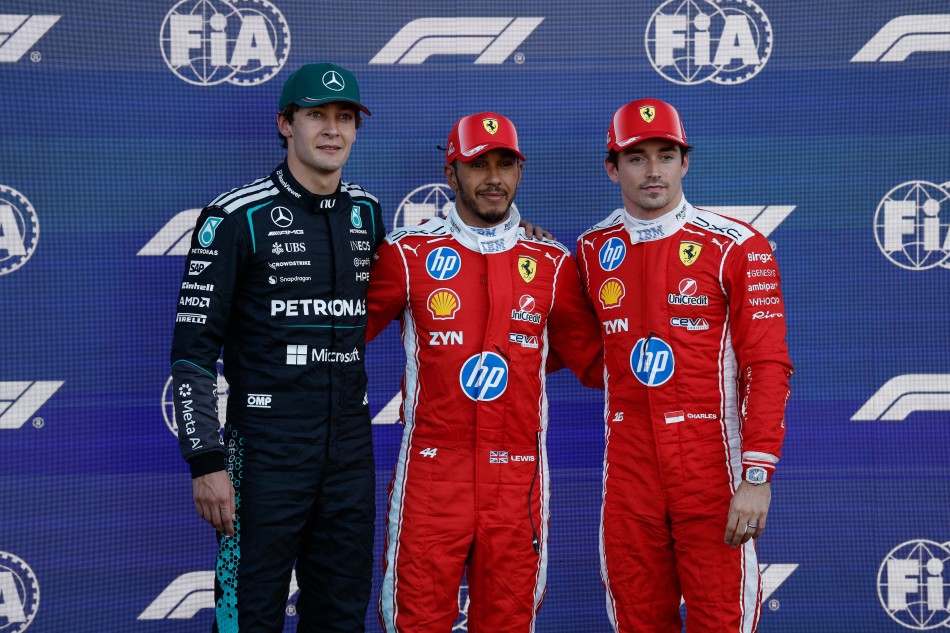
Lewis Hamilton beat George Russell by 0.009 seconds in qualifying for round 19 of the 2026 F1 season in Mexico City, with Charles Leclerc third. Beyond the order, the FIA’s post-qualifying press conference added a shared problem: bringing the tyres into the right operating window before a timed lap. The complete classification is in our published race-weekend report.
Three drivers describe a shared tyre challenge
Hamilton described a narrow window in which the tyres work well, followed by overheating. He said he retained the temperature on his final out-lap and that, once through Turns 1, 2 and 3, the lap flowed smoothly.
He also described a seesaw between the axles: the fronts might come in as the rears began to go off, while backing up to make a gap cost temperature. Preparing the tyres therefore involved coordinating front and rear readiness, out-lap pace and the start of the push lap; simply making them hotter was not the objective.
Russell said falling temperatures, cloud cover and the setting sun brought conditions towards Mercedes. A more aggressive out-lap before his final attempt gave him greater confidence in the available grip. He nevertheless acknowledged that he still could not fully explain why that particular Q3 lap had been so strong.
Leclerc likewise identified preparation as important. He said he had a relatively clean out-lap for his second Q3 run, but the car felt different and he did not deliver when required. Ferrari’s drivers ultimately finished 0.119 seconds apart.
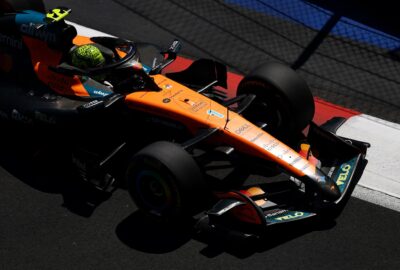
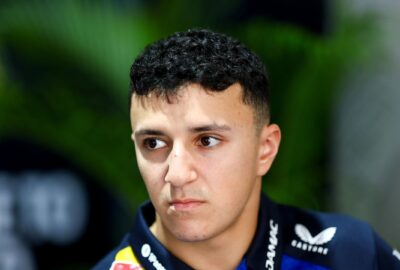
Elsewhere, Oscar Piastri told Formula1.com that the new Q2 tyres lacked grip and that the car’s balance had suddenly changed; he remained unsure what had happened. He qualified 13th while team-mate Lando Norris had led Q2.
INKA SPORTS Analysis: Can extra fuel explain 0.009 seconds?
Russell raised a more specific frustration in the press conference: the original plan had included an additional preparation lap, so he carried the fuel for it, but ultimately did not use that planned lap. He believed the weight penalty could have exceeded the gap to pole. This was a driver’s retrospective assessment, not a measured result proving that one less lap of fuel would have guaranteed pole.
A margin of 0.009 seconds makes small details worth investigating, but does not identify a decisive variable on its own. All three leading drivers emphasised preparation, while differing in their out-laps, sensations and explanations. Russell’s fuel counterfactual and Piastri’s balance change need additional data to quantify; the finishing margin cannot supply that verification.
The race adds another uncertainty. Hamilton said Friday’s stoppage had cost him his long run, leaving him unsure how the car would behave on heavy fuel or which settings he would need. Russell and Leclerc both expected the opening sequence to matter and overtaking to be difficult thereafter.
Conclusion
Qualifying highlighted a common preparation challenge while leaving questions about fuel weight and McLaren’s differing car behaviour unresolved. Hamilton delivered the strongest individual lap. His heavy-fuel performance without a long-run sample, and whether the drivers’ expectations for the start and overtaking prove accurate, remain the race questions. Pole performance and sustained race competitiveness need separate judgments.