
Expand chapter contents · 13 chapters
- It began with a New Zealander who could drive and understood how to build cars
- How the team carried on after losing its founder
- Fuji 1976: After Lauda withdrew, Hunt still had to recover the title himself
- Dennis and carbon fibre: Rebuilding began with the car's core structure
- Portugal 1984: Half a point concealed two ways to fight for a title
- 1988: So strong that only team-mates remained, and all the harder to manage
- The Silver Arrows return: Häkkinen turns the wait into the 1998 double
- How did an extra pedal give a photographer a major scoop?
- Close to a title can still mean far from consistency
- Why the second Honda partnership did not reproduce the first
- Orange reaches the summit again, after 26 years between titles
- Abu Dhabi 2024: After twenty-six years, one Sunday still had to be secured
- 2025: Orange becomes the colour through which a new generation knows McLaren
Park several generations of McLarens together and they may hardly look like one family: the orange cars of Bruce's era, Senna's red-and-white MP4s, Häkkinen's Silver Arrows and the modern papaya cars driven by Norris. Viewers familiar with different periods may even give different answers to what colour a McLaren ought to be.
Colour is only an entrance to memory, though. What makes McLaren compelling is that its history did not stop at one dynasty. The founder's death, falling behind technically, a star's departure and a failed engine partnership all left it searching for direction. Its championship story therefore always carries another question: how does a team that has already won learn to win again?
It began with a New Zealander who could drive and understood how to build cars
Bruce McLaren was a racing driver before his name became a team. In 1958, he came to Britain from New Zealand. His experience at Cooper brought him close to one of F1's most important technical shifts: the engine moving from ahead of the driver to behind him, as small, light cars challenged the old order. For someone who loved studying machinery, the paddock was both a racetrack and a classroom.
He founded Bruce McLaren Motor Racing in 1963, and McLaren entered the F1 World Championship with its own car in 1966. The three-year interval reflects a company whose beginnings were not confined to F1; sports-car racing was important too. At the 1968 Belgian Grand Prix, Bruce drove his own car to the team's first F1 race victory. Driver, engineering thinker and businessman came together in that moment.
Those origins explain the early team's character. It was held together by the ability to solve problems, with designers close to both the pits and the cockpit. Today it is a vast racing institution; it began as colleagues working around particular cars. The man whose name appeared on the nose would personally take the machine they built onto the track.
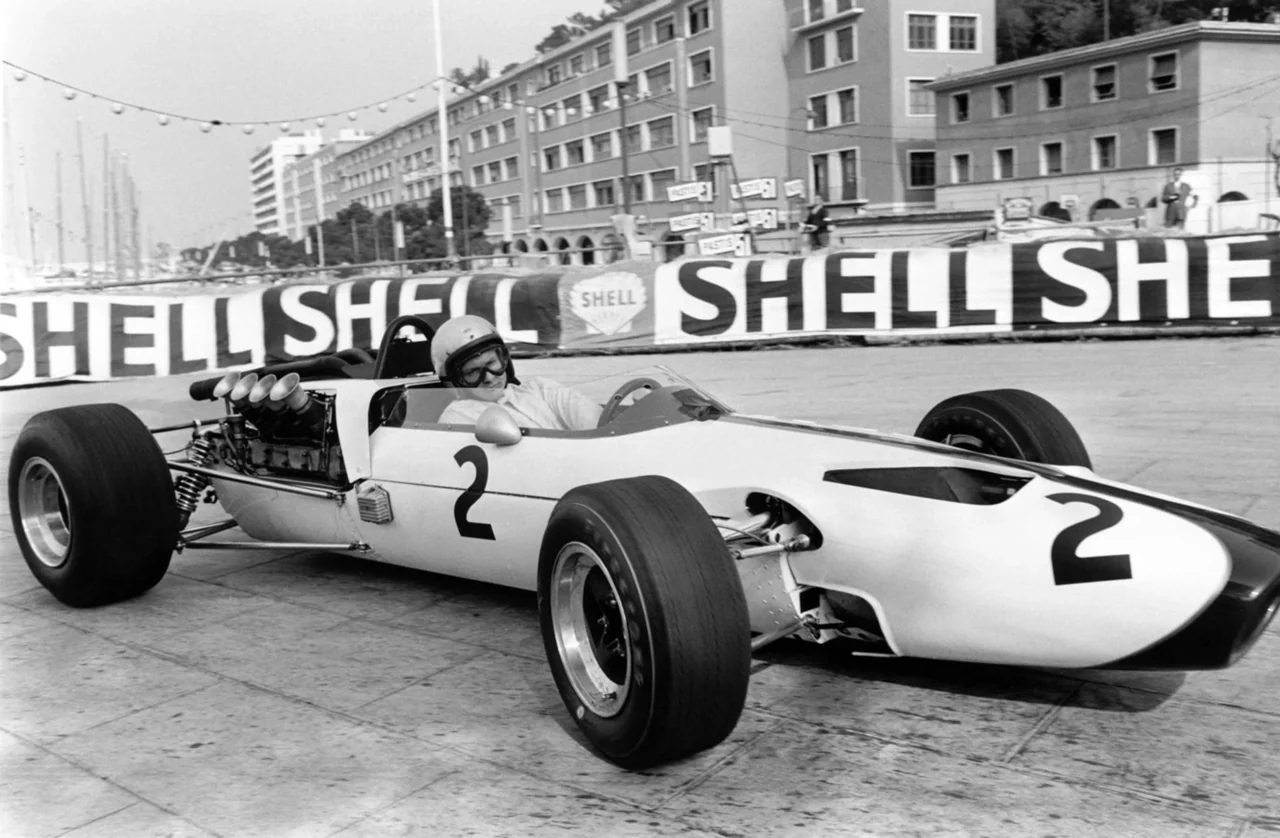 Photo: McLaren.com
How the team carried on after losing its founder
In June 1970, Bruce died while testing a Can-Am car at Goodwood. For a team only just establishing its reputation, the loss went far beyond a name. Driving, technical judgement and the ability to inspire the team had all been concentrated in him. Teddy Mayer and others had to turn those abilities into qualities the organization itself could retain, allowing it to advance without its founder.
In 1974, Emerson Fittipaldi won the drivers' world championship in the M23, and McLaren took its first constructors' title. In 1976, James Hunt beat Lauda to the crown by one point. Two very different personalities benefited from successive development of the same car family. For a new F1 viewer, the M23 illustrates that a successful car's value can come from continued improvement, without starting from scratch every year.
Podiums did not secure the team's future, however. By the late seventies, the competitive environment kept changing, and accumulated technical experience could not guarantee the next victory. McLaren first encountered a problem it would face repeatedly: history can help attract talent, but cannot explain why a new car is not fast enough.
Fuji 1976: After Lauda withdrew, Hunt still had to recover the title himself
Before the Fuji finale, Hunt trailed Lauda by three points. Torrential rain and poor visibility made the race first of all a test of safety judgement. Lauda withdrew early, but that did not hand Hunt the championship. The McLaren driver still needed a sufficiently high finishing position to change the annual outcome.
Hunt was initially in a favourable position, but tyre trouble forced a stop. When he rejoined, his position no longer assured the title, so he had to fight back in the closing stages. He secured the required third place and the championship by one point. Reducing the finale to 'his rival withdrew and Hunt won the title' removes the part of the race that he and his team still had to complete.
It also encapsulates the M23 era. The car had years of development behind it, yet a season's outcome could still rest on tyres and a handful of overtakes. McLaren's second drivers' world champion had a different personality from its first, Fittipaldi. The team still had to give both the same basic support: a car they could trust and an organization able to function when circumstances changed.
Dennis and carbon fibre: Rebuilding began with the car's core structure
In the early eighties, Ron Dennis's Project Four joined with McLaren, giving rise to the MP4 designation that would stay with the team for years. John Barnard's MP4/1 brought the carbon-fibre composite monocoque into F1 racing. Its exterior may not look much more dramatic in a photograph than older cars, but the real change lay in the structure around the driver.
The monocoque can be understood as the car's central load-bearing cell. Greater stiffness helps the suspension work as intended, while a lighter structure leaves room for weight distribution choices. Materials and manufacturing therefore affect handling, not only safety. John Watson won the 1981 British Grand Prix in the MP4/1. Later, in a serious crash at Monza, the cockpit's protection demonstrated another significance of the approach.
The subsequent TAG-Porsche turbo engine programme gave McLaren a new complete-car combination. Lauda beat team-mate Prost by half a point in 1984, then Prost took the titles in 1985 and 1986. Lauda's experience, Prost's precision and the team's engineering management all delivered in the same period. This success also formed a distinctive image of Dennis-era McLaren: converting as much of racing's uncertainty as possible into details that could be managed.
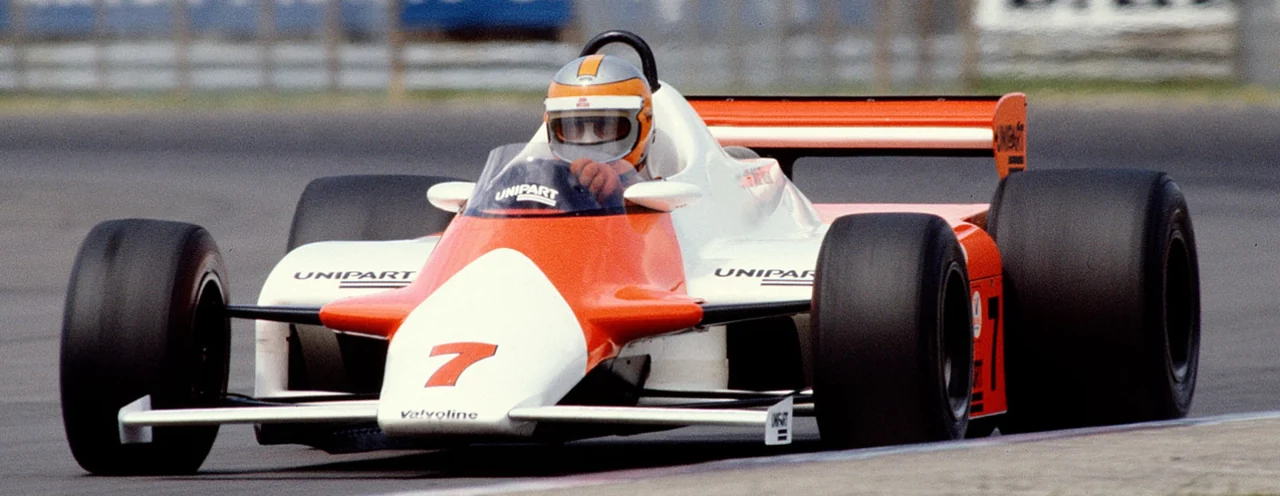 Photo: McLaren.com
Portugal 1984: Half a point concealed two ways to fight for a title
Before the final round in 1984, Lauda had 66 points and Prost 62.5. Second place would secure Lauda's title; Prost needed to win and hope his team-mate finished third or lower. Lauda qualified only fifteenth, so Prost's championship opportunity remained very real before the start.
Lauda advanced through the field, but not smoothly. He explained afterward that the turbocharging system had affected the car's power. Mansell's retirement finally gave him the second place he needed. Prost won the race, Lauda the championship, by a final margin of just half a point. The two McLarens had almost turned the season into an internal contest, without making its last decision easy.
That half-point margin came from the whole season, including Monaco, shortened by heavy rain and awarded half points. In hindsight, it is easy to name one race as the reason a title was lost. In reality, every finish, retirement and application of the scoring rules contributed. For McLaren, the first significance of 1984 was that two world champions with different driving methods could now contend consistently on the same technical foundation.
1988: So strong that only team-mates remained, and all the harder to manage
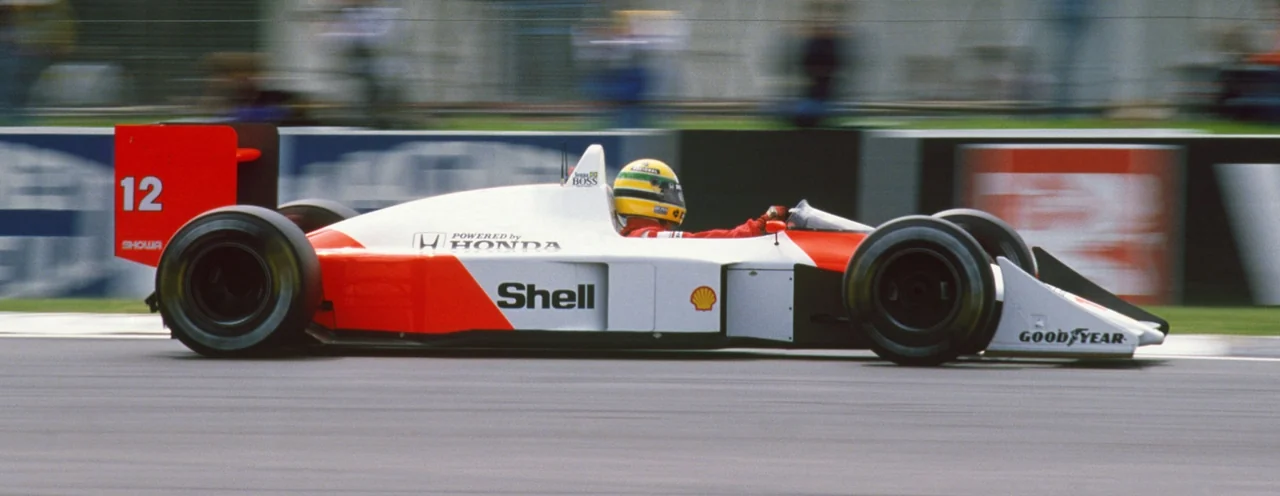
In 1988, McLaren put Senna, Prost and Honda power into one programme. The MP4/4 won 15 of the year's 16 rounds: eight for Senna and seven for Prost. To other teams, it was an almost insurmountable mountain. For McLaren, two men stood at its summit, each certain that he should be champion.
Even such an exceptional car could not erase their differences. Qualifying, race pace, preserving machinery and communication with engineers created different battlegrounds. Senna took the 1988 title and Prost the 1989 crown; their Suzuka collision put the team's internal tension on public display. The most successful driver pairing is not necessarily the easiest partnership to sustain.
After Prost moved to Ferrari, Senna added the 1990 and 1991 titles. McLaren won four consecutive constructors' championships from 1988 to 1991, but the conditions supporting that advantage were not permanent. Attributing them all to one driver overlooks Honda, chassis design and teamwork. Attributing them all to one car fails to explain how two great drivers could take the same equipment to such heights.
As a car, the MP4/4 represented a complete package for the closing stage of the turbo era. It had to work within fuel limits, boost restrictions and race distance, with Honda's engine delivering its value through the chassis and overall layout. The red-and-white car was no universal answer independent of regulations, but an extraordinarily successful response to the conditions of 1988.
McLaren's official archive preserves its low profile. In a full-car photograph, compare the relative heights of cockpit, engine cover and rear before looking at tyres and wings. Images help explain the layout, but no single visual clue can identify one component as the source of fifteen wins. The victories came when the complete car repeatedly finished races.
The Silver Arrows return: Häkkinen turns the wait into the 1998 double
After Honda ended that partnership and Senna left following 1993, McLaren again faced engine choices and rebuilding competitiveness. Its Mercedes partnership began in 1995, but signing a contract did not instantly produce a mature complete car. Silver livery later became a generation's memory; before that memory came years of experimentation and defeat.
New regulations in 1998 changed car dimensions and tyre conditions. Adrian Newey's design work after joining McLaren combined with the existing technical team, Mercedes power and Bridgestone tyres to form the MP4-13. Häkkinen and Coulthard won nine races in it, returning the team to a championship double. Häkkinen retained the drivers' title in 1999, while Ferrari took the constructors' crown.
This history is often simplified into a genius designer plus a genius driver. It better illustrates F1 as a system: tyres change grip, grip alters suspension and aerodynamic demands, and power and body packaging constrain one another. The team needs those parts to work in the same direction. The Silver Arrows did not return simply because one component suddenly became more advanced than everyone else's.
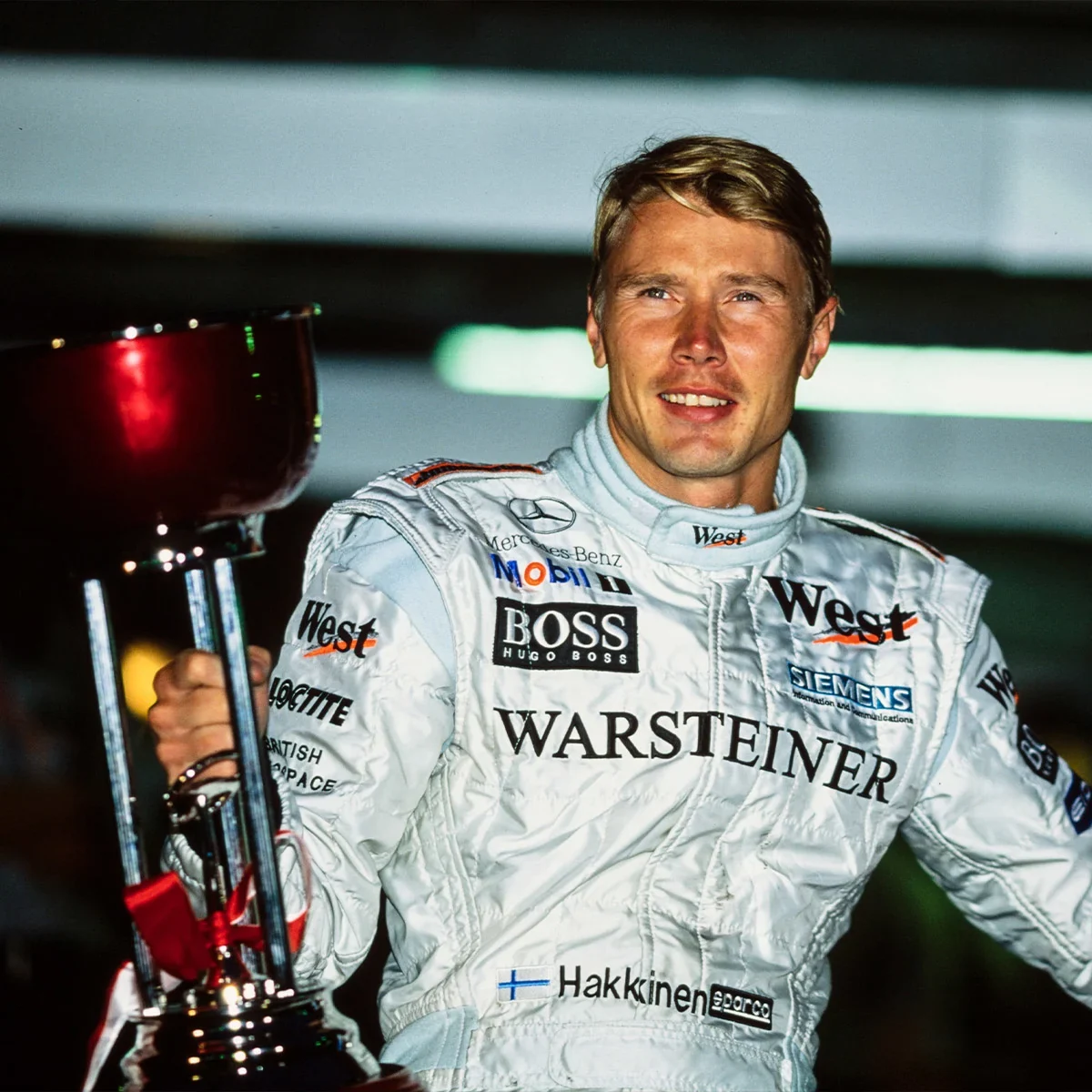 Photo: McLaren.com
How did an extra pedal give a photographer a major scoop?
In 1997, McLaren developed an additional driver-operated braking device that could brake a selected rear wheel to help the car turn. It was not an obvious external feature such as a wing, but could change the car's response in corners. Häkkinen tested it first, and Coulthard subsequently used it too.
Photographer Darren Heath noticed unusual braking behaviour. Later, when the car had retired and stopped beside the circuit, he photographed the footwell. Häkkinen had removed the steering wheel, allowing the camera to see the extra pedal. A technical secret hidden inside the cockpit became evidence the paddock could discuss and investigate.
The system was banned early in 1998. McLaren still won both titles that year, so the season's entire speed cannot be attributed to a device it could no longer use. The episode better illustrates something else: F1's development contest takes place not only in wind tunnels, but also beneath drivers' feet and in tiny clues observed by rivals and photographers.
Close to a title can still mean far from consistency
In the new century, Räikkönen became central to McLaren's title challenges. In 2003, he kept the championship undecided until the finale. The MP4-20 of 2005 also had tremendous speed, but speed and reliability did not coincide throughout the season. Between the fastest lap and a championship lie finishing races, grid position, pit execution and the pace of development.
The 2007 season taught a sharper lesson. The internal rivalry between Alonso and rookie Hamilton was exceptionally intense. They finished level on points, each one behind champion Räikkönen. At the same time, McLaren lost its constructors' points for the year over the case involving confidential Ferrari material. It cannot be told only as an entertaining clash between two uncompromising talents. It also exposed the influence of organization and governance on sporting results.
In 2008, Hamilton finally returned the drivers' title to Woking. He took the required position on the final lap in Brazil, and another razor-thin points margin decided the season. The drivers' crown did not bring a constructors' title with it, however. After the team trophy of 1998, McLaren still had a long wait before reaching the summit again in the name of the whole organization.
| Representative car | Key change | How to understand it |
|---|---|---|
| M23 | Continued development of a mature platform | The title-winning car of Fittipaldi and Hunt |
| MP4/1 | Carbon-fibre monocoque | Structural technology changes performance and protection |
| MP4/4 | Chassis combined with Honda turbo power | 15 wins in 16 rounds in 1988 |
| MP4-13 | Responding to the 1998 regulations | Häkkinen brings back the double |
| MP4-23 | The 2008 title contender | Hamilton's first drivers' championship |
| MCL38 / MCL39 | The result of another team rebuilding effort | Constructors' title in 2024, championship double in 2025 |
Why the second Honda partnership did not reproduce the first
McLaren went through 2013 without a podium. After restarting the Honda partnership in 2015, the difficulties deepened. Having two world champions, Alonso and Button, did not automatically mature a complex hybrid system. Power, energy recovery, cooling and reliability affected one another, with a compromise in one area spreading through the whole car.
The names from 1988 could be reunited, but that era's technical environment could not be recreated. By the end of 2017, McLaren decided to end the partnership and switched to Renault power for 2018. Changing engines did not instantly restore championship speed either. It helped the team look at itself again and recognize that not every problem belonged to its partner. One of F1's hardest diagnoses is separating the performance someone else has failed to supply from the areas a team must improve itself.
Sainz and Norris helped the team recover in 2019, and McLaren finished third among constructors in 2020. After returning to Mercedes power in 2021, Ricciardo won at Monza with Norris second, ending a wait for a race win dating to 2012. After years without victory, both sides of the garage could finally celebrate together. It was not yet proof that season-long title-winning capability had returned.
Returning to constructors' title contention required making such weekends a more regular competitive position rather than exceptions. Progress midway through 2023 mattered because it broadened the range of circuits where the team could run near the front and let both drivers contribute points consistently. For a team with several glorious pasts, the most persuasive sign of revival remained what its current car delivered at an increasing number of races.
Rebuilding is more than one engine change
Its repeated returns to the front all combined improvements in complete-car development and race execution.
Orange reaches the summit again, after 26 years between titles
The start of 2023 was difficult, but improvements during the season put Norris and new arrival Piastri on the podium frequently. In 2024, Norris took his first victory in Miami, and the MCL38 became capable of winning at more circuits. McLaren ultimately took its first constructors' championship since 1998, ending a 26-year interval.
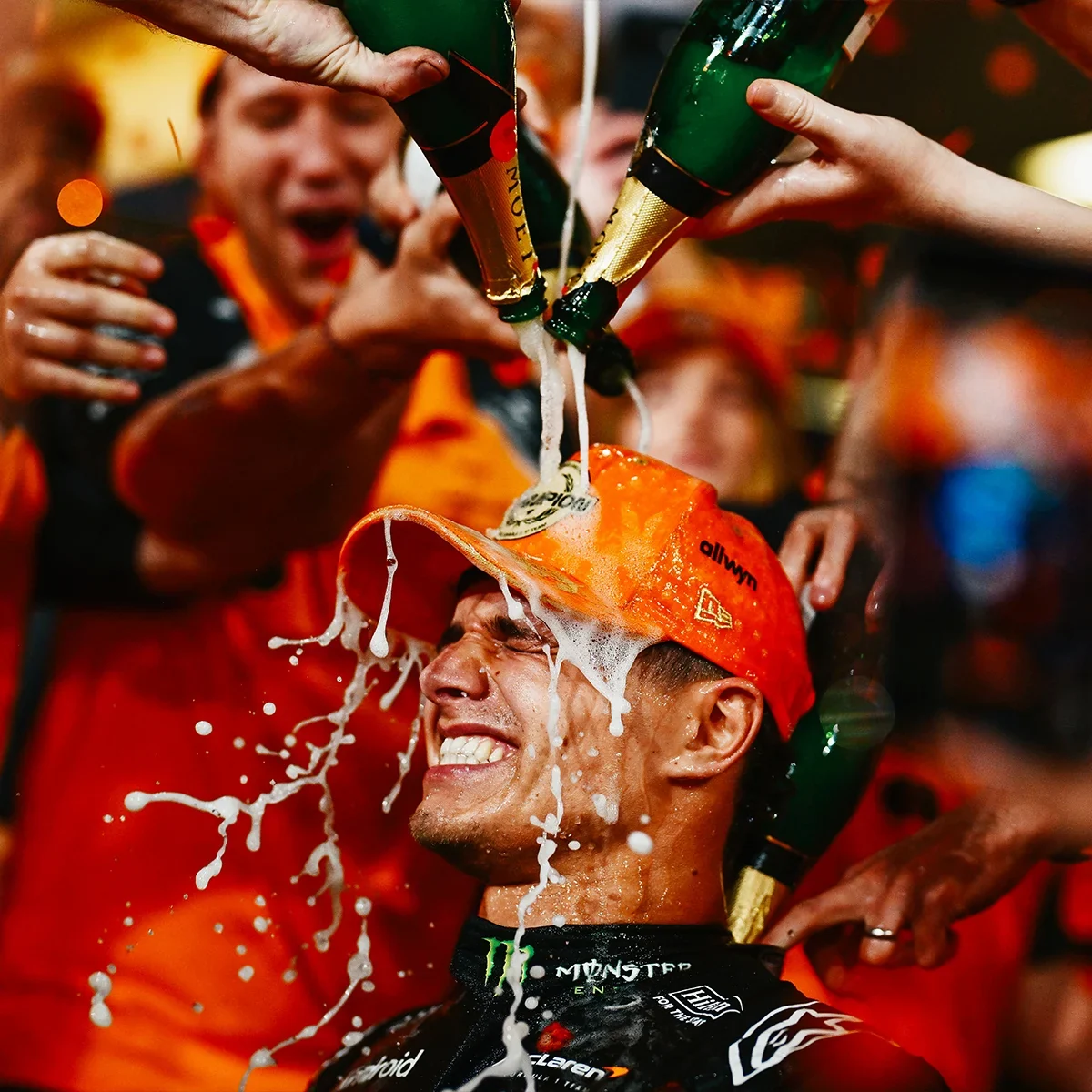 Photo: McLaren.com
Abu Dhabi 2024: After twenty-six years, one Sunday still had to be secured
McLaren arrived at the 2024 finale with the constructors' points advantage, and Norris and Piastri started from favourable positions. After the start, Piastri made contact with Verstappen and fell back. Both Ferraris kept advancing: Sainz finished second, while Leclerc charged from the rear to third. McLaren's existing lead did not make the championship automatic.
Norris had to keep the lead to the finish. Pit stops, tyre management and the remaining distance were still real tasks; any failure or mistake could alter the teams' points balance. He won, and Piastri recovered to tenth, ending McLaren's constructors' title wait stretching back to 1998. The two drivers experienced entirely different races that entered the same annual result.
Set this beside 1984 and 1988 and a recurring, never identical theme appears. McLaren must give excellent drivers the conditions to win, and those drivers must turn them into results under the greatest pressure. The twenty-six years were not an empty period without achievement. Yet regaining a trophy belonging to the entire team finally gave repeated construction and adjustment a clear destination.
2025: Orange becomes the colour through which a new generation knows McLaren
In 2025, the team retained its title and Norris also became drivers' world champion. McLaren's F1 constructors' total reached ten, and its drivers had won thirteen world titles while at the team. Those who lived through the red-and-white and Silver Arrow eras would recognize a familiar giant in those figures; new viewers might know it for the first time as the champion team of their own era.
Both views are valid. McLaren has not always been right or escaped costly judgements. Its value is that history serves more than remembrance, leaving experience for the next generation: its founder's practical spirit, Barnard's technical breakthrough, the integration of the Häkkinen era and later organizational rebuilding. Repeatedly, its history shows that winning takes a good car, while returning to winning takes a team willing to change.
View sources · 13 entries
- McLaren: Bruce McLaren
- McLaren: Eight world champions
- F1: McLaren's year-by-year history
- McLaren: Where its drivers' titles were decided
- McLaren: The 1981 MP4/1
- McLaren: The closest championship battles
- McLaren: Ten constructors' championships
- McLaren: The 1988 MP4/4
- McLaren: Championship honours
- F1 Hall of Fame: Ayrton Senna
- McLaren: MP4-13
- McLaren: How the extra brake pedal was discovered
- FIA: Abu Dhabi 2024 and McLaren's constructors' title
 Photo: F1.com
Senna: How can one qualifying lap be remembered for thirty years?
Continue reading · 14 minutes →