
Expand chapter contents · 10 chapters
- From São Paulo to Britain: Before he became Senna
- Monaco 1984: A second place that changed a career
- Three Lotus years: Speed gained a name and met its limits
- 1988: The first championship test in the strongest car
- Suzuka 1988: The title battle began with a stall
- The two Suzuka collisions cannot be told only as heroic episodes
- Brazil 1991: After conquering the world, finally winning at home
- Monaco 1992: A faster pursuer may still have no room to pass
- Donington 1993: What can you do without the best equipment?
- After 1994: Remember the driving, and the cost
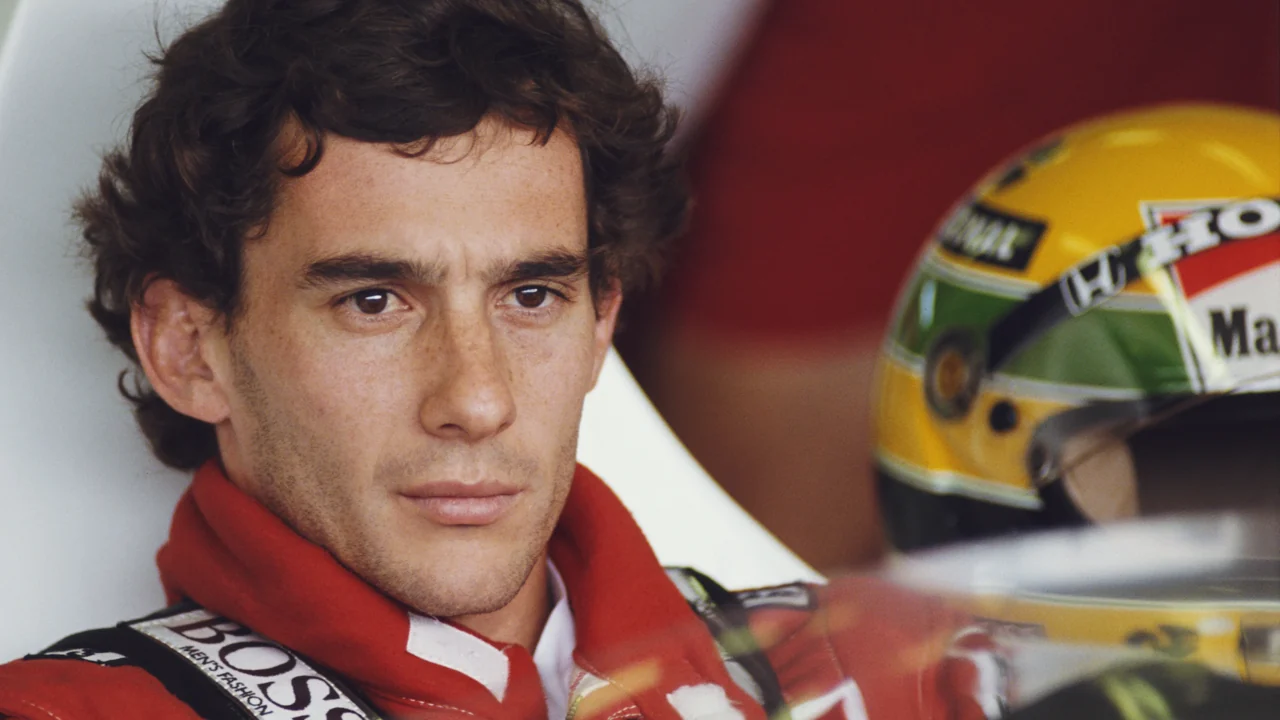
To understand Senna, start not necessarily with the accident or the championship trophies, but with how he completed a qualifying lap: finding somewhere to brake a little later on narrow streets, placing the car beside the barrier, then trying to go further on the next attempt. That driving, compressing total attention into tens of seconds, showed many people for the first time that qualifying itself could be a story worth watching repeatedly.
A legend cannot contain only its most beautiful side. Senna made mistakes, took dangerous and highly controversial decisions, and lost races with the best car. His life rewards a long reading precisely because extraordinary talent and an intense desire to win were never easily reconciled. Three titles are a starting point, far from the whole person.
From São Paulo to Britain: Before he became Senna
Ayrton Senna was born in São Paulo, Brazil, in 1960. He grew up in a well-off family and encountered karting early. Moving to Britain for single-seater racing was a deliberate choice: leaving a familiar life to invest time in an expensive career with no guarantees. Family means provided the opportunity, but track performance still decided whether he could stay.
Competition in Britain's junior formulae demanded more than driving fast. Different circuits, weather, and tiny changes in tyres and setup all required gradually accumulated judgement. By 1984, he had a Toleman F1 seat, but not a car able to contend for titles at will. A rookie's first task was to reveal his potential to the paddock through limited opportunities.
That made his early success especially conspicuous. Before viewers knew the person behind the yellow helmet, the car's positions began speaking for him. His speed is often described as talent. His development shows that talent also needed extensive practice, mechanical understanding and sustained commitment before it could be recognized at the world's highest level.
Monaco 1984: A second place that changed a career
At Monaco in 1984, rain made the streets between the barriers particularly hazardous. Starting farther back in the Toleman, Senna gradually closed on Prost. The race was stopped early because of the bad weather, leaving him second. It was not recorded as a victory, but was enough to make the whole paddock take the Brazilian rookie seriously.
Rain magnifies a driver's judgement of changing grip. The same line can become entirely different through standing water, oil and rubber, requiring continuous adjustments to throttle and brakes. A weaker car's deficit to a strong team may shrink, but does not automatically disappear. Senna impressed because he sustained high speed through change, not because rain removed the influence of car performance.
The race did not continue, so saying he certainly would have won remains a hypothetical. The firmer conclusion already carries enough weight: at a place exceptionally unforgiving and difficult to overtake on, he took a car normally away from the front into contention for victory. For a rookie, that is more persuasive than vague praise.
The event also intersected with an annual story beyond Senna's own. The shortened Monaco race awarded half points, giving winner Prost 4.5. He eventually lost the championship to Lauda by half a point. For Senna it was a day of recognition; for Prost, one piece of a season's points puzzle. The same race carries very different weight in different lives.
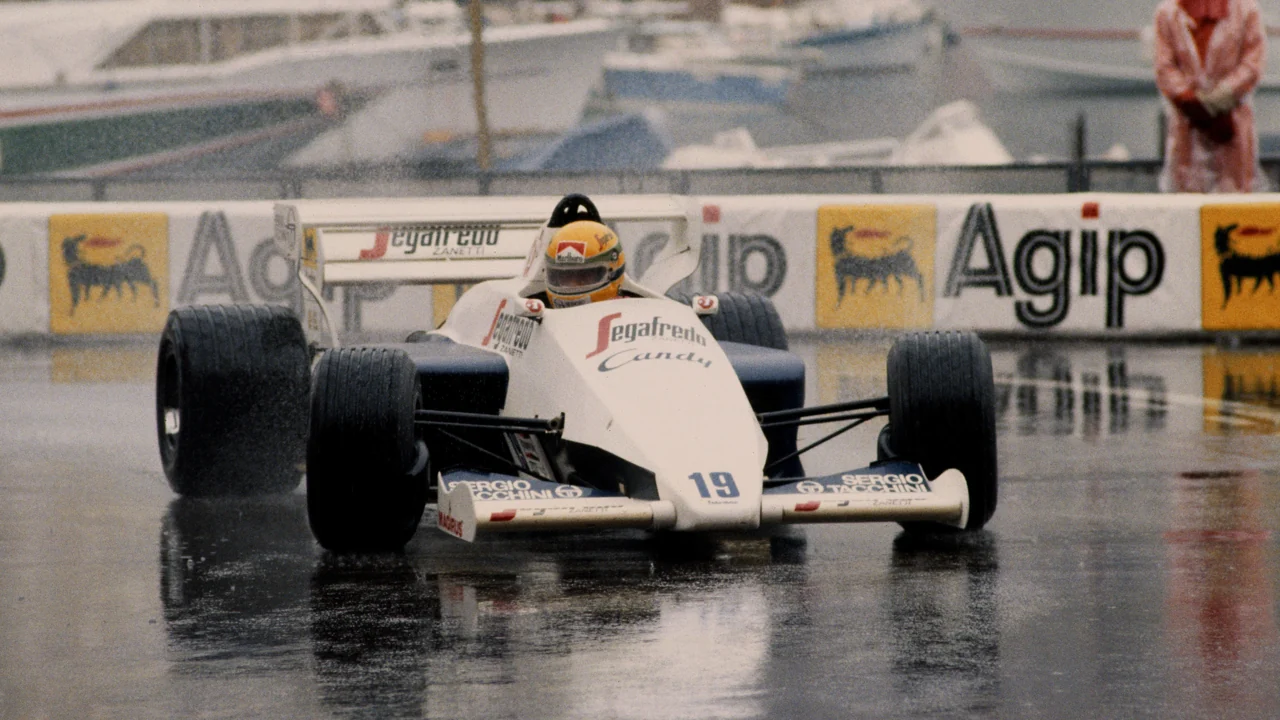 Photo: F1.com
Three Lotus years: Speed gained a name and met its limits
Senna moved to Lotus in 1985 and took his first F1 victory in the rain at Estoril in Portugal. Unlike the Monaco race that made his name, this time he controlled the contest all the way to the finish. The black-and-gold Lotus and yellow helmet became his most recognizable combination before he became world champion.
That day at Estoril, he started on pole, set the fastest lap and led throughout. Runner-up Alboreto finished over a minute behind; every other classified finisher was lapped. Pole came in the dry and the race in heavy rain, so the first win displayed his ability to use the same car in two different conditions.
Over three seasons, he won six races for Lotus and took 16 poles. The contrast is revealing: he could often put the car first over one lap, while a race demanded tyres, fuel, reliability and sustained pace together. A driver alone could not easily turn qualifying speed into a whole year's title challenge.
The Lotus years revealed his edge and explained why he kept seeking a stronger team. A title does not reward someone's most spectacular moments; it accumulates a season's results. Joining McLaren in 1988 gave him a car close to ideal, but also an opponent against whom equipment differences offered no explanation: team-mate Prost.
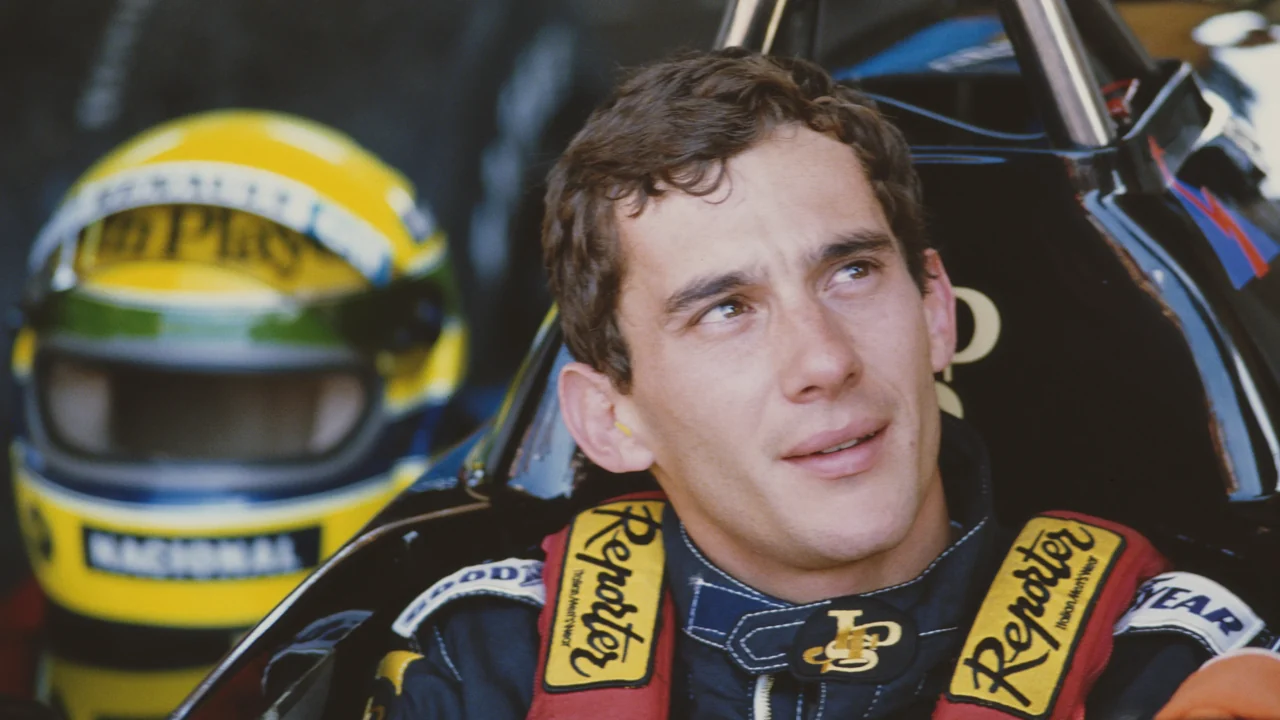 Photo: F1.com
1988: The first championship test in the strongest car
McLaren's MP4/4 won 15 of 16 races that year, making the contest between Senna and Prost central to the title. Senna won eight and Prost seven, leaving almost the entire season's race trophies in one garage.
The championship did not turn every scene from 1988 into a triumph. Senna was extraordinary in Monaco qualifying, but hit the barrier while leading the race, handing victory to Prost. The weekend preserved both sides of him: capable of pushing the limit a long way, yet also of losing the result when apparently in control.
Calling Senna a genius who drove by instinct misses another side. His attention to detail and repeated reflection on his driving also made his speed. A qualifying lap fascinates not only because it looks dangerous, but because all the preparation is delivered in a short time. The Monaco mistake reminds us that delivering one lap and managing an entire race are related but distinct skills.
Only the best eleven results counted under that year's rules. Senna's eight victories were crucial to his retained score, and he won the title by 90 points to 87. Adding every race's points without distinction yields another set of totals. The rules applied from the first round, so both drivers' season objectives must be understood within them.
That scoring system made the relationship between one win and several lower finishes different from today's. It does not diminish Prost's consistency, nor require Senna's title to be explained as luck meeting an algorithm. Eight wins, seven wins and the best eleven results were all real parts of that season. Understanding the rules explains why winning individual races mattered so much to the drivers.
| Championship season | Team / car | The focus of the title story |
|---|---|---|
| 1988 | McLaren / MP4/4 | Eight wins and a first title, beating his team-mate |
| 1990 | McLaren / MP4/5B | A title contest against Prost at Ferrari |
| 1991 | McLaren / MP4/6 | Retaining the title against a rising Williams |
Suzuka 1988: The title battle began with a stall
Senna took pole, but stalled the engine at the start. Prost surged forward and cars streamed past. Fortunately, the sloping grid let Senna restart as the car rolled ahead, so his race did not end at the first moment. By then he had fallen to fourteenth.
A sustained pursuit followed. He worked through the field, with rain changing conditions again, eventually caught Prost and passed him to win the race and his first world championship. The best starting position had vanished instantly, yet he recovered the title with his own driving.
Read alongside the Monaco crash, this gives a fuller picture of 1988. Senna could lose a win from a huge lead, but also reorganize a race from a difficulty of his own making. Eight victories were not eight trouble-free cruises; they included responses to situations after an error.
The two Suzuka collisions cannot be told only as heroic episodes
At the 1989 Japanese Grand Prix, Senna and Prost collided at Suzuka's chicane. Prost retired; Senna continued and crossed the line first, but was subsequently excluded, leaving Prost champion. In 1990, Prost was driving for Ferrari when they collided again at the same circuit's first corner and both retired. This time, the title went to Senna.
The sequences are often edited together as a drama of exchanges. Simply calling them revenge is insufficient for understanding motorsport. Contact brings risk to both drivers and may affect others. Sporting competition permits hard attack and defence, but a person's later legendary status does not exempt the limits of their behaviour from discussion.
The controversies also changed how people viewed Senna and Prost. Their supporters emphasize different details; a historical account must separate established events, participants' explanations and later judgements. Senna's titles did not disappear, and the controversy should not be erased either. A great driver's story can contain exceptional performance and must also contain choices that are hard to accept.
Brazil 1991: After conquering the world, finally winning at home
At the 1991 Brazilian Grand Prix, Senna finally won his home race for the first time. Gearbox trouble made the closing stages extraordinarily difficult, but he brought the car home. His podium emotion sharply contrasted with his usual intense, sometimes stern appearance. Even a world champion can have a particularly simple longing for one particular race.
He completed his third world title that same year. Williams was becoming more competitive, requiring him to seize opportunities throughout the season. Another Monaco win was only part of the process. He ultimately won six times on those streets, but each need not be called the same miracle. Sometimes it was single-lap speed, sometimes race control, sometimes resisting pressure from behind.
Brazil offers a more immediate entry to the story than a record. A spectator need not understand gearbox design to understand pursuing a goal through physical exhaustion, or the weight of a first reward in a familiar place. Racing history becomes more than a results table in these moments when a person meets an outcome.
Honda's retrospective describes the difficulty precisely. The gearbox problem spread until Senna had only sixth gear left. Slow corners normally require downshifts to retain suitable engine speed. With the choice of ratios gone, he had to change his rhythm and keep engine and car functioning as best he could. This was not a fully healthy championship car making a final sprint.
The Williams behind remained a threat, so he could not simply slow to the easiest pace. Preserving the machinery and protecting position became simultaneous tasks. That explains the difficulty better than an abstract phrase about persevering through damage. The car still moved, but no longer responded as he was used to, requiring him to handle the change again at every corner.
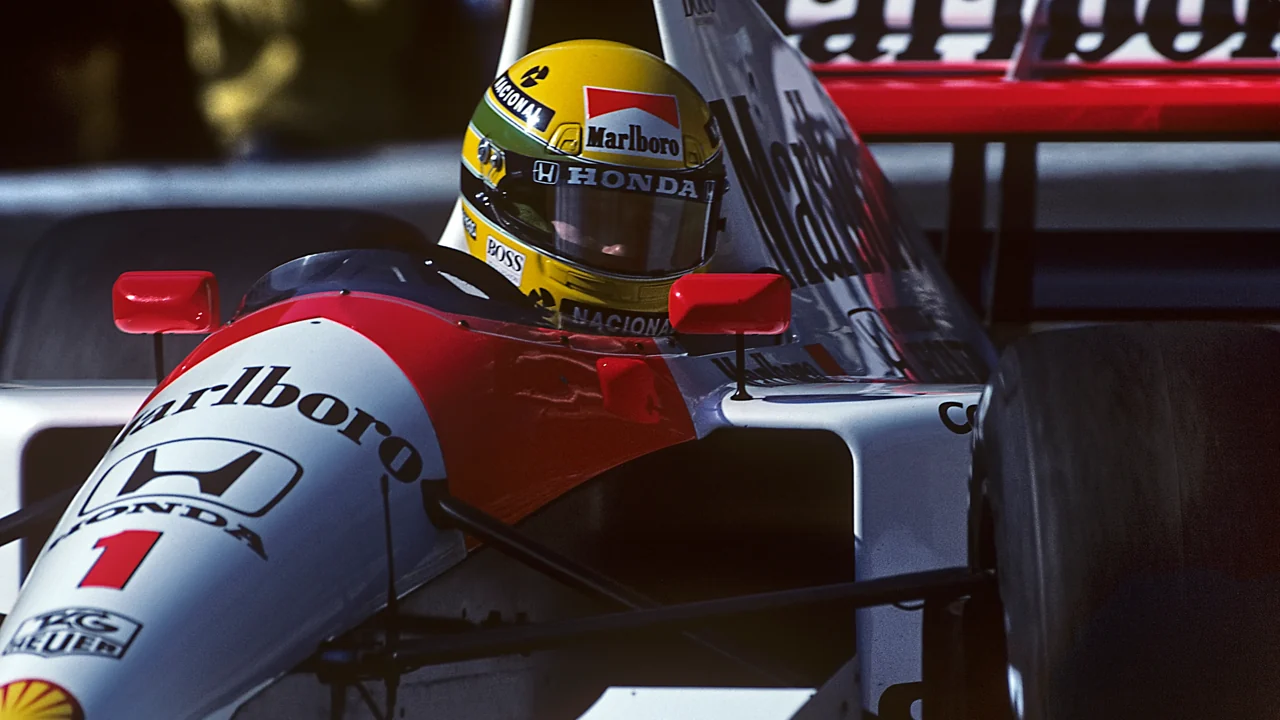 Photo: F1.com
Monaco 1992: A faster pursuer may still have no room to pass
Mansell and Williams began 1992 with consecutive wins, and Monaco followed the familiar direction for much of the race. Late on, Mansell pitted and Senna took the lead. The Williams, on fresh tyres, quickly caught him. With three laps left, they were already extremely close.
Senna's task was not the fastest lap, but keeping every possible passing opportunity under control. Monaco's narrow streets make entry lines and exit acceleration decisive in whether the following car can draw alongside. Mansell could catch him faster, but could not guarantee a pass in the few remaining laps. Just 0.215 seconds separated them at the finish, giving Senna his first win of the season.
It was his fifth Monaco win, equalling Graham Hill's total there. The task was entirely different from 1984: as a youngster he chased from behind; now he had to defend an acquired position. The contrast is more helpful than simply calling him a wet-weather genius or king of the streets. Different situations demand different judgements, not repeated demonstrations of one kind of speed.
Donington 1993: What can you do without the best equipment?
In 1993, Honda had ended its then-current F1 programme and McLaren switched to Ford power. Williams had greater overall competitiveness. The European Grand Prix at Donington brought changeable weather, and Senna went from fifth after the first corner to the lead on the opening lap. The footage became one of F1's most replayed sequences.
Its brilliance is not merely the number of cars passed, but the conditions of those passes. Grip was uneven, and the driver had to decide which side allowed earlier acceleration and which braking attempt was worthwhile. The first lap displayed those judgements in quick succession. The rest continued to test tyre choices and pace. Remembering only that minute underestimates the difficulty of keeping the lead to the finish.
Senna won five races that season, still insufficient to stop Prost and Williams taking the championships. The result makes his final McLaren year more compelling. Without the technical advantage, a driver can transform some weekends, but cannot rewrite the whole competitive environment alone. Individual ability sometimes appears most clearly within limitations.
The five wins in 1993 also included Brazil, Monaco, and Japan and Australia at the season's end. Donington is ideal for watching overtakes in quick succession; the whole season shows another consistency. Even with the annual balance against him, Senna kept finding usable opportunities in different conditions. Victory at the Australian finale became his forty-first and last career win.
Winning his McLaren farewell did not mean he was ready to retire. He was heading to the most competitive team of the time, Williams, to pursue another title. The later tragedy should not rewrite the situation at the end of 1993. Then, Senna was still making the choices of a championship contender. To him, the next step was a professional challenge, not an ending already written.
After 1994: Remember the driving, and the cost
Senna joined Williams in 1994. On May 1, he crashed and died at the San Marino Grand Prix at Imola. The previous day, Roland Ratzenberger had also died in a qualifying accident. The weekend's grief extended far beyond a sport losing a star and drove the paddock to keep confronting its responsibility for racing safety.
Looking back, it is easy to let the final outcome cover an entire life. The opposite extreme keeps only a deified speed. A more valuable reading restores the fragments that do not fit comfortably together: precision in rain, qualifying concentration, joy at a home victory, fierce rivalry with Prost and controversy when sporting boundaries were crossed.
What he left later audiences is more than an answer to who was greatest. Monaco 1984, Portugal 1985, Brazil 1991 and Donington 1993 deserve separate viewing, followed by the same question: which judgements did the driver get right in this race? Once we can read different choices in the images, Senna becomes more than a three-time champion in a ranking. He becomes a vivid route to understanding racing.
View sources · 13 entries
- F1: Introducing Ayrton Senna and his career statistics
- F1: Ten defining Senna moments
- F1: Senna archive images
- McLaren: The closest championship battles
- F1 Hall of Fame: Ayrton Senna
- F1: Revisiting Senna's first win in 1985
- F1: Final drivers' standings in 1988
- McLaren: The 1988 MP4/4
- F1: Senna's title-winning recovery after stalling at Suzuka in 1988
- Honda: Senna's Brazilian home victory after eight years of waiting
- Honda: The closing duel at Monaco in 1992
- Honda: Senna's career and championship seasons
- McLaren: Eight world champions
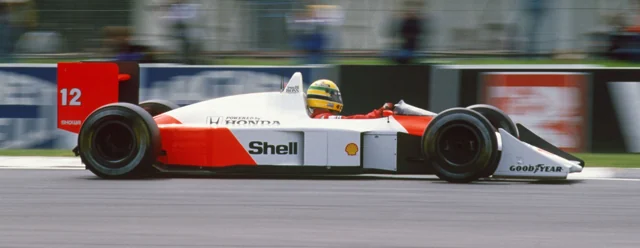 Photo: McLaren.com
McLaren: From a small workshop to repeated returns to the summit
Continue reading · 15 minutes →