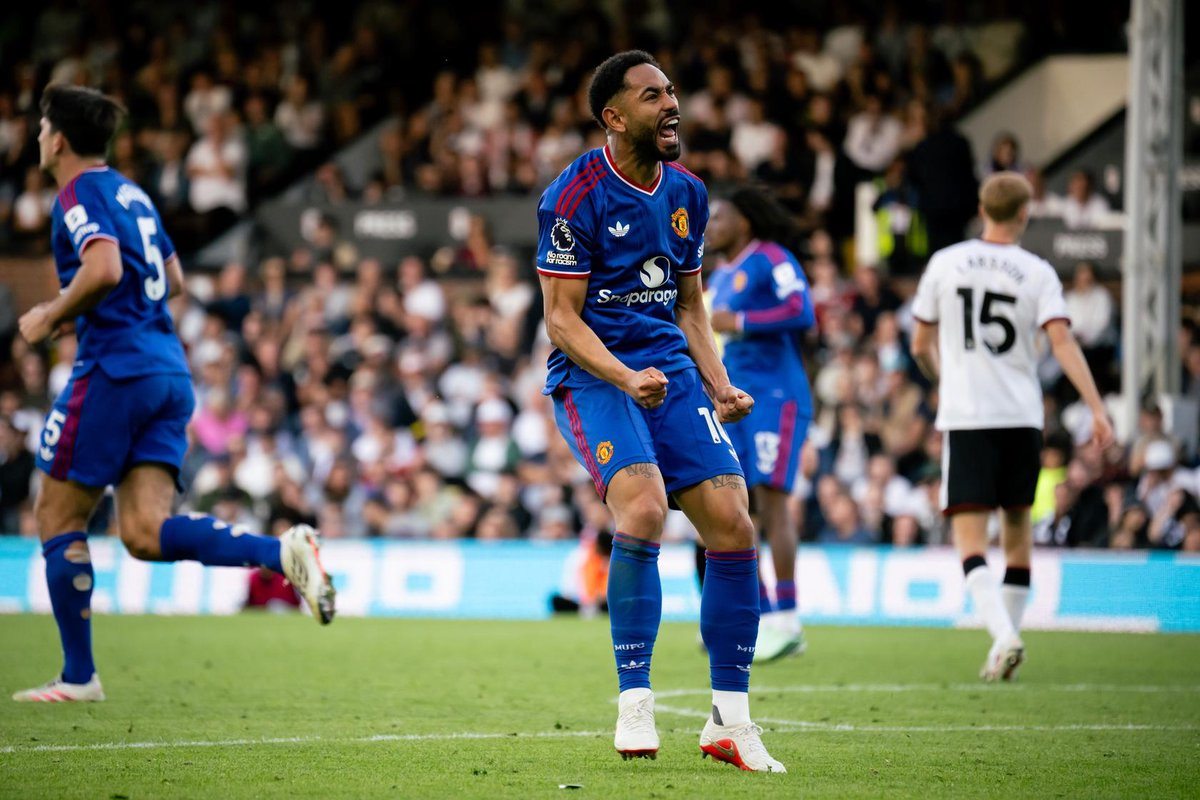
Manchester United drew 1–1 away to Fulham in the Premier League on 20 September thanks to Cunha’s 89th-minute goal. The late equaliser preserved a point, but the post-match debate centred on the intensity of the preceding performance. In his Sky Sports commentary, Gary Neville criticised United’s movement without the ball and argued that manager Michael Carrick could not keep defending the players.
United’s official report recorded chances for both sides in the first half, with Bruno Fernandes and Cunha each hitting the woodwork. In the 63rd minute, Bassey’s shot went via Lammens onto Lisandro Martinez for an own goal. Cunha then struck from distance in the 89th minute, with the ball deflecting off Affengruber into the net. Recovering the score did not erase the situation the team had faced while behind.
Neville and Cunha both discuss commitment
Neville was particularly unhappy with the start of the second half. He said United players were often walking while Fulham had possession, lacking alertness and timely adjustments to their spacing. He also felt Mbeumo and Rashford were too high and wide rather than narrowing towards the centre, and that the defensive structure needed rebalancing. Those were assessments of off-ball performance, not simply criticism of the single defensive sequence that produced the own goal.
Scorer Cunha also acknowledged to Sky Sports that Fulham had put in more energy and that United could not accept that gap. He felt the team improved after conceding and showed character, but that the response should have been present from the start. He did not use his equaliser as proof that the overall performance had been sufficient.
Carrick emphasises first-half control and chances
Carrick disagreed with descriptions of the team as passive. He told Sky Sports that United had controlled substantial parts of the first half and played good football. Fulham’s goal involved factors such as deflections, and no team could completely dominate an entire Premier League match. He was highlighting the performance already produced and the uncertainty of the game, a different emphasis from Neville and Cunha.
INKA SPORTS analysis: why a late equaliser did not end the criticism
Understanding the debate requires identifying the part of the game each person addressed. Carrick emphasised first-half control and attacking chances; Neville focused on movement without the ball and the start of the second half; Cunha compared the response before and after conceding. A team can create threats while lacking sustained off-ball effort in another phase. Hitting the woodwork in the first half therefore does not directly answer criticism of insufficient movement in the second.
Cunha both saved a point and acknowledged that the team should have raised its commitment earlier, clarifying the distinction between result and process. His 89th-minute goal answered whether United could recover the score, but not why improvement followed only after falling behind. The reports and attributed feedback support discussing consistency as an issue, but offer no measured running intensity. Nor can an own goal or a deflected goal alone establish whether players worked hard enough.
Summary
United’s point and criticism of the performance are not contradictory. The attacking chances highlighted by Carrick existed, while Neville and Cunha’s concerns about off-ball effort and improvement only after conceding each had a defined scope. The late equaliser eased the pressure of the scoreline, but responding to the debate requires extending the reaction shown while behind into more phases of matches.
Result and goals
| Team | Score | Goals |
|---|---|---|
| Fulham | 1 | Lisandro Martinez (own goal, 63 minutes) |
| Manchester United | 1 | Matheus Cunha (89 minutes) |