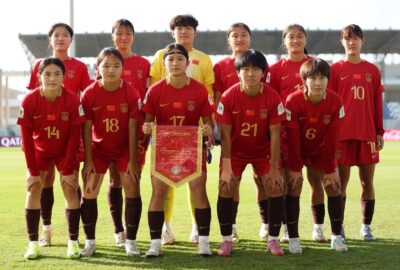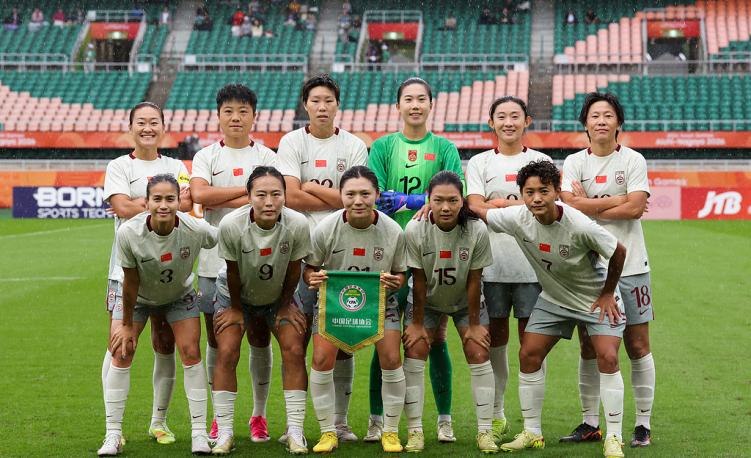
China’s women’s team will contest the Aichi–Nagoya Asian Games bronze-medal match at 14:00 China Standard Time (UTC+8) on 2 October. According to the Chinese Football Association’s match report published on 29 September, China lost 2-0 to DPR Korea at Ogasayama Sports Park Stadium in Japan’s Shizuoka Prefecture, missing out on the final. The semi-final leaves two preparation priorities: finishing chances already being created and clearing danger in front of goal.
The semi-final: two second-half goals conceded and an equalising chance missed
Wang Shuang and Shao Ziqin both started, with captain Wu Haiyan leading the defence. DPR Korea hit the woodwork in the third minute. Before half-time, China threatened through Wang’s cross from the left and Shao’s header, but the ball went over the bar. The teams reached the interval at 0-0.
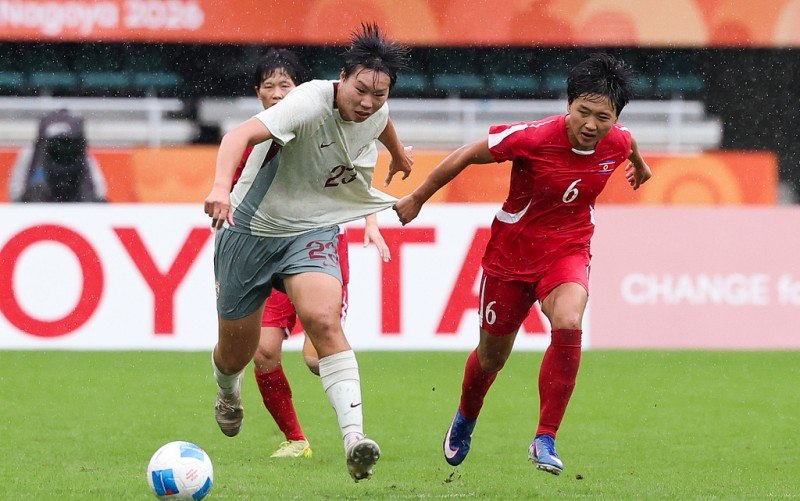
In the 48th minute, Wang delivered a set piece to the far post, where Zhang Chengxue arrived to head at goal, only for the goalkeeper to save. The CFA report specifically noted that DPR Korea’s offside trap failed in this move. In the 53rd minute, a DPR Korea attacking set piece was sent into the goalmouth; amid the scramble, the ball touched a Chinese player and went in off the post, leaving China 0-1 down.
Xie Zongmei and Yuan Cong came on as substitutes. In the 73rd minute, Shao broke down the left to the byline and crossed for Yuan to shoot from the centre, but a defender blocked the attempt. China was still creating an opportunity to equalise while trailing by one goal.
In the 79th minute, DPR Korea gained possession inside the penalty area and scored, putting China 0-2 behind. China then committed everyone to attack but could not find a goal.
Key sequences compared: chance creation, outcome in front of goal and score
| Time | Attacking sequence | Outcome in front of goal | China’s score |
|---|---|---|---|
| 48th minute | Wang Shuang’s set piece to the far post; Zhang Chengxue arrives to head | Saved by DPR Korea’s goalkeeper | 0-0 |
| 53rd minute | DPR Korea attacking set piece delivered into the goalmouth | Touches a Chinese player in the scramble and goes in off the post | 0-1 |
| 73rd minute | Shao Ziqin reaches the byline on the left and crosses; Yuan Cong shoots centrally | Blocked by a DPR Korea player | 0-1 |
| 79th minute | DPR Korea gains possession in the penalty area and shoots | Goal | 0-2 |
INKA SPORTS analysis: where the chances came from and how the deficit grew
Far-post header and central shot: how the final action was stopped
In the 48th minute, Wang delivered the set piece to the far post, the area around the post farther from the side of the delivery, for Zhang to arrive and head at goal. The failed offside trap allowed her to meet the ball, but the goalkeeper ultimately saved the attempt. In the 73rd minute, China again worked the ball to the centre, this time from the left byline, only for Yuan’s shot to be blocked by a defender. Both chances show that the delivery had found a player in front of goal, but the goalkeeper and a defender respectively prevented a goal. The attacking review therefore centres on the final touch: making the far-post header threatening and dealing with the block after receiving centrally.
Contact with the ball did not end the danger
For the 53rd-minute goal, the threat did not disappear when the ball touched a Chinese player. DPR Korea’s set piece entered the goalmouth, touched a Chinese player in the scramble and went in off the post, showing that the delivery continued to threaten the goal. This sequence requires a review of successive actions: contesting the ball as it enters the penalty area, then controlling or clearing it after contact, until it has left the dangerous area in front of goal.
A chance at one goal down; the second concession changed the task
In the 73rd minute, China trailed by only one goal, so Yuan’s shot could still have levelled the match. Six minutes later, DPR Korea gained possession in the area and scored to extend the gap to two, after which China committed everyone forward. The tasks differed between those phases: at one goal down, China needed to seek an equaliser while protecting the penalty area; at two goals down, it needed two goals to recover, and the CFA recorded the subsequent all-out attack. Preparation for the bronze-medal game should retain the effective wide progression that created the equalising opportunity while addressing opponents’ ability to receive and shoot inside the area during the pursuit of a goal.
Conclusion
The semi-final leaves two specific sets of tasks for the bronze-medal match. In attack, both the far-post header and the cross from the left produced shots, so preparation can focus on the final touch and handling defensive blocks. Defensively, China needs to manage the scramble after set pieces reach the goalmouth and restrict opponents’ ability to receive and shoot inside the area while chasing a one-goal deficit. Maintaining the established attacking routes and protecting the goalmouth need to be addressed together.