
Expand chapter list · 19 sections
- Key milestones
- 1. He could have chosen another sport
- 2. Spanish titles: a passport and a label
- 3. Toyota needed a driver; he needed a bigger stage
- 4. Before the jumps at the 1000 Lakes, he had to trust the unseen road
- 5. Four wins in 1990, four different problems solved
- 6. More wins in 1991, but no title defense
- 7. The other half of a title, in the pace notes
- 8. In 1993, the reigning champion had a car that no longer held the advantage
- 9. McRae: teammate and final rival
- 10. A planned Toyota return became a move to Ford
- 11. The final few hundred meters of 1998
- 12. No third title, but he still helped his team become champion
- 13. Citroën: the veteran champion and a new generation share a garage
- 14. The last of twenty-six wins, in Argentina
- 15. From pace notes and jumps to dunes: the veteran becomes a newcomer again
- 16. Four manufacturers, four different lessons
- 17. Beyond those final few hundred meters, the story continues
- Sainz's titles and career record
Key milestones
Finland's 1000 Lakes Rally, 1990. A driver from Madrid won in a Toyota Celica at an event long dominated by northern Europeans. When Carlos Sainz and Luis Moya stood on the top step of the podium, they changed more than one rally's list of winners.
In rallying at the time, the division was deeply entrenched: southern Europeans were asphalt specialists, northern Europeans gravel experts. Sainz, too, was seen as a tarmac specialist when he reached the world stage. But he wanted to fight for an entire world championship, not just the few events allocated to him on the calendar.
The subject of this story is the father of the later Formula 1 driver Carlos Sainz. He won two WRC drivers' world titles and twenty-six rallies, then added four Dakar car-category victories. Yet a story told only through trophies would miss the most compelling parts of his career: repeatedly learning roads outside his original strengths, and seeking the next race even as a third WRC title slipped away again and again.
1. He could have chosen another sport
Sainz was born in Madrid on April 12, 1962. As a boy he played several sports, including football, boxing and squash, becoming Spanish squash champion at sixteen. His athletic ability was evident before he entered motorsport; rallying was not a career mapped out entirely from childhood.
In a later DirtFish interview, he recalled discovering rallying through his family and the limited television coverage available. Rally footage was scarce in Spain then; he even bought a reel of Super 8 film to watch repeatedly. Unlike today, when onboard footage is instantly accessible, seeing how world-class drivers drove was itself something that required an opportunity.
He began competing officially in 1980, driving a Renault 5 in Madrid's Shalymar Rally. His route then passed through regional events, one-make competitions and the national championship. He also studied law before ultimately devoting his energy to racing, with support from family and those around him providing an important foundation for his early career.
Playing different sports could not directly teach him how to brake on gravel, but his choice was becoming clear: he wanted to spend his time driving and was willing to build results from small events. People would later call him “El Matador”; his working life began with a small car, a limited schedule and a great deal of practice.
2. Spanish titles: a passport and a label
In 1987 and 1988, Sainz won consecutive Spanish Rally Championship titles in a Ford Sierra. Familiar asphalt roads helped him build his record and made it easier for international teams to see which events might suit him.
For a team seeking an asphalt driver, it was an attractive résumé; for someone aspiring to the world title, it could become a restriction. The WRC crossed different countries and surfaces. A driver entering only a few suitable events would struggle to gain the experience needed for a full championship challenge.
Sainz made his WRC debut in Portugal in 1987. As he recalled in his DirtFish interview, he set the fastest time on his very first stage and won another that day, only to retire relatively early. The debut already contained both sides of his early career: speed sufficient to attract attention, but not yet the conditions needed to complete a rally.
Britain's RAC Rally that year was a different experience. He faced snow in a rear-wheel-drive car, with less than ideal tires. Speed on familiar roads had to be rebuilt on an unfamiliar surface. Sainz called it a year of learning: more important than any single impressive stage was his first exposure to the full calendar he would need to master.
3. Toyota needed a driver; he needed a bigger stage
In the rain and fog of Sanremo in 1988, Sainz showed enough competitiveness to catch the attention of Toyota boss Ove Andersson. In 1989 he joined Toyota Team Europe, driving the four-wheel-drive Celica and gaining his place within a works team.
In later interviews he described Andersson as a second father. That assessment had a specific professional basis: Andersson gave him a car and a program, and allowed him to keep seeking proof of his ability on different surfaces. What Sainz needed was the chance to broaden his skills, rather than permanent assignment to the few rallies he already knew best.
The four-wheel-drive Celica offered new tools and demanded new learning. Compared with his previous rear-wheel-drive Ford, its responses under acceleration, through corners and at the limit of grip were different. He had to relearn the relationship between throttle response, body movement and the information coming from the road.
The year began poorly, with several retirements, but Sainz gradually reached the podium. Third in Finland, third in Sanremo and second in Britain lifted him to eighth for the season. Finland was the most significant result: he was already approaching victory on fast gravel, and the boundaries of the supposed asphalt specialist were beginning to shift.
4. Before the jumps at the 1000 Lakes, he had to trust the unseen road
Finland's challenge was not simply its high average speed. The road rose and fell continuously, corners could be hidden beyond crests, and an airborne car could not change direction immediately as it could on the ground. Direction and speed at takeoff determined how many options remained on landing.
That made the co-driver's pace notes especially important. The driver saw the stretch immediately ahead; Moya's calls brought the next crest, corner and hazard into the driving process in advance. Information delivered too late left no time to respond; differences in understanding could produce the wrong action even when every word was heard clearly.
Sainz had led the 1000 Lakes in 1989, then rolled while chasing, yet still finished third. Returning in 1990, he turned that near miss into victory and became the event's first winner from outside northern Europe. Finland offered stronger proof than an ordinary rally win: he had won where others least expected him to hold an advantage.
Sainz recalled that an accident before the rally left him competing in pain and even questioning whether he could start. That detail comes from his account many years later. What the result establishes is that he completed every stage and broke a long-standing geographical barrier. His rivals now had to work out how to beat him, rather than simply decide which roads were not his territory.
5. Four wins in 1990, four different problems solved
Finland was not Sainz's first victory of 1990. He had already taken his maiden WRC win at Greece's Acropolis Rally and won in New Zealand. He added Britain's RAC at the end of the season. Together, those four events formed an important foundation for his first world title.
Greece presented heat, rocks and the need for mechanical endurance; New Zealand's gravel roads demanded flowing corner sequences; Finland tested judgment over fast crests; Britain required a sustained rhythm through complex forest stages. Those results could not be explained by applying the same driving inputs everywhere.
He and Moya secured the championship with third in Sanremo, then still went on to win in Britain. Toyota had its first WRC drivers' world champion, and Spain its first holder of the title. For Sainz, it also meant something more personal and specific: he had finally proved that asking to contest a full season was not asking for something beyond his ability.
He also took important results in Monte Carlo, Corsica, Argentina and Australia that year. Wins were the most visible points in the title campaign; the other weekends connected those points into a continuous line. Sainz's versatility lay both in where he could win and in what he could bring home when he did not.
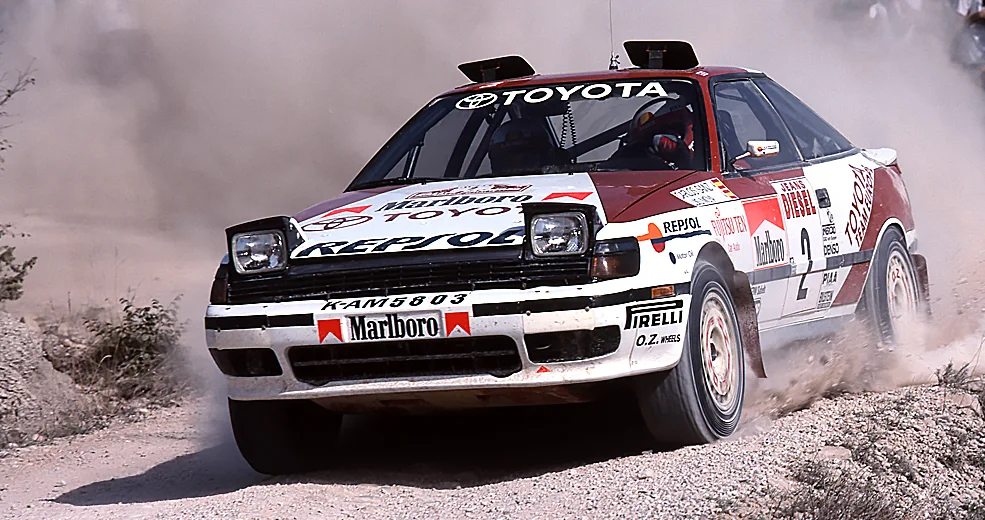 Photo: toyotagazooracing.com
6. More wins in 1991, but no title defense
In 1991 Sainz took five wins, one more than in his first title season, yet the championship went to Kankkunen. Victories in Monte Carlo, Portugal, Corsica, New Zealand and Argentina demonstrated his adaptability across surfaces, while retirements and lost points also shaped the final outcome.
In racing, “stronger than last year” cannot always be proved by one number. More wins can coexist with more retirements, while a rival may complete the season with a different distribution of points. The races a driver has won do not disappear, but photographs of victory do not erase the races left unfinished either.
In 1992 Sainz moved to the new Celica ST185. Wins on the Safari and in New Zealand, Catalunya and Britain made him world champion again. The two titles emerged from different season trajectories, transforming him from a suddenly successful newcomer into an established contender capable of repeating a championship challenge.
The win at the British finale mattered especially: it sealed his second title. Britain would later leave him with deeply painful memories, but it was initially a place of repeated success. A venue's meaning in a driver's career can be completely rewritten by another race many years later.
7. The other half of a title, in the pace notes
Moya began partnering Sainz in 1988, and together they won the drivers' and co-drivers' titles in 1990 and 1992. Finland's jumps over crests showed the value of pace notes; their long partnership allowed judgments made on reconnaissance to be carried out accurately in competition.
A co-driver's duties also covered time controls, the itinerary and regulations. An advantage earned on a stage could be lost to a penalty for reporting at the wrong time; after a mechanical problem, both occupants had to decide whether repairs and continuation were possible. Separate drivers' and co-drivers' titles recognize two jobs inside the car that cannot replace one another.
8. In 1993, the reigning champion had a car that no longer held the advantage
After his second title, Sainz left Toyota. His official website records that changes in sponsor Repsol's relationship with Toyota prompted his move to Jolly Club, which ran Lancia cars. A champion's next destination was not decided solely by which car was fastest.
Lancia had a glorious history, but its 1993 program no longer matched the earlier works operation's sustained dominance. Sainz did not win a rally, and his season deteriorated markedly. Second in Greece was one of the few highlights; a championship title could not automatically restore an old car's competitive advantage.
Later results make it easy to describe that move as an obvious mistake, but those making the decision had to consider contracts, sponsorship and available seats together. The unavoidable reality was that a driver could retain his skills while a car's development and resources still changed what he could achieve.
In 1994 he joined Prodrive-run Subaru and resumed his title challenge. A win in Greece and several podiums brought him second in the championship. Changing cars and teams had not cost Sainz his competitiveness; the new environment quickly put his speed back into the title fight.
9. McRae: teammate and final rival
At Subaru, Sainz met Colin McRae. Their public images were sharply different: Sainz was often seen as a meticulous champion skilled in car development, while McRae drew attention for his fierce attacks and distinctive driving. Yet personality labels alone could not explain the real contest. Both had world-championship speed.
In 1995 Sainz won Monte Carlo and Portugal but missed New Zealand with a shoulder injury. In Catalunya, the two Subaru drivers fought for victory as the manufacturers' points battle also reached a crucial stage. Seeking to protect its leading cars, the team ordered them to hold position after the penultimate day, when Sainz led by seven seconds.
McRae did not immediately accept the instruction. On the final day his stage times took him ahead of Sainz, but he eventually accepted a time penalty at the team's request and dropped to second. Sainz won his home rally, sending both men to the British finale level on points. The victory was deeply controversial and exposed the conflict between team interests and a driver's championship ambitions.
DirtFish's retrospective preserves Sainz's statement at the time that he had not asked to win that way. McRae ultimately won in Britain and took the title, with Sainz second in both the rally and championship. A single instruction had not resolved the teammates' conflict; the season still found its final answer on the stages.
10. A planned Toyota return became a move to Ford
Sainz had intended to return to Toyota in 1996, but TTE's ban for a technical infringement made that impossible. Instead he signed a two-year deal with Ford and continued in the WRC with the Escort. Someone else's technical decision had altered his career path.
He won for Ford in Indonesia in 1996, then added Greece and Indonesia in 1997. Third in the championship in both years kept him near the front through changing circumstances. His title count had not risen, but his capacity to win had not disappeared.
New World Rally Car regulations arrived in 1997, granting greater development freedom and changing the machinery available to drivers. Sainz had to keep adapting to different drivetrains, body responses and setup options. He could not simply remain within the successful experience of his 1990 Celica and wait for everyone else to return to the same conditions.
In 1998 he finally returned to Toyota, now driving the more compact Corolla WRC. An immediate win at the Monte Carlo opener seemed the perfect beginning to the reunion. Several second places and a victory in New Zealand then brought him within reach of the world title again.
11. The final few hundred meters of 1998
At the British finale, Mäkinen retired and Sainz gained the chance to take a third title. He did not need to win the rally, only to hold a sufficiently high position. It brought a different pressure from chasing a rival flat out: every extra risk could seem unnecessary, yet the rally still demanded concentration and sufficient speed.
On the final stage, the Corolla's engine failed. Only a few hundred meters remained to the finish, but the car could go no farther. Moya climbed out and hurled his helmet at the rear window. The distance between Sainz and a third world title was frozen on that stretch of forest road.
On television, the two men emerged from the cockpit. They had done almost all the work of a full season but could not drive the car across the final finish line. Every calculation of points and positions had become irrelevant. Mäkinen was champion, and Sainz was runner-up once again.
That defeat later became almost a defining label. To viewers unfamiliar with his earlier years, Sainz could be, first of all, “the man whose car broke down before the finish.” Yet the same driver had already won in Finland, Greece and Britain, and claimed two world titles. His career had reason to remember that lost championship, and reason to extend beyond it.
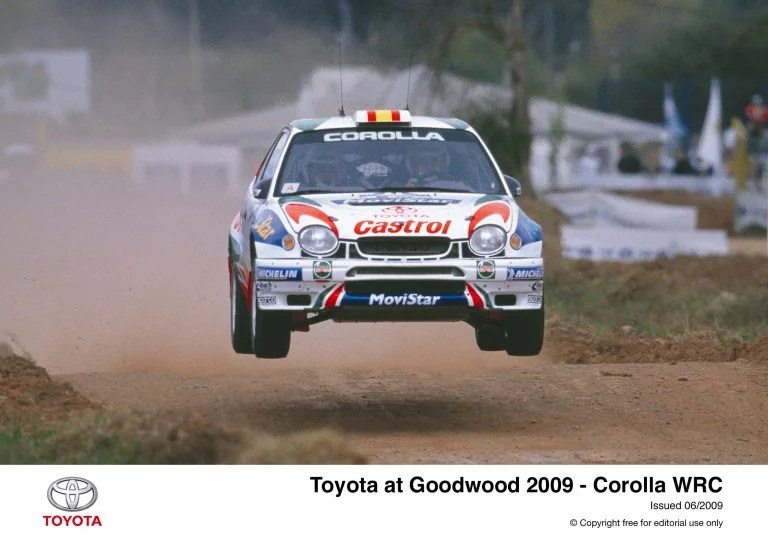 Photo: media.toyota.co.uk
12. No third title, but he still helped his team become champion
Sainz won no rallies in 1999, but repeated podium finishes made a major contribution to Toyota's manufacturers' title. Second places in Sweden, Portugal, Greece and Australia, plus thirds on the Safari and in Corsica, Finland and China, created a steady flow of points.
Even after a personal ambition is frustrated, a driver can remain crucial to the team's task. Toyota won only one rally that year, Auriol's victory in China; more often, its title depended on keeping both cars near the front. Sainz's value did not become zero because his own win tally was zero.
Toyota then withdrew from works WRC competition. In 2000 he returned to Ford, driving the Focus and again sharing a team with McRae. Two men who had once fought directly for the title now had to work together for another team. Relationships in racing keep changing with contracts, cars and objectives.
Sainz won in Cyprus in 2000 and Argentina in 2002, finishing third in the championship in both seasons. As he entered his forties, he could still win at the highest level. Any claim that “his era was over” first had to contend with results that were still there in the standings.
13. Citroën: the veteran champion and a new generation share a garage
In 2003 Sainz joined Citroën in a formidable lineup with McRae and Sébastien Loeb. Marc Martí was the co-driver beside him in the Xsara WRC; his partnership with Moya had ended. His subsequent WRC results belonged to this new pairing.
Loeb was developing the abilities that would later reshape the sport, while Sainz brought extensive experience across teams and surfaces. Citroën needed both a future centerpiece and someone who could immediately challenge for wins and score consistently in a new program. Big names could draw attention to the lineup; results still depended on where each driver brought his car.
Sainz won in Turkey and took important results in Argentina, Greece and Corsica, among others. He remained in world-title contention until the British finale. Eleven years after his second championship, he was not competing merely as an experienced supporting figure.
Britain again ended the challenge. He went off the road and retired, finishing the season third as Petter Solberg took the drivers' title and Citroën the manufacturers' crown. The wait for Sainz's third title remained unfulfilled, but his very presence in the fight showed that changes of car and era had not removed him from the leading contest.
14. The last of twenty-six wins, in Argentina
In Argentina in 2004, the forty-two-year-old Sainz took his twenty-sixth and final WRC rally victory. Driving the Citroën with Martí, he again showed that experience was not merely useful for explaining events afterward; it could become speed and results in competition.
This was not a season sustained by one isolated late-career flash. He made the podium repeatedly and finished fourth overall. Podiums in Mexico, Cyprus, Finland, Germany, Sardinia, Corsica and Catalunya continued his familiar approach: remain competitive on different roads, rather than wait for one rally that suited him perfectly.
In 2005 he entered only Turkey and Greece, finishing fourth and third respectively. His final WRC appearance still ended on the podium. Twenty-six wins, thirty-six second places and thirty-five thirds made ninety-seven podium finishes across his long career.
Those twenty-six wins tell us how often he was fastest to complete a rally; the other seventy-one podiums show that his competitiveness existed beyond victories. After years of team moves, car changes and revised rules, his ability to keep running near the front became a foundation for his next challenge.
15. From pace notes and jumps to dunes: the veteran becomes a newcomer again
After leaving regular WRC competition, Sainz turned to long-distance rally raids and joined Volkswagen for the Dakar. On his 2006 debut he won four stages and finished eleventh. Speed appeared quickly; learning how to complete the whole event still lay ahead.
Dakar and the WRC shared fundamental driving skills, but the scale of the event and the navigation tasks differed markedly. Long stages over many consecutive days demanded management of wear, while dunes and complex off-road routes made navigation a larger competitive factor. A rhythm previously built through reconnaissance and detailed pace notes could not be copied unchanged.
In 2009 he crashed out while leading, once again losing a victory that had seemed close. Being a two-time world champion did not make the experience any easier. He had to keep addressing specific weaknesses in a new discipline, rather than wait for past prestige to take effect in the desert.
In 2010 Sainz and Lucas Cruz won the Dakar car category with Volkswagen. The title echoed his 1990 victory in Finland across the years: once again, he had completed the full task in an environment outside his original core experience.
16. Four manufacturers, four different lessons
Sainz and Cruz won the Dakar for Peugeot in 2018, then again with MINI in 2020. Including Volkswagen in 2010, they had now won the car category with three manufacturers. Different layouts and characteristics required their driving and development work to keep evolving.
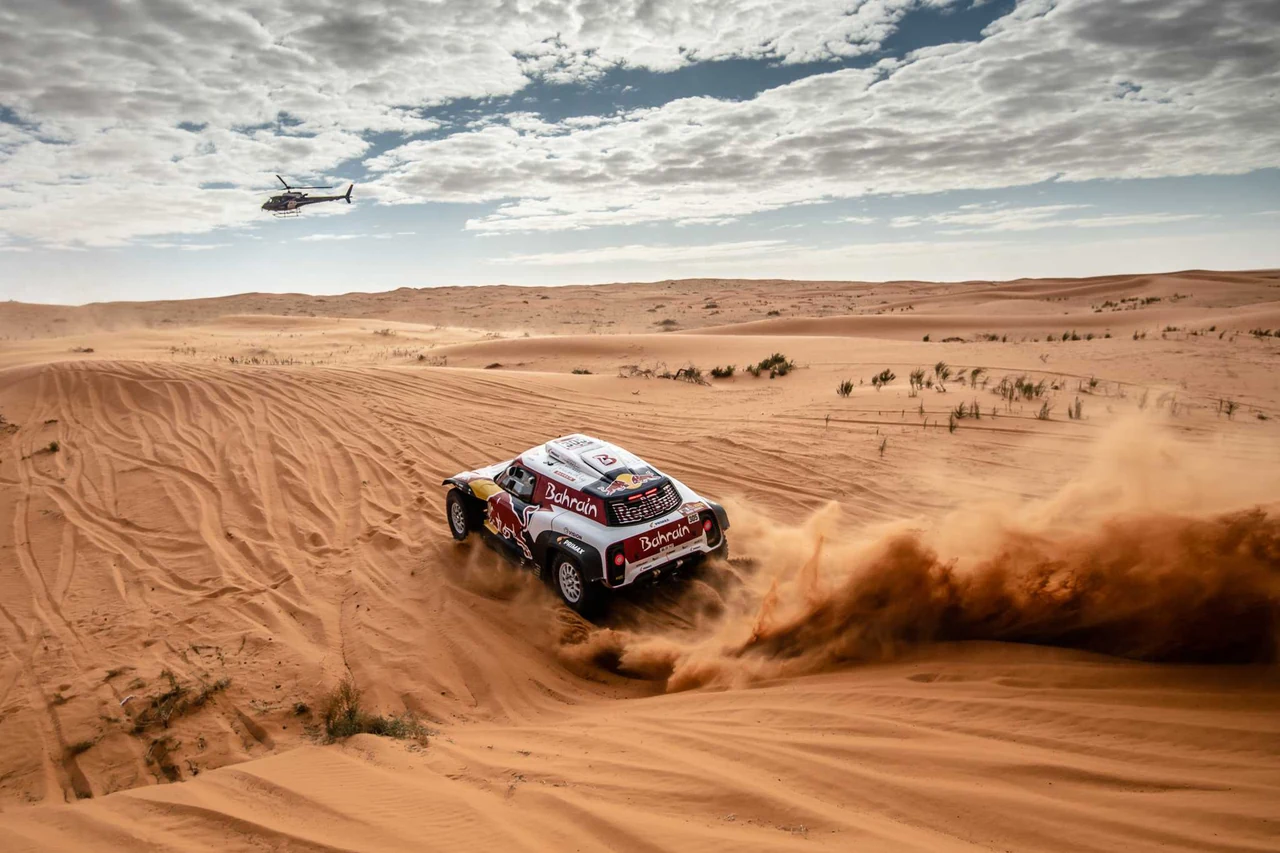 Photo: © BMW AG / press.bmwgroup.com
In 2024 the sixty-one-year-old Sainz won again in an Audi RS Q e-tron, taking his list of winning manufacturers to four. Electric motors drove the wheels, while an internal-combustion engine generated electricity to replenish the energy supply. This range-extending electric-drive hybrid system still required fuel. The technical questions it posed to the driver were far removed from those of his early Celica.
His age certainly made the result more distinctive, but an age record alone cannot win a race. A new car required development, testing and reliability improvements; the crew had to manage mechanical and navigation risks, and the driver had to keep understanding unfamiliar systems. Victory followed the combined completion of those tasks.
Sainz's Dakar chapter did not replace his two WRC trophies. It showed how his early refusal to be confined to one surface eventually extended to different cars and disciplines. The second half of his career kept pursuing the same question: what other skills could he learn anew?
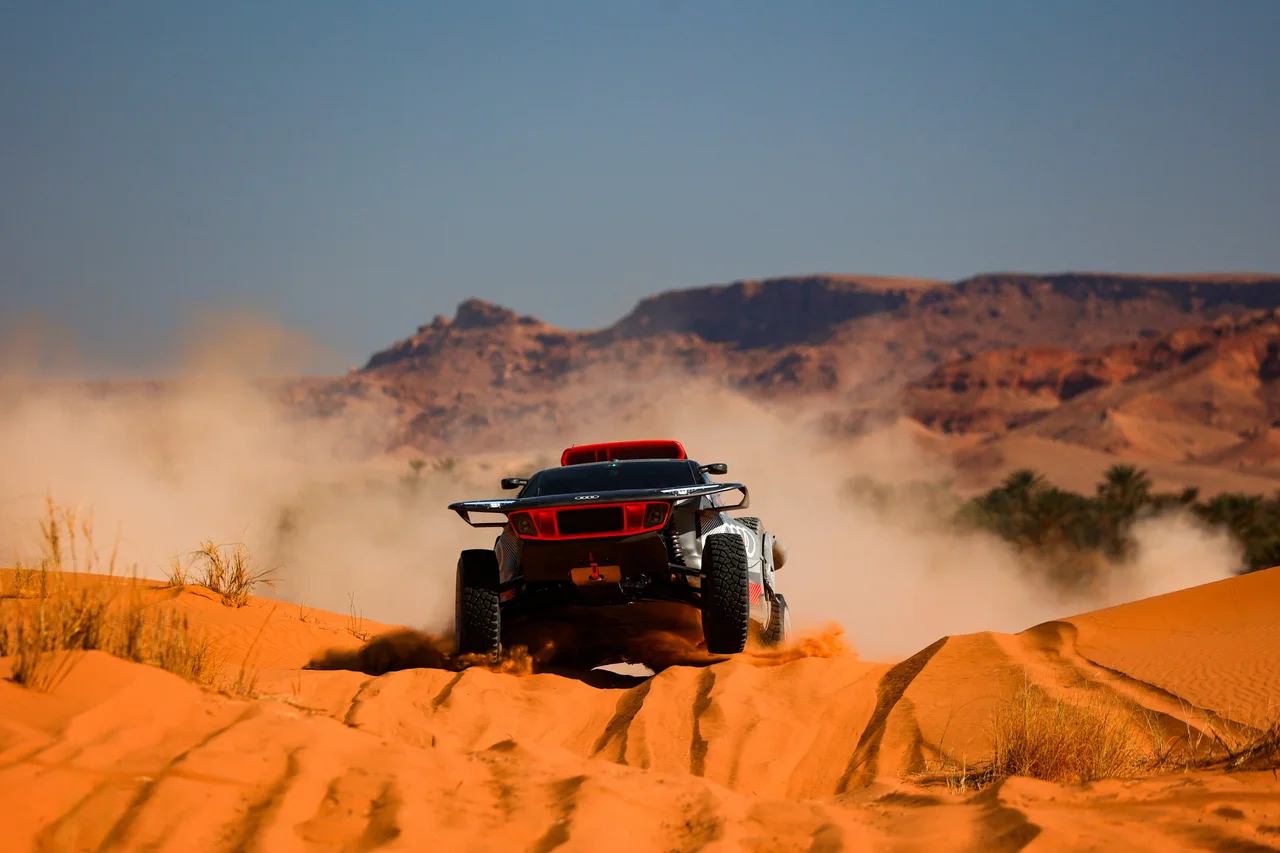 Photo: audi.com
17. Beyond those final few hundred meters, the story continues
If Sainz's story stopped in the British forest in 1998, it would leave only the regret of a third title lost a few hundred meters away. The stranded Corolla represented that day, not all the years that followed. In 1999 he helped Toyota win the manufacturers' crown; later he won for Ford and Citroën, then moved to the Dakar.
Ninety-seven WRC podiums and Dakar victories with four manufacturers show that there is more than one way to remain competitive. Changing cars, testing again, building a partnership with a co-driver and adapting to different terrain are all tasks that precede results. Two WRC titles gave him experience, but they did not make dunes and long-distance events familiar.
The third WRC title never came. The defeat to a teammate in 1995, the failure in 1998 and the retirement in Britain in 2003 were not erased by later trophies. Keeping those losses in the story is necessary to understand why entering the next event was not simply repeating the last.
In Finland in 1990, he crossed a boundary others had drawn according to nationality. Years later, he kept learning in different cars and different events. Sainz could not rewrite those final few hundred meters, but he drove his next race farther into the future.
Sainz's titles and career record
As of the end of 2025: two WRC drivers' world titles and four overall Dakar car-category wins. Dakar victories are overall results in a single event; they must not be combined into “six WRC world titles.”
| Competition / category | Years or total | Car / partner |
|---|---|---|
| WRC drivers' world title | 1990、1992 | Toyota Celica GT-Four; co-driver Luis Moya won the title in the same years |
| WRC rally wins | 26 wins | Final win: Argentina 2004, Citroën Xsara WRC / Marc Martí |
| WRC podiums | 97 | Counted separately from season titles |
| Overall Dakar car-category victories | 2010 | Volkswagen Race Touareg / Lucas Cruz |
| Overall Dakar car-category victories | 2018 | Peugeot 3008 DKR Maxi / Lucas Cruz |
| Overall Dakar car-category victories | 2020 | MINI John Cooper Works Buggy / Lucas Cruz |
| Overall Dakar car-category victories | 2024 | Audi RS Q e-tron / Lucas Cruz |
Sources
- Biography | Carlos Sainz
- How it Started: Carlos Sainz – DirtFish
- 1995 Rewind: Sainz and Subaru win as rallying loses in Spain – DirtFish
- Inside Toyota's banned 1996 season – DirtFish
- Toyota Corolla WRC - Toyota Media Site
- Carlos Sainz Sr. – Wikipedia
- The Audi RS Q e-tron: New details for the technological pioneer | audi.com
- Rally de Portugal: official results history of the 1990s
- Subaru STI: the 1995 Catalunya Rally
- Carlos Sainz official website: fourth Dakar victory
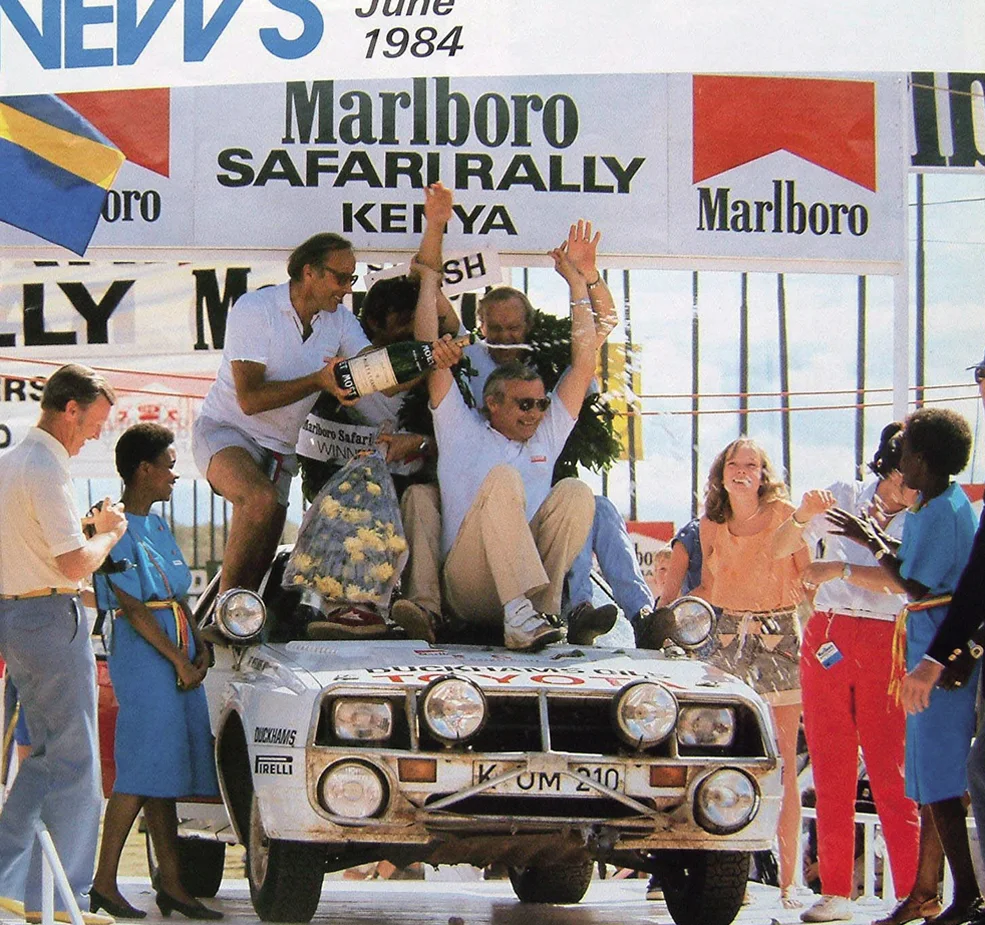 Photo: toyotagazooracing.com
Toyota: From African endurance battles to nine titles, three rebuilds in rallying
Return from the driver's career to Toyota's works team to understand its different titles and phases of rebuilding.
Continue reading · About 20.9 min →