
Expand the Chapter List
- Peugeot on Africa's long roads, before the WRC
- First came an important small car, then its racing namesake
- 1984: prove it could win before fighting for a whole season
- Salonen's 1985 turned speed into two titles
- 1986: the championship was finally decided away from the stages
- After Group B, experience took another road
- How the 206 crossed the four-metre threshold
- 2000: second place in the finale brought a world title
- Three consecutive titles needed more than one star
- 2002: the size of the advantage that sealed the titles early
- The 307 had speed; keeping it to the finish was harder
- The withdrawal decision preceded the final season
- Timeline
- Honours record
On 6 October 2002, Rally New Zealand ended with Marcus Grönholm and Harri Rovanperä first and second. Peugeot secured both the drivers' and manufacturers' titles with two rounds still to go. The silver 206 WRC took a third successive manufacturers' trophy back to France ahead of time, recalling the equally compact and fierce 205 T16 of more than a decade earlier.
The two cars were not joined by a steadily ascending line. Peugeot experienced the abrupt end of Group B, left the top level of world rally competition, maintained its operation through domestic events, and then designed a new title-winning approach for new rules. It later endured a 307 period of speed without consistent success, before a group-wide reduction in motorsport spending ended the factory campaign.
As of the end of 2025, Peugeot held five WRC manufacturers' titles, concentrated in 1985–1986 and 2000–2002. Understanding those peaks requires more than how the cars went fast. It also means examining why the company entered, how it organized its drivers, and why it left while still capable of winning rallies.
Peugeot on Africa's long roads, before the WRC
Peugeot's rally tradition did not begin with a mid-engined car covered in air intakes. Saloons such as the 404 and 504 first made its reputation in long African events. The 404 won the East African Safari Rally four times, in 1963 and from 1966 to 1968. Those victories predate the world rally championship's creation in 1973: they belong to the marque's history, but cannot all be counted as WRC results.
Long-distance events gave reliability an immediate meaning. Cars had to do more than outrun rivals on a closed stretch of road: they endured rough terrain, long driving hours and limited repair resources. Even with engine power intact, a suspension, transmission or body mounting failure could turn a speed advantage into waiting by the roadside. The big saloons' results thus became closely linked to a public image of durability.
The 504 continued that approach. Peugeot's official history records wins in the Safari, Morocco and Bandama rallies in 1975, followed by Morocco and Bandama in 1976. The events had differing championship status, but together demonstrated the marque's strength on African roads. Jean-Pierre Nicolas added an important WRC-era victory by winning the 1978 Safari in a 504 Coupé V6.
This period gave Peugeot experience of demanding events and linked the lion badge in consumers' minds to completing long journeys. The lightness, four-wheel drive and turbocharging later shown by the 205 T16 seemed far removed from the 504, but one objective remained common: potential performance becomes a result only when the car reaches the finish.
The move from the 404 to the 205 also changed what the brand expected of racing. Early victories emphasized road cars' abilities in harsh conditions. In Group B, Peugeot sought the most prominent position in international competition's technology and speed. The two histories illuminate each other, but should not be presented as an unchanged racing philosophy.
First came an important small car, then its racing namesake
Jean Todt established Peugeot Talbot Sport in October 1981. Two years later, the consumer 205 went on sale on 24 February 1983. Peugeot needed a versatile small car that could attract new customers. Jean Boillot championed that product direction, while the in-house design team led by Gérard Welter gave it a compact, distinctive shape.
The road-going 205 and the 205 T16 shared a name and recognizable outline, but their mechanical layouts differed greatly. The ordinary car had to meet demands of price, space and everyday use. The T16 organized a turbocharged engine, four-wheel drive and competition structure around Group B rules. Similar looks did not make an ordinary showroom 205 merely a racer without the livery.
The connection nevertheless had commercial value. Seeing a small Peugeot charge through gravel, snow or mountain passes carried a racing impression onto everyday roads. The competition department borrowed a core product's name, while the product gained live evidence ordinary advertising could scarcely reproduce. Winning, however, depended on a purpose-designed and prepared racer, not road-car sales themselves.
Todt's task was not just to build a powerful prototype. Engineering, driver feedback, servicing and logistics had to support a full season together. Rally conditions continually change. A car fast only on a test road has not yet proved it can keep working across countries and surfaces within limited servicing time.
The 205 T16 therefore belongs in both product renewal and the organization of competition. It was neither a sudden miracle nor a performance brochure for a road car. Peugeot first identified the new-car image it wanted the public to know, then invested in a dedicated racer to seek results capable of changing the marque's reputation.
1984: prove it could win before fighting for a whole season
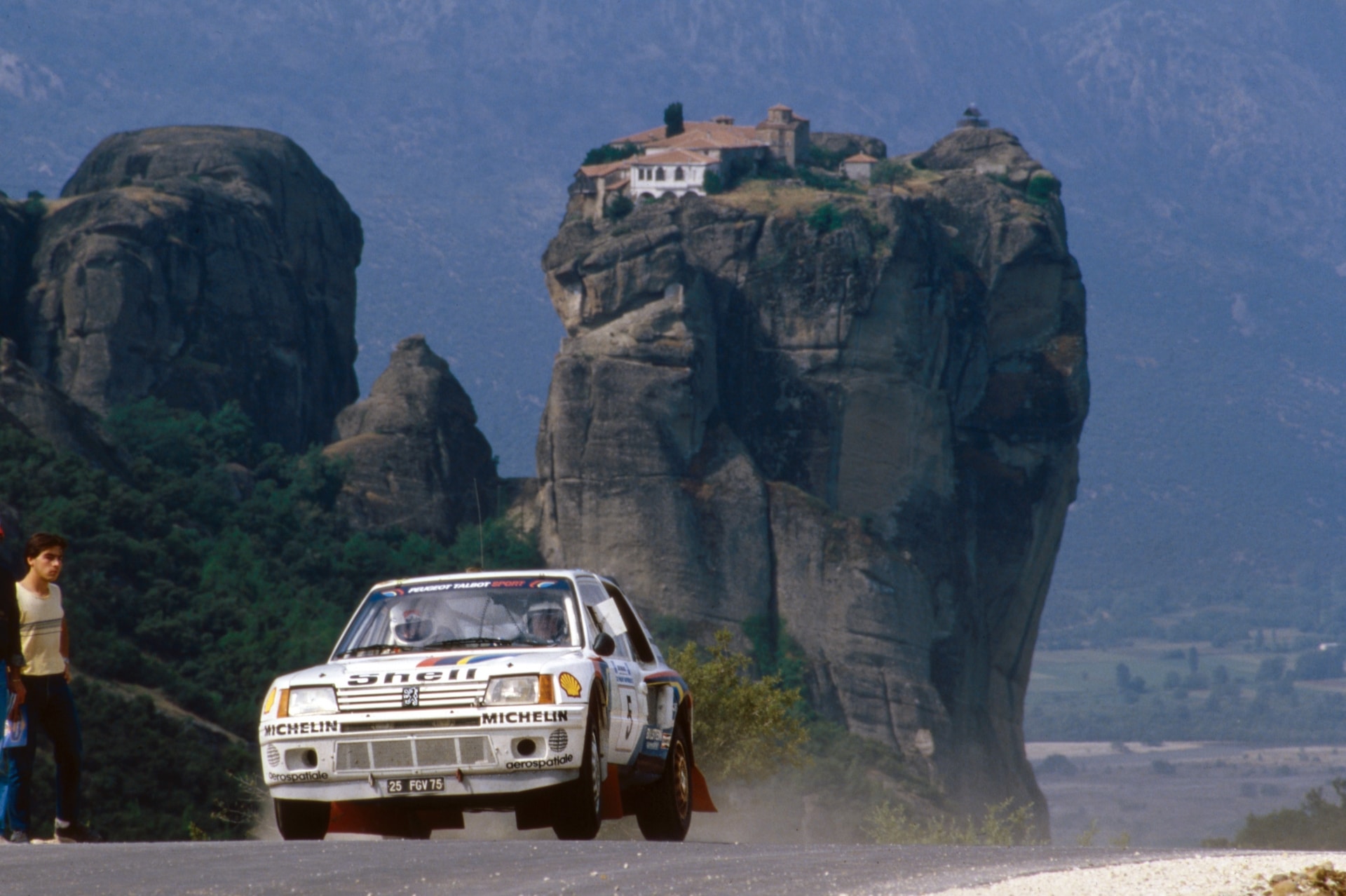
The 205 T16 entered world rallying in 1984. Peugeot initially chose selected events rather than demanding a full-season title from the start. Its official history records five starts and three victories in this phase. Ari Vatanen took the car's first win in Finland and then continued to put its competitiveness on the results sheet.
A partial programme did not remove pressure. It let the team test a young car in real conditions while focusing limited preparation on specific events. Testing can repeat a road or change a component; competition adds the timetable, changing conditions and opponents' speed. One victory at least showed that the concept could deliver its performance through an entire rally.
Three victories and a world championship were still different achievements. The former allowed concentration on selected events; the latter demanded points even on less suitable surfaces. Component life, service efficiency and a driver's control of risk when full attack was inappropriate all grew more important over a complete season.
Vatanen's role had two layers. He displayed the car's speed publicly, and real competition confronted engineers with measurable questions: where time was gained or lost against rivals. His driving and feedback tested their development judgements, exposing the potential on the drawings to actual roads and opponents.
In 1984, Peugeot moved from preparing to enter to being able to win. The next question was harder: once opponents understood the 205 T16's threat and reacted, could it remain competitive across wider conditions, and could the team turn separate rally results into an annual title?
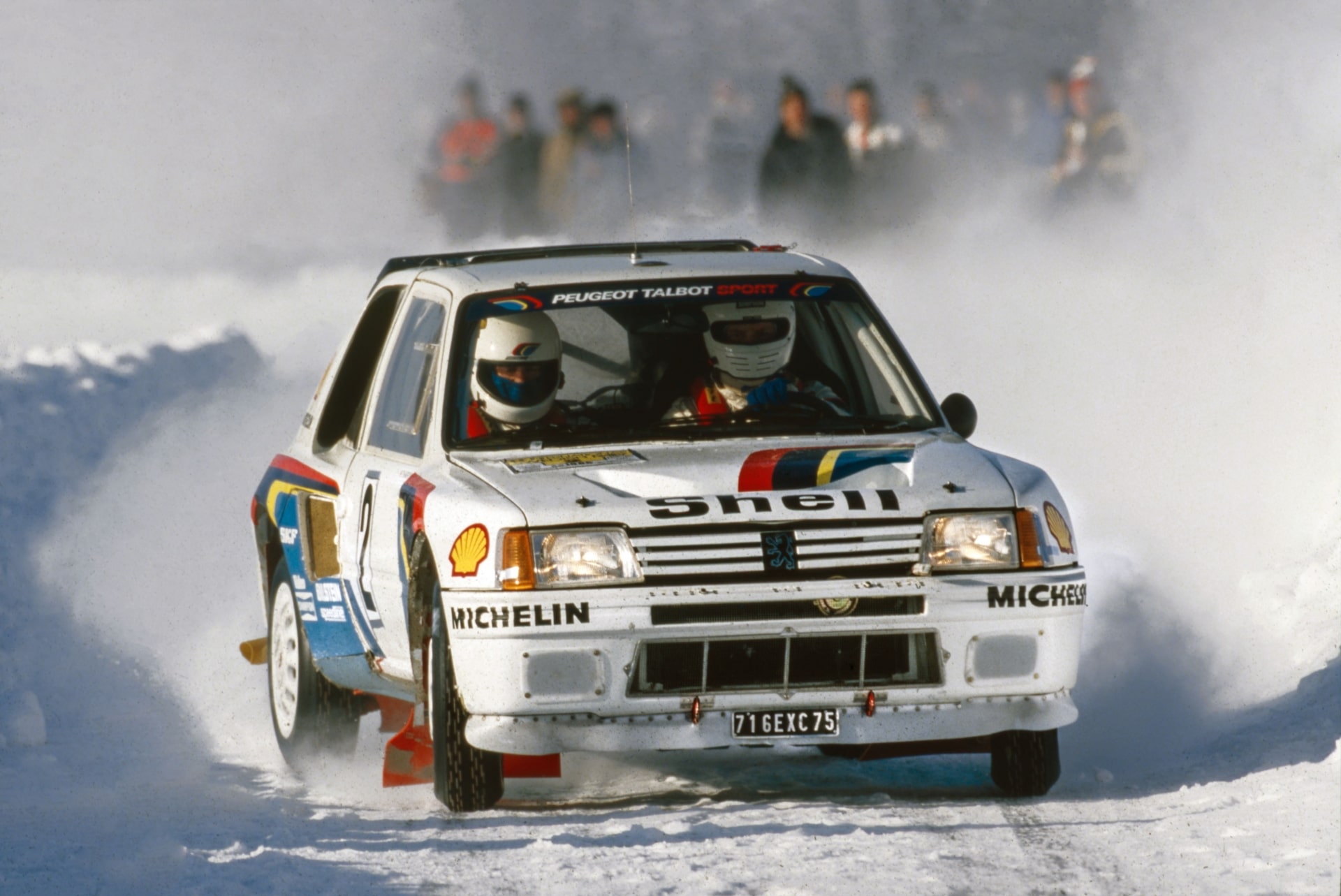 Image source: Peugeot Sport
Salonen's 1985 turned speed into two titles
In 1985, Timo Salonen won the drivers' world championship in the 205 T16, and Peugeot took the manufacturers' title. It was the marque's first WRC double. Vatanen's victories the previous year had built confidence, but Salonen was the man who brought its first complete title-winning season to the finish.
Team history cannot be represented solely by its most dramatic driver. The person who first proves a new car can win need not be the person who later produces the best result across a season's points battle. Recording both reveals the abilities needed at different stages, rather than letting one star obscure everybody else's contribution.
Nor is a manufacturers' championship simply another name for the drivers' title. It assesses the team's results counted under the rules and requires its cars to fulfil their tasks across events. A driver may keep attacking for personal position, while the manufacturer must also weigh overall points, car condition and preparation for the next round. Winning both showed that Peugeot's advantage extended beyond one weekend.
Group B is often remembered through power figures and images of spectators close to the cars, but annual results also contained less spectacular work. Choosing settings, recording the road and resolving service problems within the allotted time did not disappear because acceleration improved. Greater performance could magnify mistakes in driving and organization.
Peugeot's first double placed a relatively new top-level project at the centre of the sport. No longer merely challenging established teams, it now faced the pressure of defending its crowns. In 1986, it would quickly learn that a title could be shaped not just by stage times but by regulatory disputes and the fate of an entire category.
1986: the championship was finally decided away from the stages
Juha Kankkunen won the 1986 drivers' title for Peugeot, which retained the manufacturers' championship. Yet “consecutive doubles” cannot fully describe the outcome. Group B was approaching its end after a succession of serious accidents, and Peugeot was embroiled in the Sanremo dispute that affected the drivers' title.
During Sanremo, event scrutineers considered components underneath the Peugeots to have a prohibited aerodynamic function, and excluded the team. Peugeot protested, but the cars were not allowed to continue. Lancia's Markku Alén ultimately scored points there, further altering an already close championship fight.
The dispute was not resolved before the next rally. After the season-ending Olympus Rally, Alén still led the provisional points, so title celebrations coexisted with an undecided appeal. Drivers faced a concrete problem: they had to decide how much risk to take later without knowing whether one event's points would ultimately count.
FISA ruled on 18 December 1986. Contemporary reports said it found no evidence of Peugeot breaking the rules and considered the exclusion improper; timing problems also undermined confidence in the event's results. The entire Sanremo Rally's world championship results and points were annulled. Alén lost those points, and Kankkunen became champion.
Peugeot's cars had already been forced out, and a successful appeal could not recreate the rally they might have completed. The team therefore received no retrospective finishing positions or Sanremo points. The championship changed hands because all points from that event were withdrawn.
Both contenders had finished their seasons but still had to wait for administrative proceedings to settle the order, giving 1986 a particularly heavy ending. Kankkunen was the official world champion; Alén's late-season driving did not disappear. Peugeot retained both titles, but the 205 T16's Group B would not return in the same form the following season.
After Group B, experience took another road
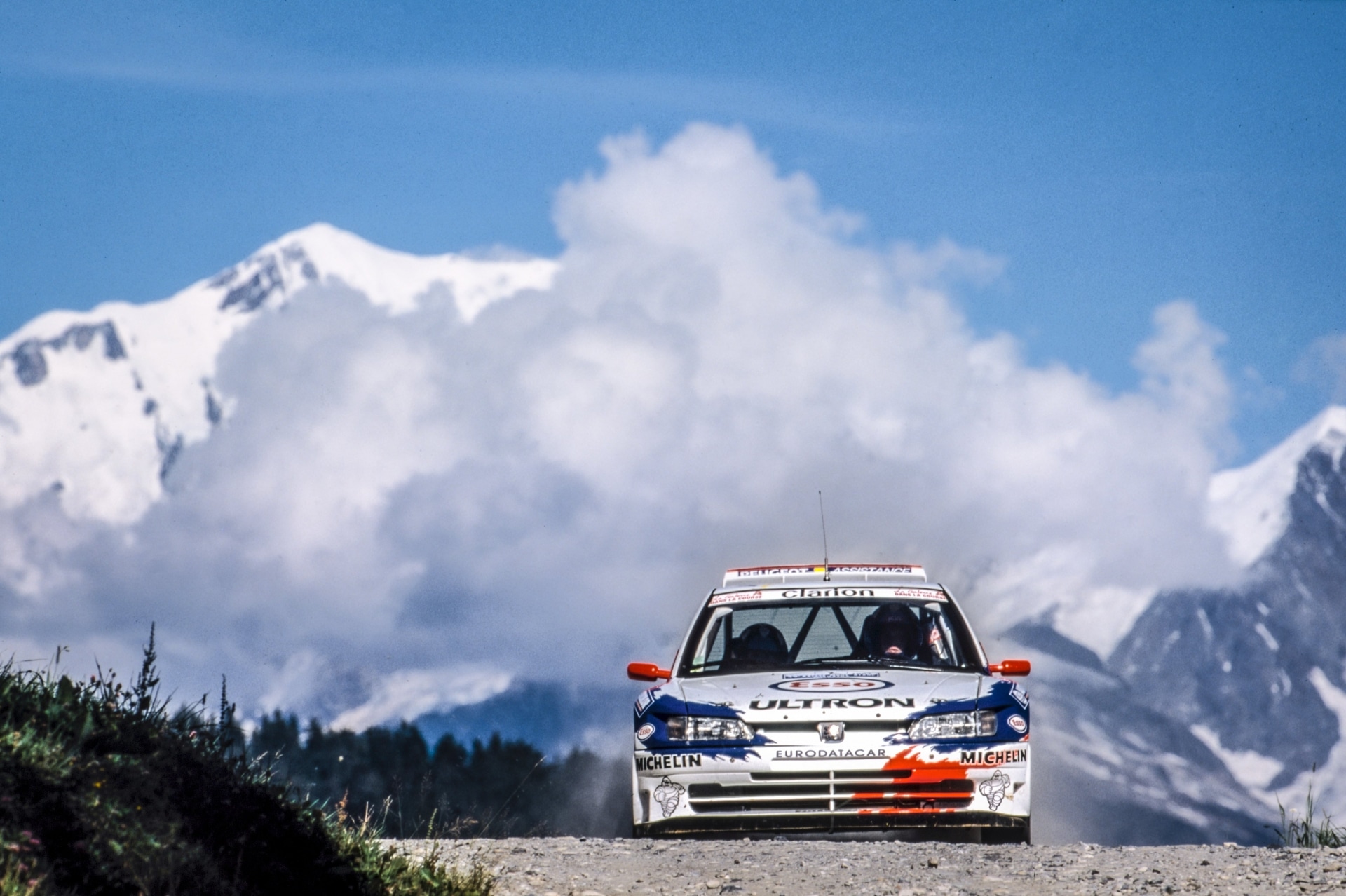 Image source: Peugeot Sport
Peugeot did not mothball the 205 T16's technology and personnel with Group B's end. Adapted for long-distance cross-country racing, the car moved to Paris–Dakar. Vatanen won in 1987 and Kankkunen in 1988. The 405 T16 then continued that path, giving Peugeot four consecutive Dakar victories from 1987 to 1990.
Those results are an important sporting legacy, but they are not WRC wins or titles. Cross-country rallying tests navigation, stage length, supplies and environmental conditions in different ways. Related vehicle origins do not make it an extension of the WRC. Peugeot developed a new use from an existing foundation rather than simply changing its entry form.
In the 1990s, the 306 Maxi returned the marque to the centre of European road rallying. Gilles Panizzi won the French rally championship in 1996 and 1997, and the car showed its competitiveness on world championship asphalt events. Its layout and rules differed from the 205 T16's, representing another way of exploiting specific surface conditions.
The 306 Maxi's setting highlighted surface differences. Asphalt asks different things of weight, steering response, tyres and power delivery than loose gravel or snow. An agile, competitive car can excel on suitable roads; a top-level programme covering every surface over a season needs broader adaptability.
This phase also maintained organizational continuity. Drivers, co-drivers and service personnel kept working in real events. Peugeot could see who excelled on which roads and where preparation needed strengthening. When the 206 WRC appeared, it placed existing people and experience into a new rules framework rather than relearning rallying from a blank sheet.
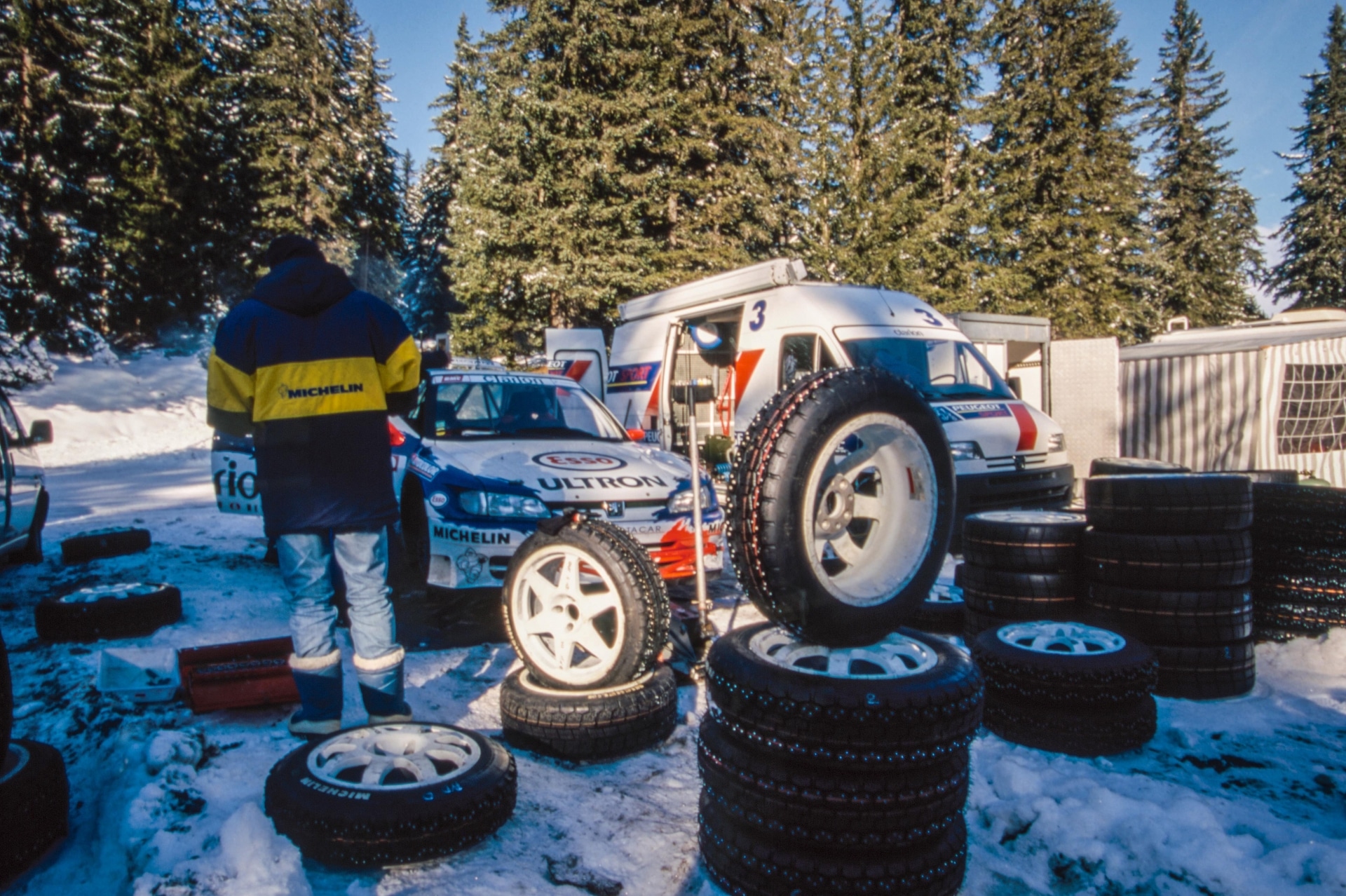 Image source: Peugeot Sport
How the 206 crossed the four-metre threshold
The 206 WRC debuted in Corsica in 1999, with François Delecour and Panizzi handling its first appearance. A two-litre turbo engine, four-wheel drive and six-speed sequential gearbox put it into top-level competition under the World Rally Car rules. Its name again linked Peugeot's leading competition programme to a best-selling small car.
But the 206 faced a seemingly simple problem: length. The ordinary road car was about 3.83 metres long, while the model used for this competition project needed to meet a four-metre requirement. Peugeot introduced the 206 GT with extended front and rear bumpers, reaching the required length, and built 4,000 examples, above the applicable threshold of 2,500.
That did not make the road-going 206 GT a turbocharged four-wheel-drive car ready for WRC competition. It used a roughly 137 hp naturally aspirated two-litre engine and a five-speed gearbox; the racer had different engine and drivetrain specifications. The GT helped meet dimensional and homologation conditions, but sharing a four-metre length did not make the two mechanically identical.
Compared with earlier approaches relying on particular high-performance road models, World Rally Car rules gave manufacturers different development freedom. A more widely sold model could provide the public identity, with competition technology configured under the rules. That freedom still had limits: dimensions, homologation documents and permitted modifications were real design constraints.
The bumper story is therefore more than an entertaining detail. Championship cars are never determined solely by an engineer's ideal shape. Product ranges, written rules and competition needs must fit together. Peugeot first solved legal eligibility, then had the chance to show whether the compact 206 could turn that design choice into speed.
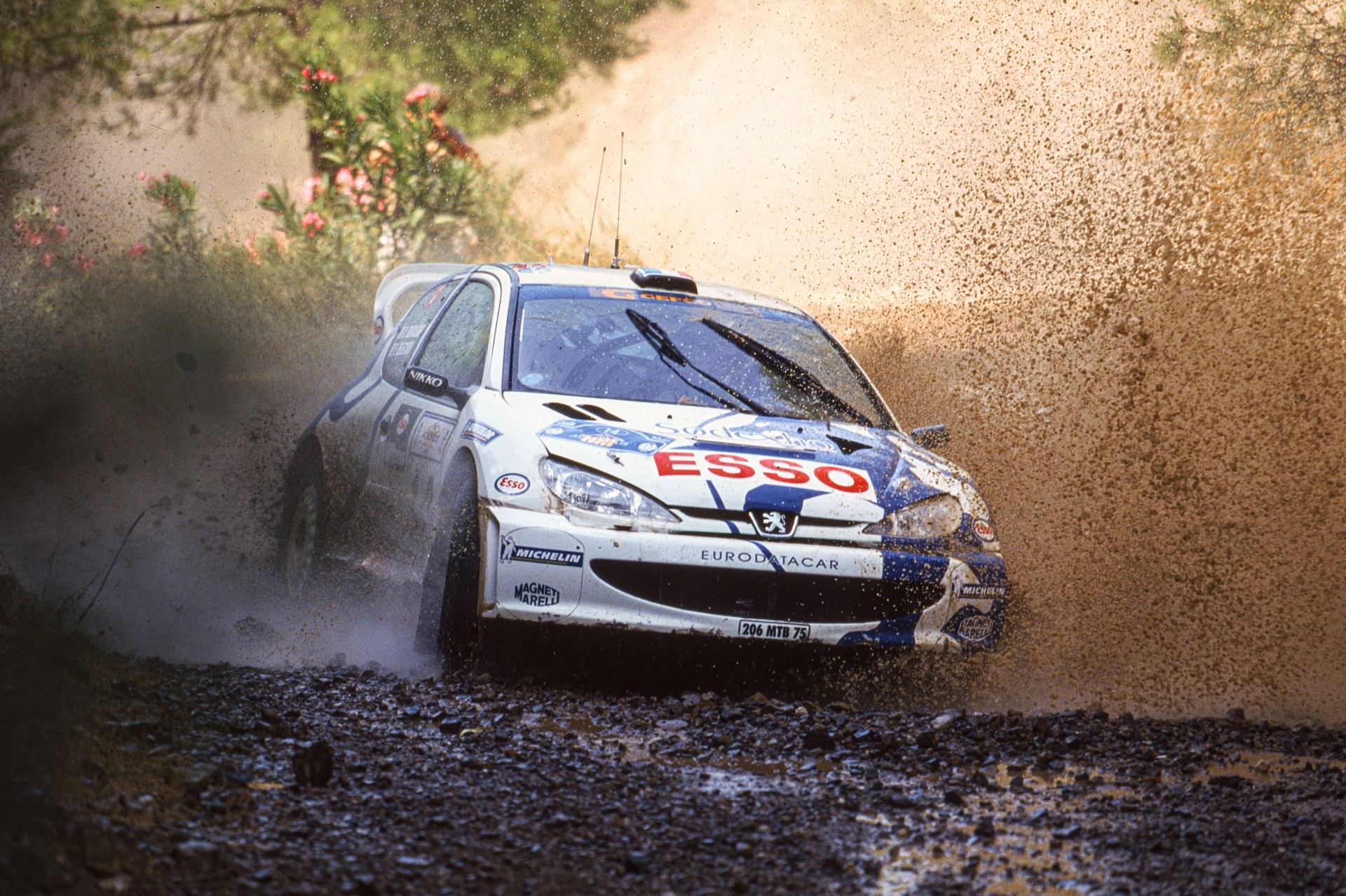 Image source: Peugeot Sport
2000: second place in the finale brought a world title
Grönholm took his first WRC victory in Sweden in 2000, an important early moment in his first full world championship season. Peugeot relied on more than one snow-rally win: the 206 WRC won six rounds that year, turning a possible title challenge into a concrete task.
The season ended in Britain, where Richard Burns won and Grönholm finished second, 1 minute 5.6 seconds behind. On the podium the victory belonged to Burns; in the season standings Grönholm became champion by 65 points to 60. Peugeot won the manufacturers' title with 111 points, ahead of Ford and Subaru.
The rally illustrates how an annual contest works. The final event's winner need not be the season champion. A driver must understand the required result, then judge how hard to attack from the road and car's condition. Burns won the finale; Grönholm preserved his season lead through earlier points and second place in the last round.
For Peugeot, the 2000 double answered what the 1999 debut had not. The 206 could do more than surprise on selected roads: the team could now earn the highest honours across a whole season. It shared a brand symbol with the 205 T16, but used different rules and technology against another generation of established rivals.
Grönholm's age and experience matter too. He did not become world champion immediately upon entering rallying, but waited years between Finnish domestic events and occasional world championship opportunities. Peugeot supplied a full-season seat, and he converted accumulated ability into results. The partnership joined opportunity with existing skill, rather than creating a novice from nowhere.
Three consecutive titles needed more than one star
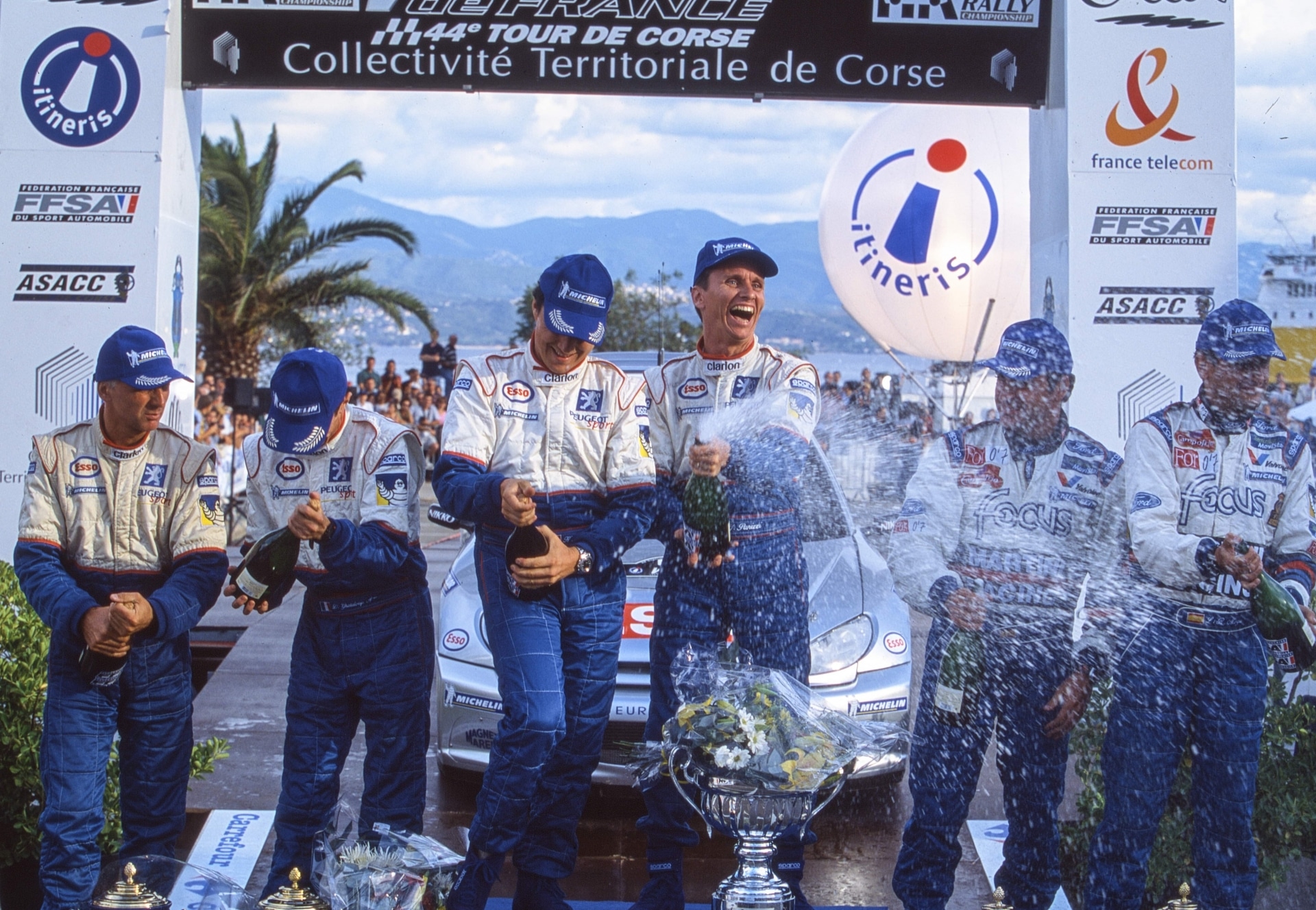 Image source: Peugeot Sport
Peugeot retained the manufacturers' championship in 2001, but Subaru's Burns won the drivers' title. The distinction matters: the 206's three manufacturers' crowns did not mean one Peugeot driver won three years running. Grönholm took the titles in 2000 and 2002; the team's and drivers' results diverged in the year between.
Panizzi, Rovanperä and other drivers at different stages together created the 206 era's strength. Drivers had different familiarity with asphalt, snow and gravel, and the manufacturer had to use those differences in its entries. Experience affected pace-note building, grip judgement and driving adjustments; several crews gave the team more options for different rallies.
Burns joined Peugeot in 2002, adding another reigning world champion to the line-up. His arrival did not remove internal competition. Professional drivers pursuing the best results cooperated and compared themselves at the same time. Engineers gained richer feedback, but also had to distinguish demands arising from different driving habits.
The manufacturers' championship required the team to manage that complexity. A fastest-lap-style burst could not replace a complete rally result, nor could one driver's strengths automatically cover every surface in the calendar. Scoring rules and how crews salvaged results after problems all affected the final points total.
The 206's sustained success therefore cannot be reduced to building a good car and finding one champion to drive it. Peugeot needed usable performance across conditions and several crews to fulfil specific race tasks. Grönholm was a central champion, but three manufacturers' titles always covered more than his personal record.
2002: the size of the advantage that sealed the titles early
After New Zealand in 2002, Grönholm had 67 points and his nearest challenger Burns had 34. Two rounds remained, and with ten points for a win a rival could add at most twenty. A thirty-three-point lead made the drivers' title unreachable without waiting for the final round.
The manufacturers' title was settled that same weekend. The Grönholm–Rovanperä one-two completed the lead driver's championship task and displayed the team's overall advantage in the finishing order. As Grönholm took his 67 points into the remaining rounds, both annual titles had already been secured.
The 206 WRC won eight rallies in 2002, its best single-season tally. Peugeot's figures at the time recorded six, six, eight and four wins from 2000 to 2003 respectively, for twenty-four in total. The eight victories in 2002 marked the peak of that sequence and matched the season's early double-title clinch.
Numbers show an advantage without explaining all its sources. Eight wins mean that car and crews repeatedly sustained their performance to the finish; they do not prove every opponent was helpless or that every rally posed the same technical problem. Snow, asphalt and gravel made different demands on tyres and vehicles, requiring fresh preparation each time.
The year 2002 was the clearest peak of the 206 dynasty: a third manufacturers' title, Grönholm's second crown and both secured before the season ended. It is easy in retrospect to see that moment as proof the dominance must continue. Peugeot's next chapter showed that familiar names and personnel could not preserve every advantage after a change of car.
The 307 had speed; keeping it to the finish was harder
The 307 WRC replaced the 206 at the top level in 2004. Its larger shape and distinctive silhouette derived from a convertible marked a new challenge. It could still set fastest stage times, but failures, rule penalties and lost leads made this period markedly different from the 206's title streak.
At Cyprus in 2004, Grönholm initially occupied the winner's place. His car and Rovanperä's were later excluded for non-compliant water pumps, giving victory to Sébastien Loeb. A weekend worthy of celebration became one without an official result to retain, leaving the 307 still awaiting its first confirmed win.
Its first official victory finally came in Finland that year. Grönholm lost fourth gear for three consecutive stages on Saturday but still brought the car home first. Peugeot's post-rally material recorded fifteen fastest stage times for the 307 and said a five-speed gearbox was planned for the next round in Germany.
Finland displayed both sides of the 307. It had the speed to win on fast gravel and transmission problems directly restricting the driver's actions. Grönholm had to use the remaining gears while engineers continued changing components and solutions. Development did not stop with the first win; reliability and performance still needed to improve together.
Grönholm won again in Japan in 2005 after long-time leader Petter Solberg suffered a steering failure on the penultimate stage. The event showed how a rally could change even near its end. Peugeot took the opportunity and finished, but restoring annual dominance required more sustained performance than isolated wins. The 307 did not extend the 206's championship sequence.
The withdrawal decision preceded the final season
On 4 November 2004, PSA announced that Peugeot and Citroën would withdraw from factory WRC competition after the 2005 season. The statement linked the decision to the car market and cuts in motorsport spending. The date matters: withdrawal was announced before 2005 began and cannot be retrospectively attributed to events that happened later.
Results and a racing programme's survival are therefore affected by different forces. Wins may raise visibility, but a competition department remains within corporate resource allocation. Development, commercial conditions and other investments influence continued management support. Crews may have a competitive car and still face a final season already decided in advance.
Peugeot continued its sporting identity elsewhere. The 207 S2000 succeeded in the Intercontinental Rally Challenge, and the marque remained active in other forms of motorsport. Those achievements belong to their respective competitions. They show that rally knowledge survived, not that the WRC factory team had returned, and cannot be added to those five manufacturers' titles.
Looking back, the 205 T16 and 206 WRC both put a compact-car image at the centre of their eras under entirely different rules. The first was cut short by Group B's end; the second's dominance ended amid a new model and corporate decisions. Five titles leave no permanently valid winning formula, but two complete examples of bringing product, rules, people and organization together at the right time.
Timeline
| Year | Key Milestone |
|---|---|
| 1963、1966—1968 | The 404 won the Safari four times, all before the WRC existed. |
| 1978 | Nicolas won the Safari in a 504 Coupé V6. |
| 1981 | Jean Todt established Peugeot Talbot Sport. |
| 1984 | The 205 T16 entered the WRC; Vatanen took its first win in Finland. |
| 1985 | Salonen won the drivers' title and Peugeot its first manufacturers' crown. |
| 1986 | Kankkunen won the drivers' title and Peugeot retained the manufacturers' crown; it withdrew after the Group B season. |
| 1987—1990 | Peugeot won four consecutive Dakars, recorded as a separate competition. |
| 1996、1997 | Panizzi won consecutive French rally titles in the 306 Maxi. |
| 1999 | The 206 WRC debuted in Corsica. |
| 2000—2002 | Peugeot won three successive WRC manufacturers' titles; Grönholm took the 2000 and 2002 drivers' crowns. |
| 2004 | The 307 WRC's first season; its first official victory came in Finland. |
| November 2004 | PSA announced both brands' withdrawal from factory WRC competition after 2005. |
| 2005 | Peugeot completed the final season of this factory WRC programme. |
Honours record
| Category | Historical record as of the end of 2025 |
|---|---|
| WRC manufacturers' titles | 5: 1985, 1986, 2000, 2001 and 2002. |
| WRC drivers' titles won by Peugeot drivers | 4: Salonen in 1985, Kankkunen in 1986, Grönholm in 2000 and 2002. |
| 206 WRC world championship rally victories | 24: six in 2000, six in 2001, eight in 2002 and four in 2003. |
| Two periods of manufacturers' championship success | Two consecutive titles with the 205 T16; three with the 206 WRC. |
| Statistical Scope | Dakar, the French championship, IRC, Le Mans and Pikes Peak are excluded from the WRC honours above. |
Sources and Further Reading
- Forty years of Peugeot Sport
- Forty years of the Peugeot 205
- 125 years of Peugeot motorsport
- Peugeot Sport competition heritage
- 206 WRC model profile
- Factory statistics on 206 production and WRC results, 2005-12-16
- Factory information on the 206 GT, 1999-05-05
- 2000 Rally GB post-event report
- 2002 Rally New Zealand post-event report
- 2005 Rally Japan post-event report
- Contemporary report on the final Sanremo ruling
- Peugeot's factory report on the 2004 Rally Finland
- Peugeot's exclusion from the 2004 Cyprus results
- PSA's WRC withdrawal statement, 2004-11-04
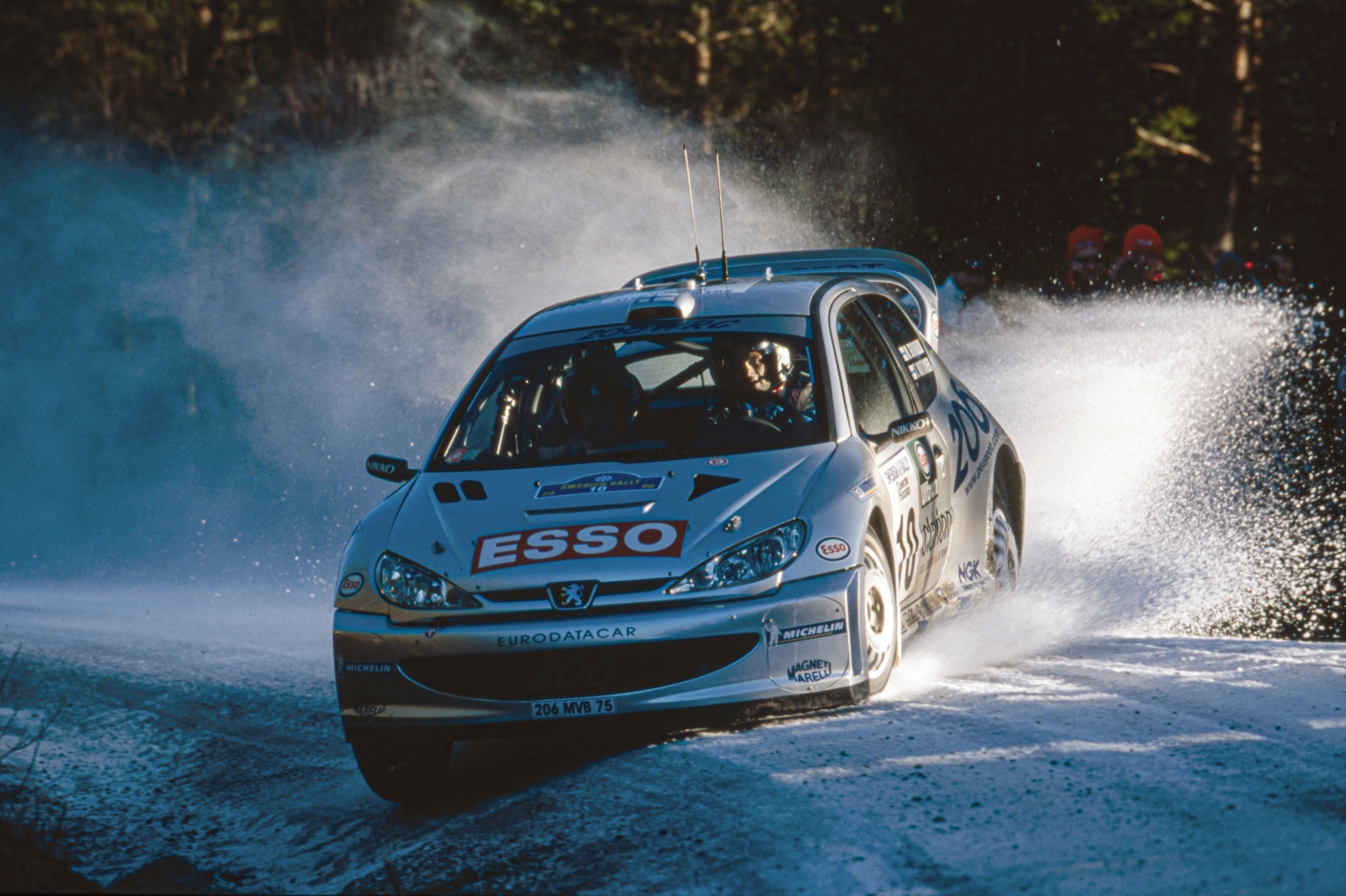 Image source: Peugeot Sport
Marcus Grönholm: eleven years to a first win, and a farewell four points short
From Finnish domestic rallies to two world titles and the four-point margin of 2007, revisiting his long partnership with Rautiainen.
Continue reading · About 21 minutes →