
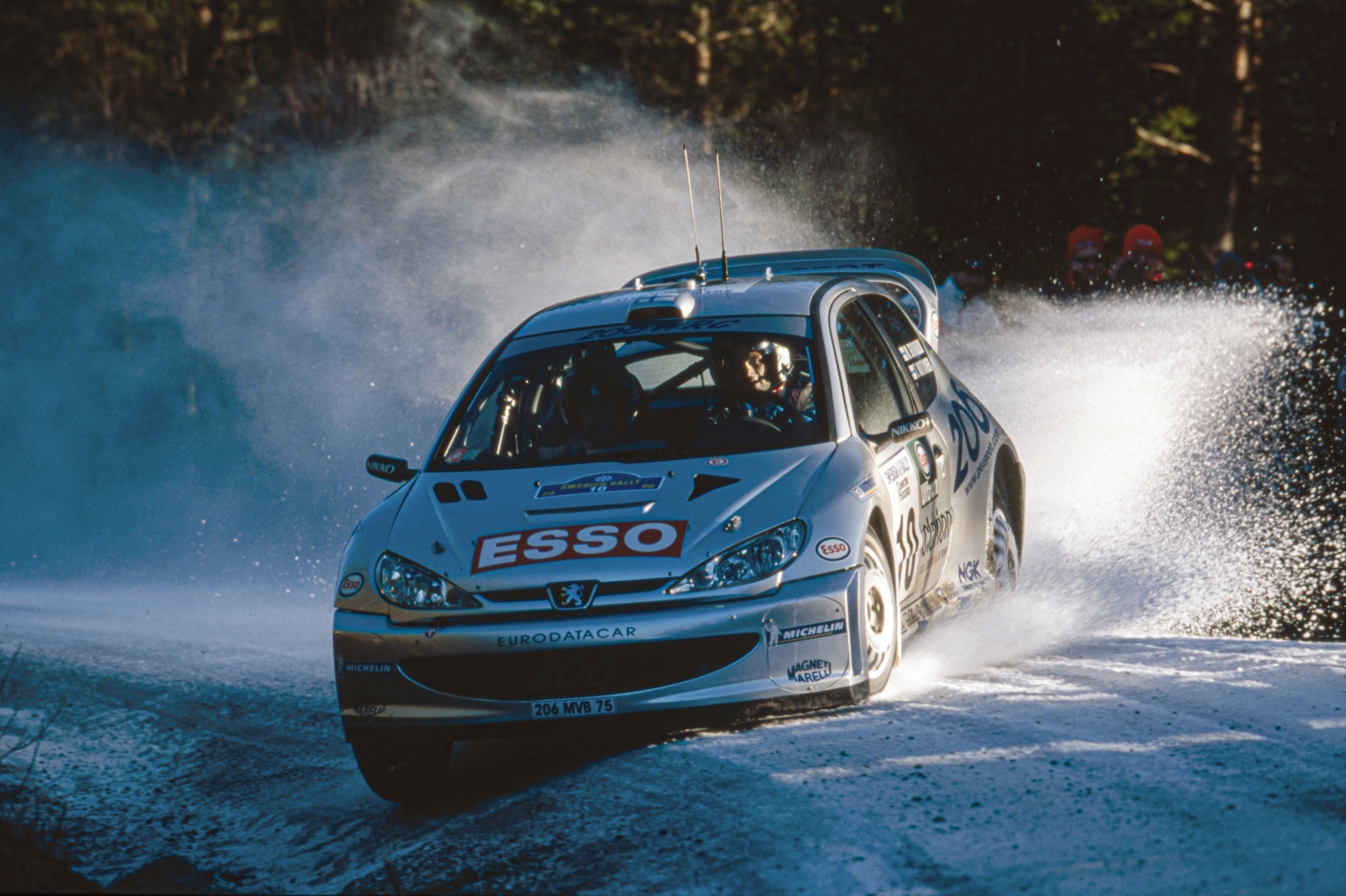
Expand the Chapter List
- A racing family did not spare him the long road
- Domestic titles were both achievements and a passport
- There was someone else in the car: Rautiainen
- Thirty-two before his first world championship rally win
- From losing the title to reclaiming it with two rounds to spare
- The 307 years: even a champion had to use an imperfect tool
- Seven wins in Finland were more than a record of courage
- Moving to Ford in 2006, he did not leave his speed behind
- A team-mate's growth was visible in the same rally
- After three tenths of a second, he chose to stop
- Wales did not return the initiative lost in Ireland
- After retirement, his experience found a different use
- Timeline
- Career Record
On 2 December 2007, the rain, fog and darkness of Wales finally remained outside the car window. Marcus Grönholm finished Rally GB in second place, ending his last full-time WRC season. Team-mate Mikko Hirvonen won, with Sébastien Loeb third. Those results made Loeb champion by 116 points to 112.
Grönholm did not retire with a third drivers' trophy, but neither did he leave because he had lost his speed. A few months earlier, he had beaten Loeb by three tenths of a second in New Zealand for his thirtieth WRC win. He was still leading the drivers' standings when he announced his farewell.
His peak came late. He first entered the WRC in 1989, took his first win only in 2000, and became world champion that same year in his first full season. A career of long waiting, two titles and a deliberate decision to stop was more winding than the familiar label “Flying Finn” suggests.
A racing family did not spare him the long road
Grönholm was born in Kauniainen, Finland, on 5 February 1968. His father Ulf had rallied, and his cousin Sebastian Lindholm also became a professional driver. The sport was never a distant television image: cars, competition and the people involved already formed part of family life.
That background brought more than advantages. Ulf died in a testing accident, giving racing's risks a very concrete form. In a family so close to rallying, competition held both achievements worth pursuing and irreversible loss. Grönholm's later choice to enter the sport was still his own professional path.
His WRC debut in 1989 was far removed from a full factory opportunity. The first meant he could contest a world-level event; the second meant cars, personnel and arrangements supporting an entire season. Combining those milestones into one date erases the longest stretch of his career.
In a Finnish Broadcasting Company interview after his first win in 2000, he described a road of gradual proof: first win domestically, then use results to persuade supporters. It is not romantic, but it reflects many rally drivers' situation. Speed is necessary, as are resources to keep competing, and one excellent performance does not always bring a seat for the following year.
The two world titles and thirty wins can make people forget how long he competed before becoming a leading factory driver. This was not a young prodigy swiftly taking over the world stage, but a driver with established technique and judgement waiting for a sufficiently complete opportunity to demonstrate them.
Domestic titles were both achievements and a passport
Grönholm's Finnish championship honours need separating by category. He won Group N in 1991 and Group A four times, in 1994 and from 1996 to 1998. Sources calling him a four-time or five-time Finnish champion may therefore use different scopes: four Group A titles, or those four plus the 1991 Group N crown.
This is more than a numerical argument. Domestic events offer repeated competition on familiar and unfamiliar roads, in different weather and rhythms. But category rules change performance and the field of opponents. Calling every honour an overall championship at one level flattens the real process of development.
The Arctic Rally's official history records consecutive wins by Grönholm and Timo Rautiainen in a Toyota Celica in 1996, 1997 and 1998. Snow does more than make a car look dramatic: grip, road edges and usable lines change. Crews must turn their knowledge of the road into actions and maintain consistency over a long event.
Those wins help explain why he already had a mature foundation when he entered a full world championship season. He did not begin learning co-driver communication or rally pacing in 2000. The WRC added surfaces, logistical distances and stronger rivals, but much of the daily work had already been practised repeatedly in domestic competition.
Domestic success did not automatically create an international seat. Teams needed a suitable project, budget and vacancy; the driver had to stay ready when one appeared. His waiting years were neither simply wasted nor necessarily a noble trial required for a title. They supplied championship ability and imposed a real career cost.
There was someone else in the car: Rautiainen
Rautiainen became Grönholm's regular co-driver in 1995. Their partnership ran through the Peugeot titles and Ford campaigns until they announced together in 2007 that they would end full-time WRC careers. Reports often reduce a champion to the driver's surname, but before the car races beyond visible road, the co-driver is already doing indispensable work.
Pace notes are not a vague warning that a corner lies ahead. Crews describe bends, distances, crests and hazards in a shared system and read them at the right moment. Too late, and the driver cannot act; a mismatched rhythm disrupts continuous judgement of the road ahead. What works is a language developed over time that remains accurate in use.
Friendship alone cannot explain the partnership. Grönholm processed grip and car responses while driving; Rautiainen maintained the information sequence amid bumps, noise and time pressure. Their jobs depended on each other but were different. Even after years together, each rally required specific preparation rather than familiarity replacing basic procedures.
At the FIA press conference for his 2019 Swedish return, Grönholm said he needed to readapt to driving and pace notes, while Rautiainen spent time explaining changed rules. That account clarifies their championship partnership: world-class performance includes skills kept sharp through continuous use, not automatic reactions retained forever after retirement.
Discussion of Grönholm's speed should therefore include the labour beside him. Thirty wins are his official driver record, but do not mean he completed the events alone. Rautiainen turned road information into an actionable rhythm, Grönholm combined it with car feedback, and both shared the consequences of possible errors.
Thirty-two before his first world championship rally win
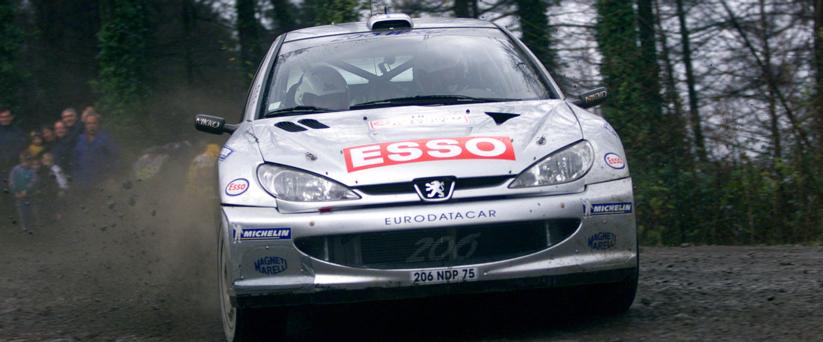 Image source: Motorsport UK
In February 2000, Grönholm won the Swedish Rally in a Peugeot 206 WRC, about eleven years after his WRC debut. He had just turned thirty-two. The victory was not a late reward at the end of a long career but the beginning of an entirely different phase.
Peugeot offered a full world championship season, allowing him to use the same factory resources consistently across more events. Domestic titles did not mean he already knew how to contend on every surface over a year. But regular starts let the crew carry problems discovered at one rally into the next, instead of waiting for scattered opportunities.
His Swedish win was related to years of snow-rally experience, but nationality alone does not explain it. Finland's rich winter-racing tradition does not make every Finnish driver a world-event winner. Results still required performance, preparation and execution over the entire rally. Grönholm won an event with a full field and a complete competitive result.
As the season unfolded, a title became realistic. Burns won the British finale and Grönholm was second; the final points were 65 to 60 in Grönholm's favour. Winning in a first full WRC season was exceptional, but it was not winning on his first appearance at world level. The preceding eleven years cannot be removed from the story.
The 2000 title changed his relationship with the factory. He was no longer just proving he deserved a complete programme, but a core driver the team needed to rely on and support. A title validated earlier work without solving the following year's reliability, changing opposition or points fight. Defending it posed new questions.
From losing the title to reclaiming it with two rounds to spare
Grönholm did not retain the drivers' title in 2001; Burns won it. Peugeot nevertheless defended the manufacturers' championship, and Grönholm won that year's British round. All three facts coexist: his season missed the highest personal target, the team still succeeded, and he remained capable of winning individual rallies.
The year should not be understood by merging team and driver points. A manufacturer can accumulate results from different crews at different events; a leading driver faces the gains and losses of his own starts. Peugeot's championship line-up involved more than one man, and its trophy does not make Grönholm a three-time consecutive individual champion.
In 2002 he regained the crown early. He won New Zealand with team-mate Harri Rovanperä second, leaving him on 67 points to Burns' 34. Only two rallies remained and a win then paid ten points. Even two victories could no longer bring his nearest rival level.
The meaning was concrete. His second title did not require the final weekend or a rival's future mistake. Earlier rallies had built a sufficient margin, and he could enter the final two rounds with his post-New Zealand 67 points and a confirmed championship.
Two world titles placed him among Finland's leading rally figures and made the 206 WRC part of his public identity. But a champion driver and champion car do not remain together unchanged forever. A model change followed. Grönholm was still fast, yet faced the difficult gap between having speed and obtaining results as often as before.
The 307 years: even a champion had to use an imperfect tool
The 307 WRC replaced the 206 in 2004. It could fight for wins but did not continue its predecessor's annual dominance. Grönholm initially took the winner's position in Cyprus before exclusion for a non-compliant water pump. The official victory was not his, a distinction that must remain in any account of his wins.
Finland offered a clearer view of the driver's work. He lost fourth gear for three Saturday stages but finished and took the 307's first official win. Peugeot's statement recorded the transmission problem and plans for a five-speed gearbox at the next round. This was not an emotional complaint but a mechanical condition limiting the gears available.
Handling such a fault differs from pursuing maximum speed in a healthy car. The driver must use power through the remaining gears and contain losses within a competitive margin. The car was not working as intended, yet the rally continued. Preserving the win made this home event a concrete example of his ability to manage difficulty.
The period also shows why driver–engineer cooperation needs describable problems. Which gear failed, on which stages, and how the car remained usable helped decisions more than saying it felt bad. Post-event changes could not solve everything in one step, but offered a practical route from live experience to development.
Grönholm won again in Japan in 2005 when long-time leader Petter Solberg suffered a late steering failure. For every crew, an event ends only at the finish. He could still seize opportunities, but Peugeot had announced its factory WRC withdrawal after 2005. He needed a new car and team for the next phase.
Seven wins in Finland were more than a record of courage
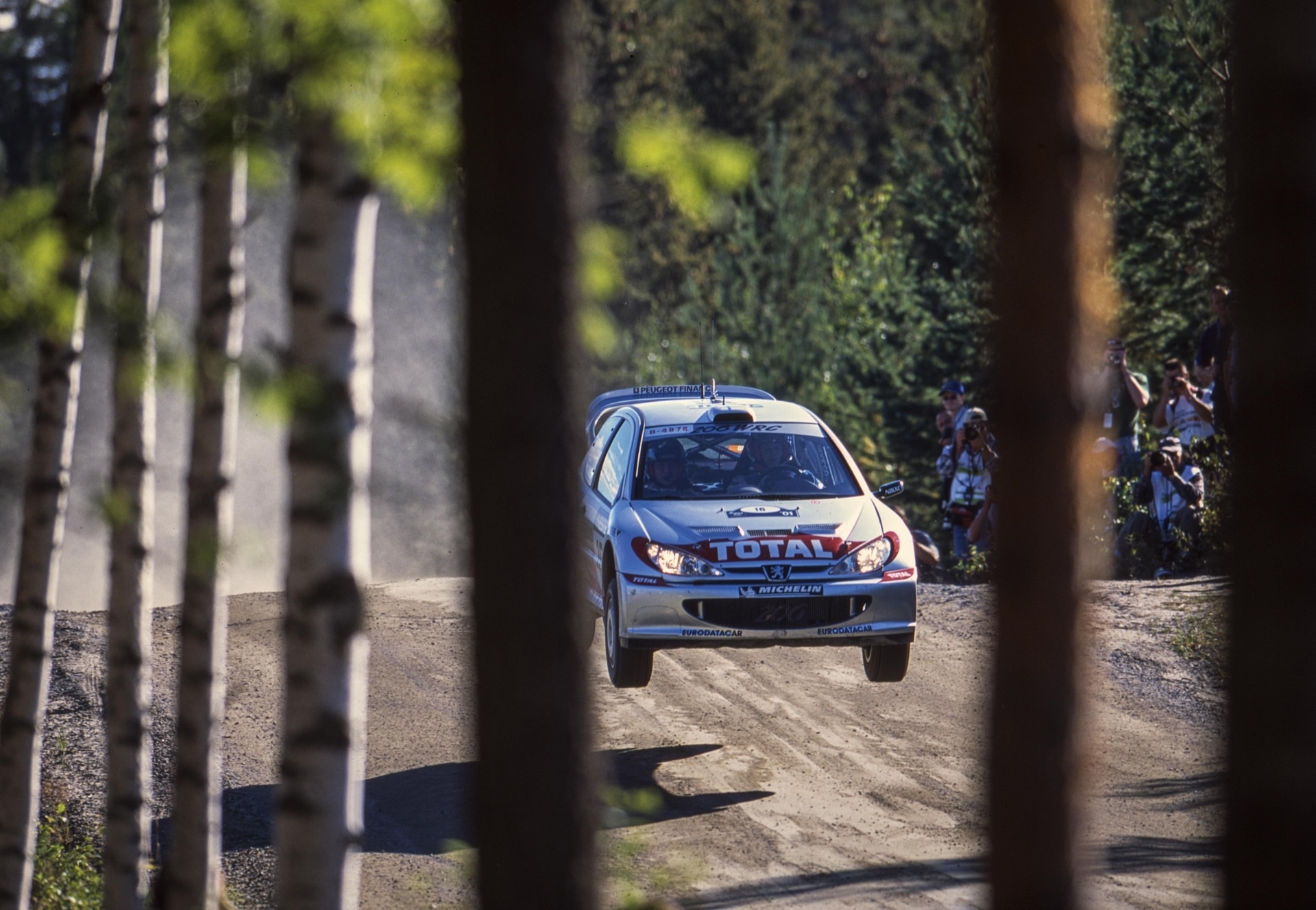 Image source: Peugeot Sport
Grönholm won Rally Finland seven times: 2000, 2001, 2002, 2004, 2005, 2006 and 2007. Only 2003 interrupted eight years of results spanning the Peugeot 206, 307 and Ford Focus. One car being suited to the event cannot explain that sequence.
Jumps are the most striking Finnish images, but linking corners between undulations also determines results. A crest can hide the next section; landing position affects steering and acceleration. Drivers judge from notes and reconnaissance, then execute with the car's current response. Courage explains entering high speed, but cannot guarantee every line is correct.
Seven wins also mean repeating success amid change. Opponents improve, cars develop, routes and weather vary. Familiarity is an advantage, not an exemption from fresh preparation. Saying he could win with his eyes closed would erase the crew's real work each year.
In Finland in 2007, he won sixteen of twenty-three stages, finishing 24.2 seconds ahead of Hirvonen and 69.9 ahead of Loeb. Ford brought the new Focus 07, and its two factory cars finished first and second. His seventh home win was also a successful debut for the updated car.
Afterward he highlighted a higher top speed, while Hirvonen emphasized easier handling. They described changes from different perspectives and backed them with results. The updated car's first rally ended in a Ford one-two.
Moving to Ford in 2006, he did not leave his speed behind
Joining Ford in 2006, Grönholm won the opening Monte Carlo and Swedish rallies. A new team meant learning engineers, car responses and procedures again. Those opening wins quickly showed that his competitiveness was not confined to one historical moment with the Peugeot 206.
His seven wins in 2006 were a personal season best. Ford also won its first WRC manufacturers' crown since 1979. The statistics must remain separate: his seven victories helped the team succeed, but Loeb still won the drivers' title. Rally wins, drivers' points and manufacturers' points answer different questions.
M-Sport and Ford's engineering teams developed the new Focus together, with Hirvonen an important team-mate. Describing one champion as saving a manufacturer alone ignores the other car and the development organization. Grönholm supplied results and experience, while the team supplied a tool for sustained competition.
Ford's later assessment made that interaction clear. Team principal Malcolm Wilson praised not only Grönholm's driving but his encouragement and help for Hirvonen. Passing on experience need not become a vague story of nurturing youth. Comparing settings, discussing rallies and facing the same rivals offered a direct environment for a younger driver to observe and learn.
Hirvonen was not permanently confined to supporting him. He had to build his own speed and judgement and deliver for the team when needed. Ford's two manufacturers' titles combined its leader's wins with the other crew's work. Grönholm found more than a replacement for Peugeot: he found a partnership that kept him in title contention late in his career.
A team-mate's growth was visible in the same rally
Grönholm was the focus in Finland in 2007, but Hirvonen's second place mattered too. He was only 24.2 seconds behind and set several fastest stage times. Against a seven-time winner of the event, the younger team-mate had to develop his own speed while bringing home the two-car result.
That relationship was more real than a simple master-and-pupil story. Grönholm could share experience, but Hirvonen still drove independently; nobody could choose his line beyond a crest for him. Similar cars and the same timing provided a basis for comparison. Shared experience becomes another driver's ability only when he uses it in competition.
Late in the season, Ford sought to secure the manufacturers' title in Ireland, needing enough points from Hirvonen. After Grönholm crashed out on Friday, that task became more important. Hirvonen finished fourth without sacrificing the result the team needed in pursuit of those ahead.
He explained afterward that deliberately driving below full speed also made rhythm difficult to find. That reveals another part of maturity: ability includes understanding what is needed and executing accurately at an unfamiliar pace, not just maximum speed. Ireland's narrow, bumpy and slippery roads made such restraint concretely difficult.
At the British finale, Hirvonen won and Grönholm finished second. The younger driver did not surrender victory as a farewell gift, saying Grönholm would not want to win that way. The champion's influence ultimately appeared in a team-mate able to do the job through his own rally, rather than remain forever in his shadow.
After three tenths of a second, he chose to stop
In New Zealand in 2007, Grönholm beat Loeb by three tenths of a second. After three days, a tiny difference in one action could have changed the outcome. His thirtieth and final WRC win became one of the most frequently recalled moments of his career.
Such a close result can easily be reduced to the last corner or final throttle input. But total time accumulates across all preceding stages; no single action near the finish explains it. Their margin reflected fragments of time gained and lost through a long contest, not only last-minute drama.
He was still pursuing a third world title. On 14 September 2007, he and Rautiainen announced they would leave full-time WRC at season's end. With five wins, a ten-point championship lead and five rounds remaining, this was a choice made while leading, not an explanation after title hopes had disappeared.
His public reasons were clear: he wanted to stop while still able to win and spend more time with his wife and three children. Seeing that as a deliberate arrangement of career and family fits the evidence better than guessing he had lost motivation. He still had rallies to complete and still hoped to leave as champion.
The final rounds therefore carried double pressure. He no longer needed to prove his worth for another long contract, but the third title had become an opportunity with a fixed endpoint. Nobody in September knew the final margin would be four points. Departure was settled; its form still depended on roads, car and driving.
Wales did not return the initiative lost in Ireland
Ireland joined the WRC calendar for the first time. Rain and mud on narrow, undulating asphalt made roads drivers likened to ice. Grönholm crashed out on Friday and Loeb won. Before the finale, Loeb led on 110 points to 104: leader and pursuer had exchanged places.
Winning Britain would not by itself guarantee Grönholm the title. Loeb also had to drop enough points. The crew needed to remain ready to exploit an opportunity while accepting that the rival's result was not entirely under their control. An advantage from earlier in the season could not be called back at the finale.
Welsh weather added difficulty. Heavy rain, thick fog and darkness reduced visibility, while slippery forest roads increased the cost of error. Grönholm held second behind Hirvonen, and Loeb completed his task in third. Grönholm won the super special at Cardiff's Millennium Stadium, but the title was decided by a much longer points process.
The final totals were Loeb 116, Grönholm 112. Ford ended with a British one-two and had already won the manufacturers' crown, but a third personal title did not come. Grönholm identified Ireland's accident, rather than the failure to reverse matters in Britain, as the key loss. That was his assessment of the season, and showed the finale's disappointment had earlier causes.
Four points invite many hypotheticals but do not rewrite the result. One higher position, one fewer accident or a different choice describes conditions that never occurred. He left two titles and a farewell season contested to the end. Their value does not require an imagined third championship.
After retirement, his experience found a different use
Ending full-time WRC did not remove him from racing. He later made occasional starts and tried rallycross. A 2012 Los Angeles X Games crash injured him and left him unconscious for a time; the FIA later reported his discharge and return to Finland. Leaving full-time WRC did not make the other events he entered inherently less risky.
In 2016 he joined Olsbergs MSE's management team and worked with its young-driver programme, which included his son Niclas. His focus widened from his own fastest run to helping prepare a team's cars and events. A world champion's experience offers guidance, but young drivers still develop their own judgement; a parent's results do not become a child's ability automatically.
In 2019 he returned to Sweden with Rautiainen in a privately entered Toyota Yaris WRC. At the FIA press conference he spoke frankly about readapting after years away. Aerodynamics were the most obvious change in the new generation, he thought, with advances in engine and suspension too. Habits that once won titles had to find their place in a different car.
Toyota confirmed afterward that he completed the return event. Its significance was not restarting a full title campaign, but showing a champion and his familiar co-driver facing changed cars and rules. That year Rally GB invited him as its official Rally Legend, bringing his 2000 title and 2007 farewell back to Wales.
As of the end of 2025, Grönholm's WRC record stood at two drivers' world titles, thirty wins and sixty-one podiums. He contributed to three manufacturers' crowns for Peugeot and two for Ford; those five team trophies are separate from his two drivers' titles. Beyond numbers, waiting, partnership and choice remain the clearest themes: a full opportunity came late, yet he chose to leave full-time competition while still able to win.
Timeline
| Year | Key Milestone |
|---|---|
| 1968 | Born in Kauniainen, Finland, on 5 February. |
| 1989 | First WRC appearance. |
| 1991 | Won the Finnish rally championship's Group N title. |
| 1994、1996—1998 | Four Finnish rally championship Group A titles. |
| 1995 | Rautiainen became his regular co-driver. |
| 2000 | First WRC win in Sweden; drivers' champion in his first full world championship season. |
| 2002 | Secured his second drivers' title in New Zealand with two rounds remaining. |
| 2004 | Took the 307 WRC's first official win in Finland. |
| 2006 | Joined Ford, won seven rallies and helped secure the manufacturers' title. |
| 2007 | Seventh Finland win; thirtieth career victory in New Zealand by 0.3 seconds; championship runner-up and end of full-time WRC career. |
| 2016 | Joined Olsbergs MSE's management team. |
| 2019 | Contested and finished Sweden with Rautiainen in a Yaris WRC; official Rally Legend at Rally GB. |
Career Record
| Category | Historical record as of the end of 2025 |
|---|---|
| Name | Marcus Grönholm |
| Principal co-driver | Timo Rautiainen |
| WRC Drivers' World Championships | 2: 2000 and 2002, both with Peugeot. |
| WRC rally victories / podiums | 30 wins / 61 podiums. |
| Rally Finland victories | 7: 2000, 2001, 2002, 2004, 2005, 2006 and 2007. |
| Most wins in one season | 7, in 2006. |
| Drivers' championship runner-up | 2006、2007。 |
| Manufacturers' titles he contributed to | Three for Peugeot in 2000–2002; two for Ford in 2006–2007. |
| Scope of domestic title count | Four Group A titles; including Group N in 1991 gives five Finnish championship category titles. |
Sources and Further Reading
- Forty years of Peugeot Sport
- Peugeot Sport competition heritage
- 2000 Rally GB post-event report
- 2002 Rally New Zealand post-event report
- 2005 Rally Japan post-event report
- Peugeot's factory report on the 2004 Rally Finland
- Peugeot's exclusion from the 2004 Cyprus results
- PSA's WRC withdrawal statement, 2004-11-04
- Rally GB's official Grönholm Rally Legend profile
- Finnish Broadcasting Company archive interview after Grönholm's first win
- Historical results in the official 2021 Arctic Rally programme
- Ford retirement announcement, 2007-09-14
- Ford Rally Finland report, 2007-08-05
- Ford Rally Ireland and manufacturers' title report, 2007-11-18
- Ford Rally GB report, 2007-12-02
- FIA 2019 Rally Sweden press conference
- Toyota's 2019 Rally Sweden post-event report
- FIA announcement on Olsbergs MSE's line-up and management
- FIA report on Grönholm's hospital discharge in 2012
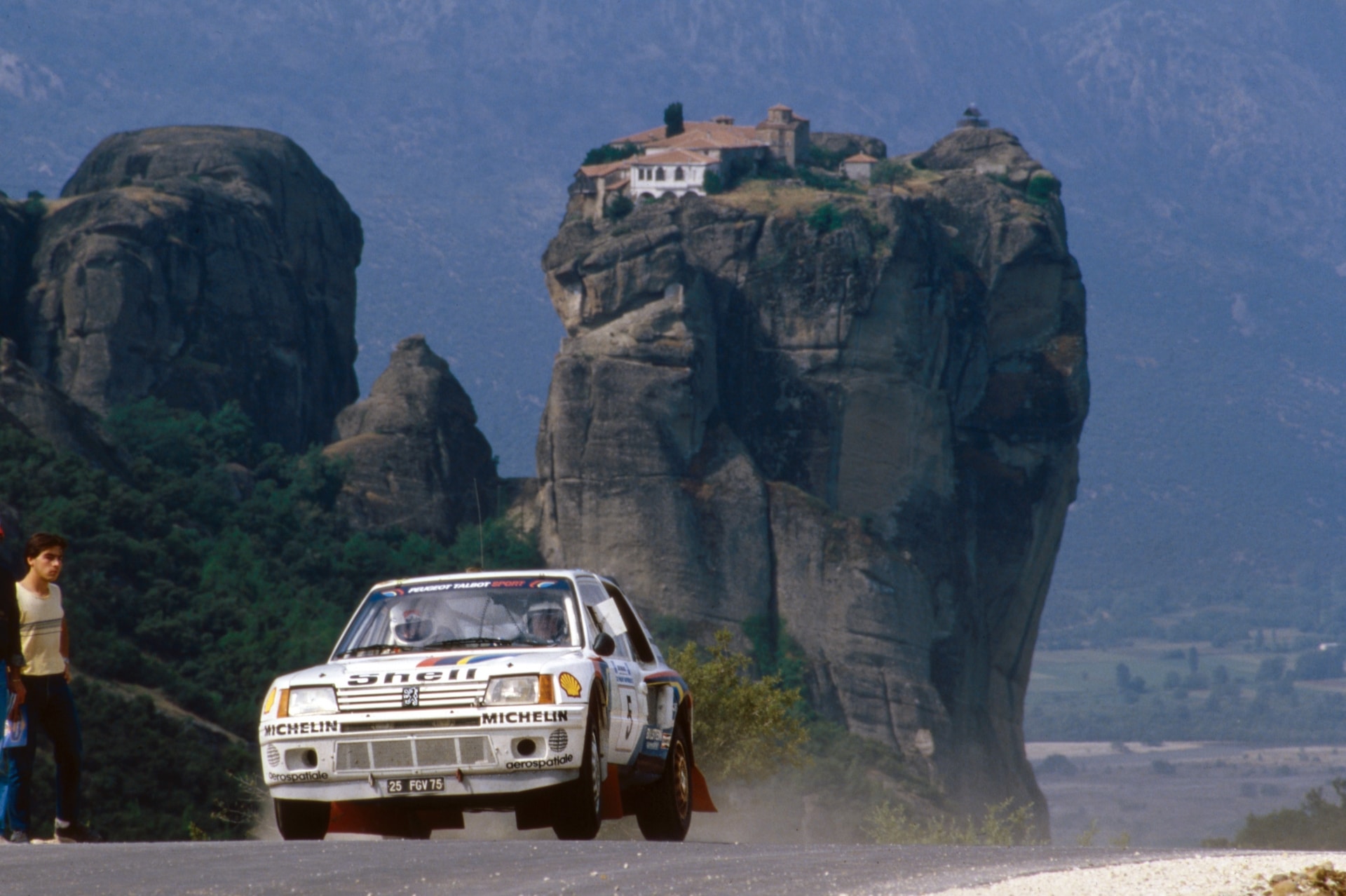 Image source: Peugeot Sport
Peugeot: two generations of small cars, five manufacturers' titles, and a dynasty that did not continue
The two peaks of the 205 T16 and 206 WRC: homologation hurdles, season-long competition, the move to the 307 and the factory withdrawal.
Continue Reading · About 20 Minutes →