
Expand the Chapter List
- Two Australians and a Company Built to Sell Racing Cars
- The BT3 and Gurney's First Win: A Factory Does Not Make an Instant Champion
- The 1966 Choice: Make the New Engine Part of a Race-Ready Whole
- 1967: A Different Champion, a System That Keeps Winning
- From Jack to Ecclestone: A Team Enters Another Era
- The Fan Car: A Radical Answer to a Specific Problem
- The BT49 and 1981: A World Title by One Point
- Working with BMW: From Development Risk to the 1983 BT52
- The Work Behind a Title: Speed Has to Be Managed
- The Last of 35 Wins, and Difficulties That Continued
- INKA SPORTS Analysis: Three Forms of Success, No Universal Formula
- A Name That Remained in Racing
- Timeline
- Honours and Team Record
In 1966, Jack Brabham won the F1 world championship in a car bearing his own surname. The distinction is striking enough to obscure the rest of the history. After Jack retired, Brabham won two more drivers' world titles. Between its championship eras, it built elegant and efficient conventional cars, and also produced a car with a large rear fan that won its only grand prix before being withdrawn.
Brabham's story spans two very different forms of F1. It began as a small manufacturer selling cars to drivers in several categories. By the time Nelson Piquet won with BMW turbo power, engine partnerships, aerodynamics, tyres and pit work required much tighter organisation. Four drivers' titles, two constructors' titles and 35 grand prix wins came from different people, different power units and repeatedly changing ways of surviving.
Returning these cars to the races of their time reveals what is most worth remembering about Brabham. It often found a technical path different from its powerful rivals, yet repeatedly faced the same question: how to turn one clever design into a competitive team that could endure.
Two Australians and a Company Built to Sell Racing Cars
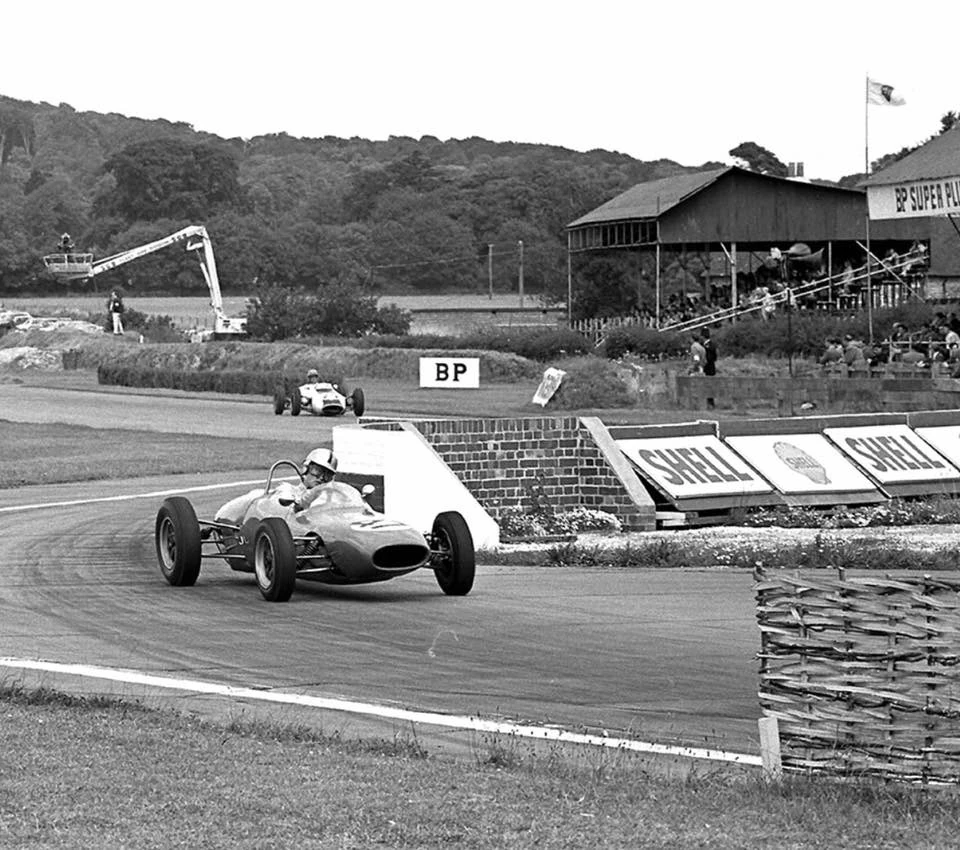 Image source: Brabham
Jack Brabham and Ron Tauranac met through Australian hillclimbing. Jack moved to Britain in 1955 to pursue higher-level racing, then invited Tauranac over in 1960, beginning their partnership in Motor Racing Developments. Jack had already won a world championship with Cooper, but the new enterprise did not exist solely to serve his F1 cockpit. Building cars for other drivers was part of its work from the start.
Their abilities connected at different points. Jack understood the relationship between driving, set-up and machinery, and knew what racing actually demanded. Tauranac turned those needs into design, manufacture and deliverable cars. F1 often compresses a racing car into one name, but Brabham's early success depended on that division of work. Bearing the owner's surname did not mean the owner alone drew every plan, machined every part and assembled every engine.
The 1961 BT1, originally called MRD1, was intended for Formula Junior and appeared before Brabham's own F1 car. The order matters: the company's history cannot begin only with its first grand prix start. Customer cars had to work for different drivers, be serviceable and have parts available. Buyers also needed confidence that the next car would be worth choosing. Results brought honour, but also established the manufacturer's reputation.
This foundation distinguished Brabham from a marque serving only one factory team. Its cars were not merely the two machines appearing at grand prix weekends, but a product range across categories. Later F2 partnerships continued that pattern. Jack might be fighting for a world championship, while Tauranac and the factory still dealt with other drivers' orders and races. F1 was the most prominent shop window, not the whole early business.
The BT3 and Gurney's First Win: A Factory Does Not Make an Instant Champion
The BT3 made its F1 world championship debut at the 1962 German Grand Prix. For Jack, already a two-time drivers' champion, it was a different kind of beginning. Driving a championship-winning car and bringing his own car to championship-winning level were connected but distinct tasks. The team had to integrate chassis, Coventry Climax engine, tyres and race operations step by step.
The breakthrough came from Dan Gurney. On July 5, 1964, he drove the BT7 to Brabham's first F1 world championship victory at Rouen in France, then won the Mexican Grand Prix at the end of the season. The founder did not deliver the first win himself, demonstrating that the enterprise had begun to extend beyond Jack's personal driving. A team gains lasting competitiveness when another driver can win with its car.
From the 1962 debut to two wins in 1964, Brabham did not leap past every rival through one miraculous invention. It improved the whole car within existing technology: making the chassis suit the driver, keeping components working over a race distance and carrying lessons from testing into the next round. For a small manufacturer, that ability to deliver incrementally mattered more than a radical design prospectus.
Gurney's wins also laid the groundwork for 1966. Brabham was not an outsider that suddenly appeared when the rules changed. Before the three-litre era, it had already proved it could build a grand prix winner. Opportunities from new regulations could only be taken by a team already possessing design, manufacturing and racing experience.
The 1966 Choice: Make the New Engine Part of a Race-Ready Whole
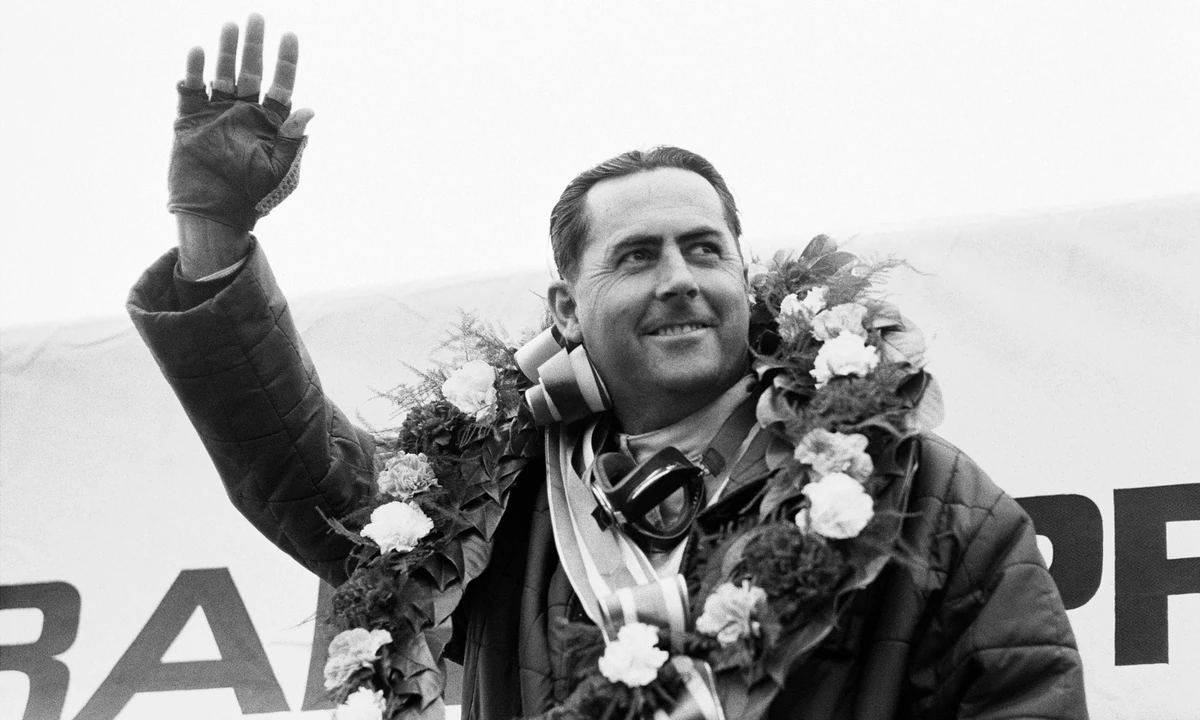 Image source: Brabham
In 1966, the capacity limit for naturally aspirated F1 engines rose from 1.5 to 3 litres. Doubling displacement meant more than installing a larger engine in an old car: weight, cooling, fuel requirements and chassis packaging all changed. Teams had to choose between new-engine potential and development risk. Brabham's answer came from Australian components company Repco.
Jack saw a useful basis in Oldsmobile's aluminium V8 block and encouraged Repco to develop it into racing power. Phil Irving and Frank Hallam played key roles in design and project delivery respectively, while Tauranac handled the chassis. This was neither a production engine simply dropped into an F1 car nor a one-man garage miracle. It was focused racing engineering built on an existing foundation within limits of time and resources.
The BT19 did not define itself by chasing the most cylinders. A compact V8 and a relatively pragmatic overall design let the team focus earlier on performance over a full race. Peak power on an engine dyno alone cannot judge that route. A car must start, accelerate, brake, change direction and bring its driver home after repeating those actions dozens of times. A component's advantage becomes points only when integrated into the whole car.
Jack won consecutively in France, Britain, the Netherlands and Germany, ultimately taking the title with 42 counting points. Brabham also won the constructors' championship. Four straight wins did not make reliability and speed opposing qualities. Reliability allowed a driver to realise speed, while sufficient pace made consistent finishes worth more than minor points. The 1966 outcome required both.
1967: A Different Champion, a System That Keeps Winning
A year later, Denny Hulme scored 51 points to Jack's 46, and Brabham again took both drivers' and constructors' titles. For a team still carrying its founder's surname, 1967 supplied another proof: the drivers' champion no longer had to be the founder himself. Hulme won in Monaco and Germany and completed his championship through the results of a whole season.
The season moved from the BT20 to the BT24; Hulme was still using the BT20 when he won Monaco. The two cars and Repco power continued the previous year's foundation, but consecutive titles cannot be understood as using an unchanged solution again. Rivals were improving, the cars needed adjustment and drivers had to convert opportunities into results. Hulme's title showed that Brabham offered more than a special tool suited only to Jack: it could support another elite driver's full championship campaign.
One detail is easily flattened by the legend: Jack was still fighting for the title, and the final gap was only five points. He won in France and Canada, while Hulme won Monaco and Germany. They finished with the same number of victories, with other races' finishes and points separating them. Brabham's success combined overall team strength with competition between its two cockpits that lasted to the end of the year.
The environment then changed rapidly. The Ford-Cosworth DFV became powerful, accessible propulsion for many British teams, while chassis and aerodynamic competition intensified. Brabham's method of winning two consecutive titles could not automatically secure the next success. Every effective historical solution depends on particular conditions. When engine supply and whole-car technology change, even winners must choose again.
From Jack to Ecclestone: A Team Enters Another Era
In 1970, Jack took his 14th and final personal F1 victory at the South African Grand Prix and retired from driving at season end. Tauranac took over Motor Racing Developments and the team, then sold after the 1971 season. Bernie Ecclestone took charge from 1972. The co-founder's period in control linked the Jack era to the Bernie era.
The Brabham name remained, but the organisation and development priorities gradually changed. The early customer-car manufacturing tradition and running an F1 team that had to keep chasing the technical frontier became increasingly difficult to regard as the same job. F1 investment grew more specialised, and results depended more heavily on concentrated development and operations across the team.
Gordon Murray became the defining engineer of this period. Carlos Reutemann took three wins in the 1974 BT44, in South Africa, Austria and the United States. In 1975, the BT44B won in Brazil with Carlos Pace and in Germany with Reutemann. Two versions across two seasons repeatedly returned Brabham to the top step of the podium.
Brabham in this period was more than the later fan car's extraordinary image. The BT44 series showed how effectively conventional elements could be organised: Cosworth power, a clear chassis layout and continuous development combined into competitiveness. Rather than crediting every success to a sudden inspiration, wins in two consecutive seasons reveal another side of Murray's work: turning ideas into repeatable racing tools.
The Fan Car: A Radical Answer to a Specific Problem
The 1978 BT46B was memorable first because it looked unlike other F1 cars. The large rear fan became its identifying feature, and Niki Lauda won the Swedish Grand Prix in it. Remembering only the fan, however, hides the problem it addressed: Brabham's Alfa Romeo flat-12 engine occupied space needed for airflow passages beneath the car.
Lotus's ground-effect cars demonstrated the value of low pressure beneath the chassis for generating grip. Brabham could not simply copy the same passages around its existing engine shape. Murray's answer used a fan to extract air, linking cooling with pressure difference beneath the car. Reliable skirt sealing directly determined whether the system could keep producing the expected downforce.
That raised a technical dispute: was the fan primarily for cooling, or a movable aerodynamic device? Murray later recalled the team's explanations to the governing body about the proportion of airflow used for cooling. As a participant's recollection, this provides an important perspective, but cannot reduce the whole dispute to one uncontested verdict. What is certain is that Lauda's Swedish victory remains in the official results.
The BT46B was then withdrawn amid controversy and pressure from other teams, never contesting another grand prix. One appearance and one win make an exceptionally rare story, easily inviting unlimited extrapolation: had it continued, it would have won every race. That season never happened. It proved that Brabham found an effective, highly specific solution. Technical feasibility, interpretation of the rules and relationships between teams together determined how far it could go.
The BT49 and 1981: A World Title by One Point
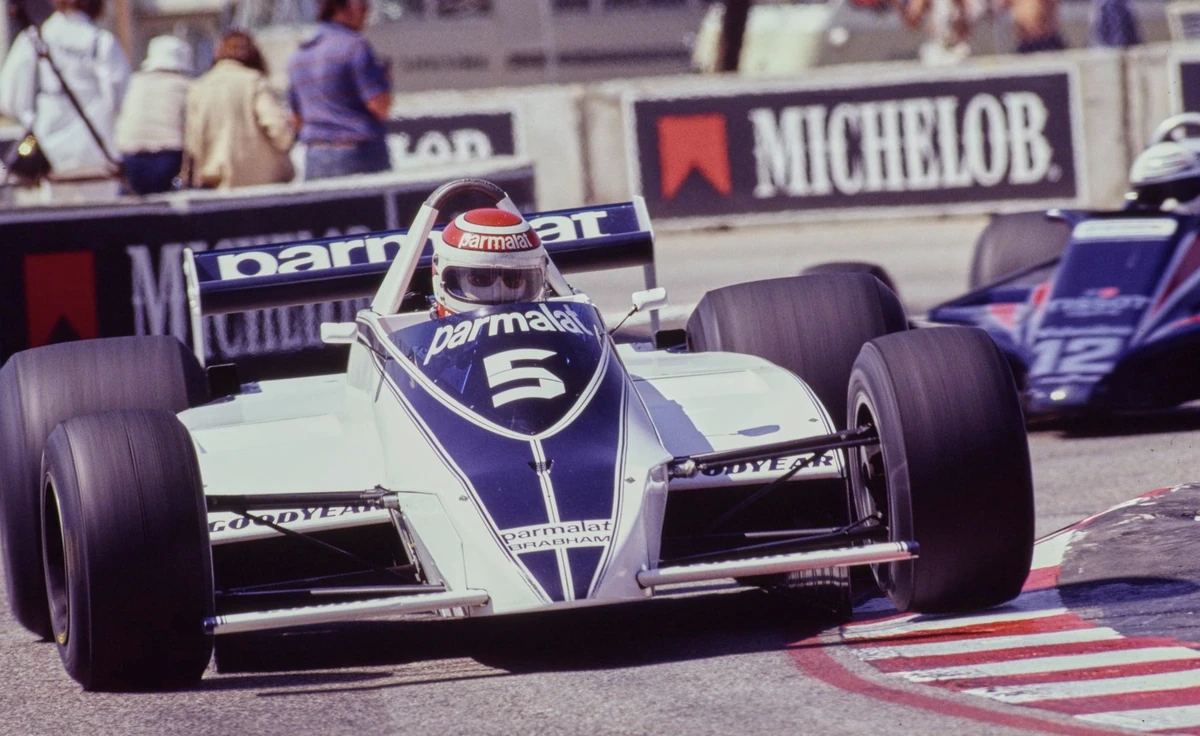 Image source: Brabham
In 1981, Piquet won the drivers' world championship in a Cosworth-powered Brabham. The final counting points were 50 to 49, with Williams driver Reutemann one point behind. This was not a season whose outcome had been certain from the start. The Las Vegas finale still decided the title, and Piquet finished fifth in intense heat to collect the points he needed.
The connection with the 1966 title is continuity of team history, not continuity of one technology. The founder had long left the cockpit, while the leading designer, engine supplier and aerodynamics were different. Crossing such changes is among the strongest evidence of Brabham's vitality. It was never permanently fixed in the form it had when Jack won in his own car.
The drivers' and constructors' titles must also be separated. Williams won the 1981 constructors' championship, with Brabham second. Piquet completed a championship-winning season, but that did not mean Brabham's two cars collectively outperformed every rival. The distinction would recur in 1983. A champion driver's season and a team's overall capability overlap, but are not identical.
During the 1981 title fight, Brabham was already developing the BMW-powered BT50. It pursued current results with the mature Cosworth car while preparing the next step along the turbo route. The overlapping work meant no neat dividing line separated winning a championship from changing technology. Development of the new programme began before the old one had won its trophy.
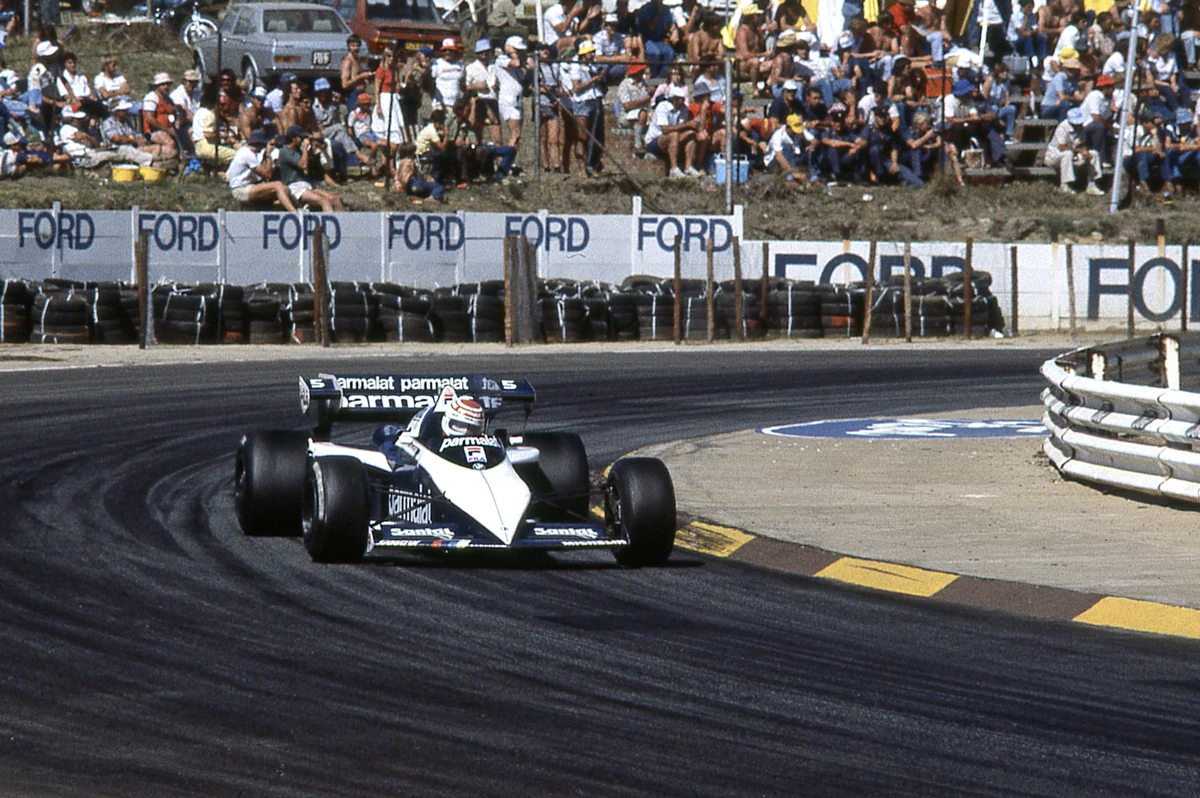 Image source: Brabham
Working with BMW: From Development Risk to the 1983 BT52
BMW's M12/13 for Brabham was a 1.5-litre inline-four turbo, with engine development driven by Paul Rosche and colleagues. The partnership did not succeed immediately in 1982, but Piquet's Canadian victory that year showed its grand prix-winning potential. The next task was to realise that potential at more circuits and over more race distances.
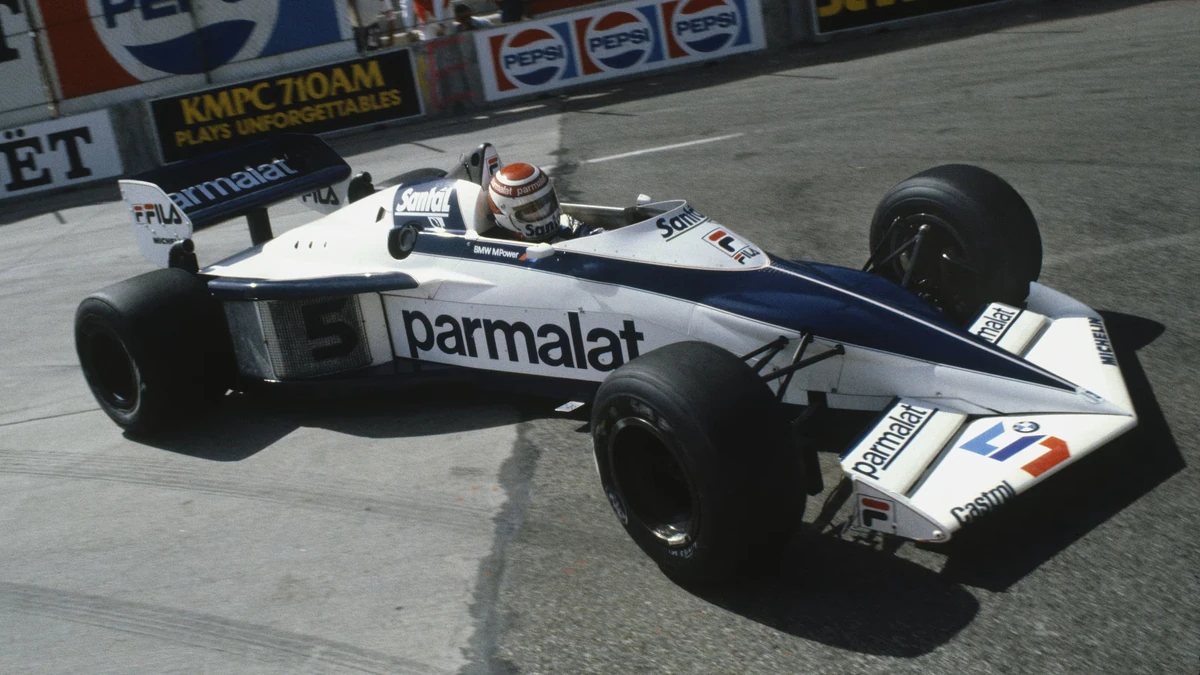
The 1983 rule changes further compressed preparation time. Flat floors removed the Venturi tunnels beneath the sidepods and reduced downforce. Murray moved the radiators rearwards, seeking more rear-axle load to improve traction, and reorganised space previously used for underfloor airflow. The BT52's arrowhead outline, narrow at the front and spread at the rear, emerged from that regulatory and packaging change.
Piquet won the Brazilian opener, then took consecutive victories in the Italian and European Grands Prix late in the season. The European race here was at Brands Hatch. At the Kyalami finale, he finished third and beat Renault's Alain Prost by 59 points to 57, becoming the first driver to win the F1 world championship in a turbocharged car.
Ferrari won the 1983 constructors' championship and Brabham placed third. Piquet's individual title remained the programme's major breakthrough. Turbo technology continued to develop, and the enormous power of later qualifying engines belonged to the next phase. The immediate achievement for Brabham and BMW was turning an engine partnership still finding its feet the year before into a complete car capable of supporting a title challenge.
The Work Behind a Title: Speed Has to Be Managed
Turbo racing tied engine potential closely to how it was used. Boost, fuel consumption, mechanical load and race distance had to be considered together; driving could not mean demanding maximum power at every moment. In a 2025 retrospective interview with BMW Group Classic, Piquet particularly recalled extensive testing and the work of the team and BMW's test personnel in resolving technical problems.
Piquet recalled that fuel-consumption problems were addressed in testing after race weekends. The key was that feedback could enter development: the driver reported what happened, engine and test staff investigated the causes, and changes were then checked by running the car.
The BT52 also built efficient race preparation into its design. Murray adopted a modular approach: the rear engine, radiators, transmission and suspension could be prepared as an assembly away from the car and then fitted. For a small team needing frequent powertrain maintenance, accessible and replaceable components let mechanics work more effectively through a race weekend.
Planned mid-race refuelling also shaped the whole car. A smaller tank gave more freedom in packaging, and the design no longer had to revolve entirely around carrying fuel for the full distance. The benefit, however, depended on completing the pit operation. Competition therefore extended beyond corners: driver, pit equipment and mechanics became parts of the same racing plan.
These details make the 1983 title richer than “a powerful engine in a beautiful chassis”. Brabham had to coordinate power, weight distribution, servicing and strategy. The British team, German engine manufacturer and the expertise of Murray, Rosche and Piquet produced points only when brought into one shared working process.
The 59–57 score also shows how close the contest remained. Piquet won only three rounds, with points gained and lost elsewhere also deciding the outcome. Testing mattered within those fluctuations: racing exposed a problem, the next running sought an improvement, and the team gradually accumulated the overall performance needed to complete a title campaign.
The Last of 35 Wins, and Difficulties That Continued
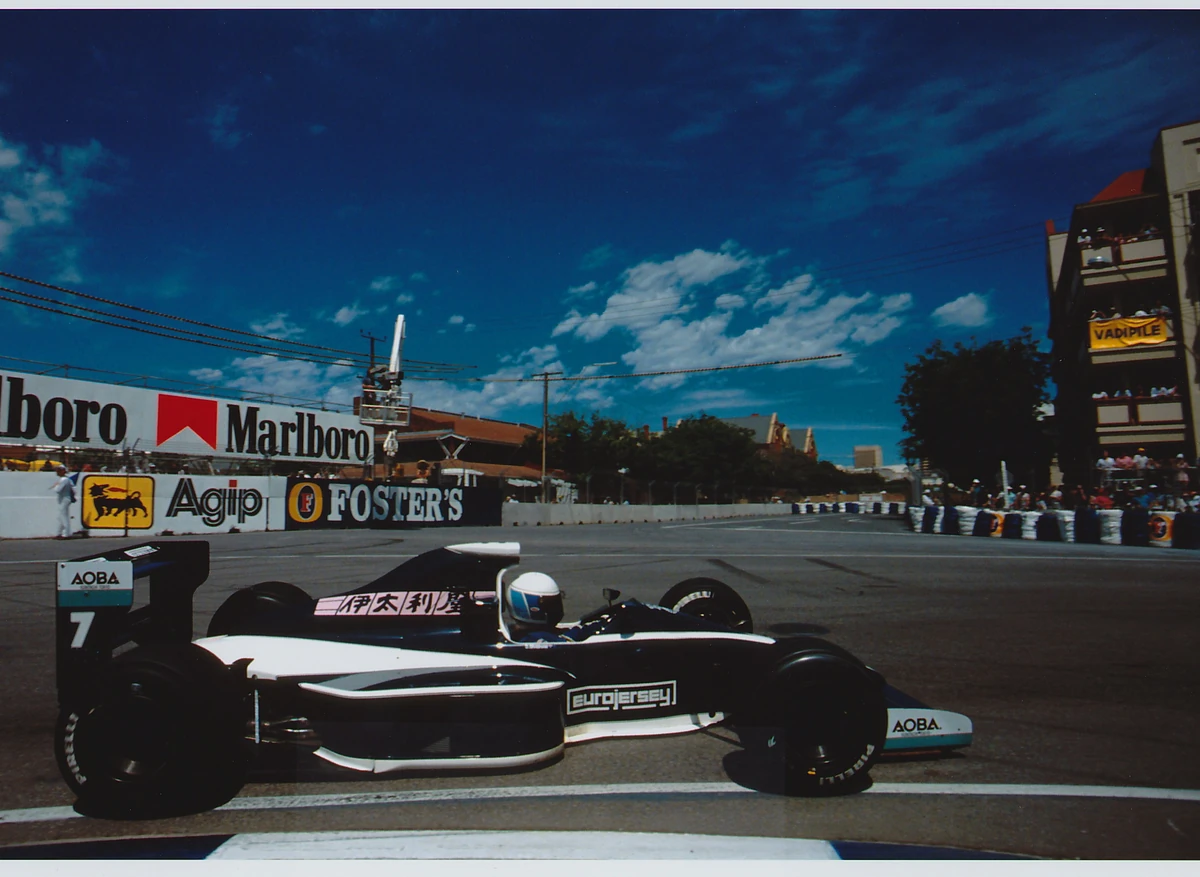 Image source: Brabham
On July 7, 1985, Piquet won the French Grand Prix. It was Brabham's 35th and final F1 grand prix victory. The team never returned to the top step of the podium in subsequent seasons.
The later record gradually moved away from the championship era. Brabham missed the entire 1988 F1 season. On returning in 1989 with Judd engines, it scored eight points and finished eighth in the constructors' standings. The comeback kept the name on the entry list, but a long competitive distance still needed to be closed.
Missing a season removes a year of official race opportunities; returning requires the car, drivers and on-site work to be organised again. The 1989 points showed that Brabham could still complete worthwhile races, but were far from sustained championship-level performance. Viewing its final period from that actual position is clearer than projecting early trophies straight into its later garage.
Its final grand prix was Hungary in 1992, where Damon Hill finished eleventh. From the BT3 in 1962 to that last appearance, Brabham's world championship history covered roughly thirty years. The ending did not repeat the glory of 1966 or 1983, but belongs to the same history. Keeping only the title years makes it harder to understand how the team changed and lost competitiveness.
INKA SPORTS Analysis: Three Forms of Success, No Universal Formula
Brabham's three most famous car groups correspond to three different engineering situations. Under new capacity rules, the BT19 chose an engine-and-chassis package that could mature relatively early. The BT46B offered a special solution to the conflict between the existing engine layout and ground-effect requirements. The BT52 reorganised the whole car amid regulation changes and turbo development, using testing and cooperation to turn performance into a championship.
It is therefore difficult to define Brabham as either “conservative” or “radical” across all thirty years. The pragmatism of 1966 and boldness of 1978 do not contradict one another; they addressed different problems. Engineering judgement matters because it fits the rules, resources and racing task of the moment, not because the proposal looks sufficiently astonishing.
The team's long-term fate adds another requirement. An effective solution can win a race; a mature combination can win a season. Survival requires the next development cycle, staffing and funding to keep pace. The BT46B's withdrawal after one win and the absence of further titles after the BT52 show that technical success does not create a permanent advantage on its own. Brabham's end cannot casually be attributed to one component or one person's departure.
For today's reader, Brabham offers a way to examine a racing car: first ask what problem it addressed, then what it sacrificed and gained, and finally how much official racing actually proved. The fan car's single victory, the BT19's four consecutive wins and the BT52's championship campaign answer at different scales. Preserving those scales lets us understand what the three cars really achieved.
A Name That Remained in Racing
Brabham's four drivers' titles belong to Jack, Hulme and twice to Piquet. That list itself spans the founder's era and a more professionalised team era. It connects Australian, New Zealand and Brazilian drivers with British car construction, Australian engine engineering and German turbo development.
Seeing a preserved BT19, BT49 or BT52 today should not call to mind a legend rising without interruption. Brabham's history includes beginnings, reversals, highly creative changes of direction and experiments that could not last. Those uneven parts make it more than a name on a championship list.
From building small single-seaters for customers to making its driver the first turbo world champion, Brabham repeatedly changed how it competed. It did not remain in F1 forever, but left enough actual racing to show that different resources can lead to different answers. Each answer suited its own era, and each still deserves to be understood individually.
Timeline
| Year | Event | Historical Significance |
|---|---|---|
| 1960 | Jack invited Tauranac to Britain and began the MRD partnership | The manufacturing company's beginning |
| 1961 | The Formula Junior BT1 appeared | Customer cars came before the team's own F1 car |
| 1962 | The BT3 debuted at the German Grand Prix | Brabham entered as an F1 constructor |
| 1964 | Gurney won the French and Mexican Grands Prix | The team's first winning season |
| 1966 | Jack and the team both won titles | The BT19-Repco combination succeeded |
| 1967 | Hulme became champion; the team retained its title | First consecutive seasons winning both titles |
| 1970—1972 | Jack retired; Tauranac took over and then sold to Ecclestone | A new phase of management and ownership |
| 1974—1975 | The BT44 and BT44B took five wins between them | A major step in the Murray era |
| 1978 | Lauda won in Sweden in the BT46B | The fan car's only grand prix appearance |
| 1981 | Piquet won the title by 50 points to 49 | The second championship era began |
| 1983 | Piquet won the title in a BMW turbo-powered car | The first turbo-powered drivers' world champion |
| 1985 | Piquet won the French Grand Prix | The team's 35th and final win |
| 1988—1989 | Returned after missing a season | A late-period return to competition |
| 1992 | Hungary was the final grand prix | The end of the F1 racing history |
Honours and Team Record
| Category | Record |
|---|---|
| F1 World Championship Participation | 1962–1992; did not compete in 1988 |
| Drivers' World Championships | 4: Jack Brabham in 1966, Denny Hulme in 1967, Nelson Piquet in 1981 and 1983 |
| Constructors' World Championships | 2: 1966, 1967 |
| Grand Prix Wins | 35 |
| First Win | 1964 French Grand Prix, Dan Gurney |
| Final Win | 1985 French Grand Prix, Nelson Piquet |
| Final Grand Prix Appearance | 1992 Hungarian Grand Prix; Damon Hill finished 11th |
| Key Historical Figures | Jack Brabham, Ron Tauranac, Bernie Ecclestone, Gordon Murray |
| Main Engine Suppliers in Title Seasons | 1966–1967 Repco; 1981 Ford-Cosworth; 1983 BMW |
| Statistical Scope | F1 World Championship; as of December 31, 2025 |
Sources and Further Reading
- Brabham Official Historical Timeline
- F1: Ron Tauranac and Brabham
- Institution of Mechanical Engineers: The 1966 BT19
- Gordon Murray Recalls the BT46B's Design and Withdrawal
- F1 Technical Retrospective: BT52 Packaging, Maintenance and Pit-Stop Design
- BMW Group Classic: Piquet Recalls 1983
- F1 Official: 1966 Drivers' Standings
- F1 Official: 1967 Drivers' Standings
- F1 Official: 1981 Drivers' Standings
- F1 Official: 1983 Drivers' Standings
- F1 Official: 1983 Constructors' Standings
- F1 Official: 1985 French Grand Prix
- F1 Archive: Hungary 1992 and Brabham's Final Appearance
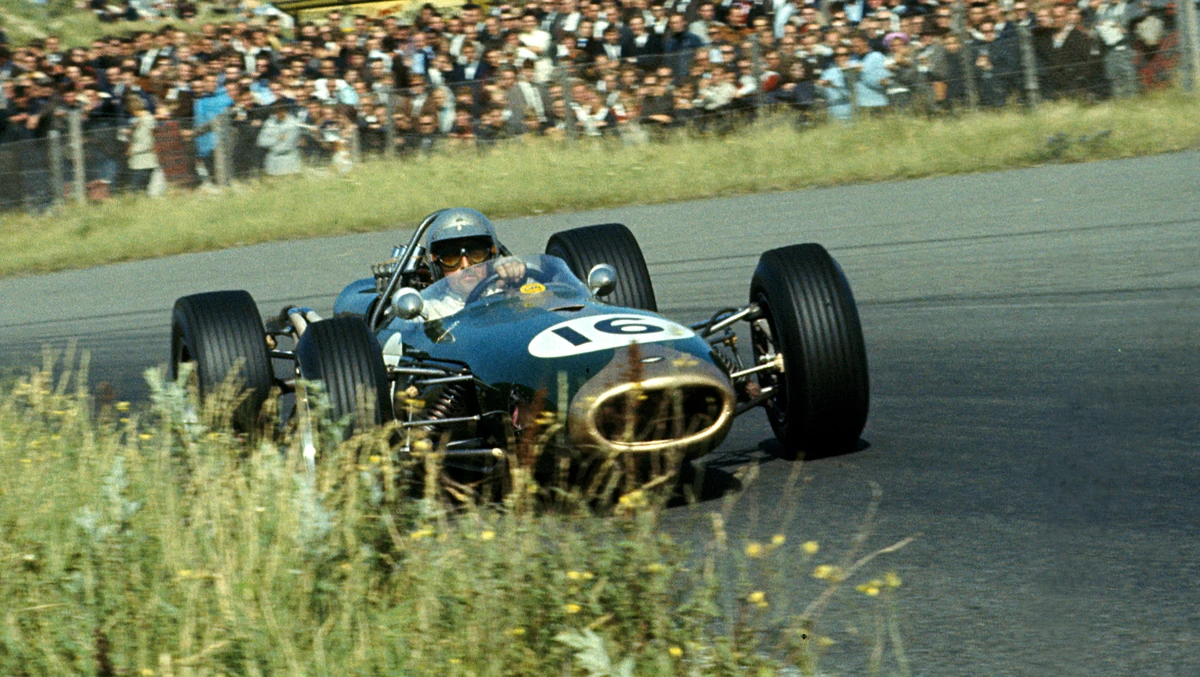 Image source: Brabham
Jack Brabham: The Three-Time World Champion Who Connected Driving and Building
Pushing at Sebring, five straight wins, the Indy 500 and a title with his own team connect the two lives of driver and builder.
Continue Reading · About 18 Minutes →