
Expand chapter list · 15 sections
- Key milestones
- 1. Starting over, without even a car of its own
- 2. The first win at Silverstone began beneath the car
- 3. 1980: A championship takes an entire season
- 4. One win can still make a champion
- 5. Honda power arrived, but the boss was no longer there every day
- 6. The 1987 double, and the car that suddenly slowed afterwards
- 7. Why was the FW14B so clearly faster?
- 8. The more successful the technology, the more a rule change demands a fresh understanding
- 9. 1994: A year no trophy can sum up
- 10. Hill and Villeneuve carried the 1990s advantage to its final peak
- 11. The BMW era: The last real approach to a season title
- 12. After one victory, an entire season still needs rebuilding
- 13. Beyond the trophy room, rebuilding must still answer on track
- Williams championship record
Key milestones
After the 2020 Italian Grand Prix, the Williams family left the team it had run for more than forty years. Blue-and-white cars remained in the paddock, the factory still had to design the next chassis, and the name stayed on the entry list. The change lay behind that name: Frank Williams and his daughter Claire would no longer decide the team's future.
For a team with nine F1 constructors' world titles, this ending is difficult to reconcile with its trophy room. Mansell's red No. 5, Prost's final championship, Hill crossing the line at Suzuka and Villeneuve turning the title fight around at Jerez seem to belong to another racing world: one in which a British team could build a car that major manufacturers had to chase.
Dorilton's purchase brought fresh resources needed to keep racing. The family's choice to leave meant that continuity came with a change of identity. Williams's history therefore poses a harder question than "How do you win a championship?" How can a team built around independence and engineering ability change enough to retain its place in competition? The answer lies in its very different fresh starts.
1. Starting over, without even a car of its own
The present Williams team's starting point is 1977. Frank had run racing teams before, experienced a shortage of funds and lost control of his operation. After parting with Walter Wolf, he and engineer Patrick Head founded Williams Grand Prix Engineering and began again from scratch.
It was no lavish beginning. Formula 1's fortieth-anniversary team retrospective records that they first worked in a disused carpet warehouse in Didcot. At the 1977 Spanish Grand Prix, Patrick Nève drove a purchased March chassis. There was no immediate sign of a future champion team, only a small group determined to remain in racing.
Frank and Head's partnership later became the central organisational foundation of Williams. Frank secured money, partners and opportunities to race; Head turned limited resources into cars that could be built, serviced and improved. A functioning connection had to exist between sponsorship funds and design drawings. Without it, even the most determined owner could do little but keep hunting money for the next race.
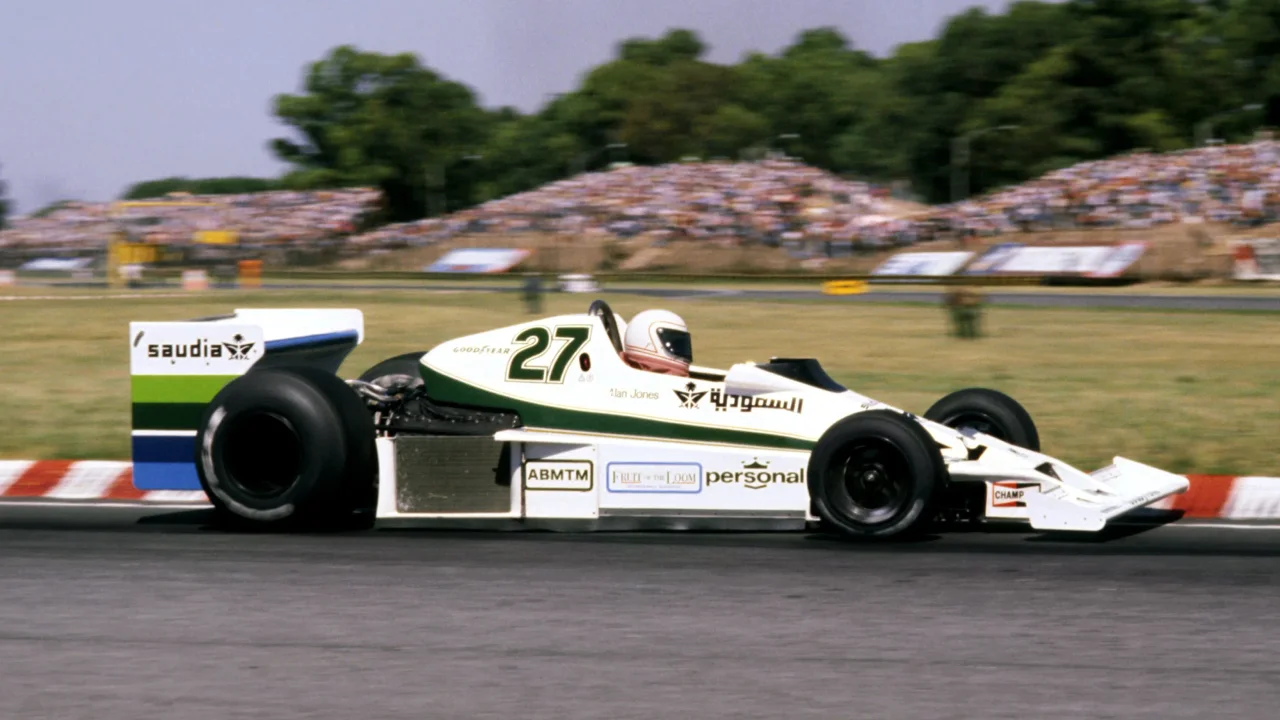
The FW06 of 1978 finally gave the team a creation of its own. Alan Jones joined and brought home a podium during the season. For the newly rebuilt Williams, this meant beginning to move beyond buying somebody else's car to compete. Its engineers could now alter their own machine directly from track feedback, and racing became a process of accumulating knowledge rather than simply consuming funds.
2. The first win at Silverstone began beneath the car
Williams took its first F1 Grand Prix victory at the 1979 British Grand Prix. Clay Regazzoni won, although team-mate Jones had been the more conspicuous driver beforehand. Jones took pole and led the race, only to retire with a water leak, leaving Regazzoni to bring the team's first win home.
The key to that race was not some sudden secret in the engine. Head's FW07 made full use of ground effect: its underbody shaped airflow to press the car harder against the road at speed. The tyres could therefore carry greater cornering loads, allowing the car to take bends faster.
Formula 1's historical account specifically notes that a local modification beneath the car during the Silverstone weekend significantly strengthened that effect. It fits Williams's later pattern of success: a concept must pass through manufacturing, sealing, stiffness and track setup before a paper advantage becomes lap time. Knowing that ground effect works is a long way from owning a car that exploits it consistently.
The first victory also exposed racing's cruelty. The driver who first demonstrated the pace did not finish; the team-mate who finished collected the reward. A team needs two cars, reliable components and shared technical knowledge. Its result cannot rest entirely on one person's perfect weekend. At Silverstone, Williams first saw that it could win as a complete team.
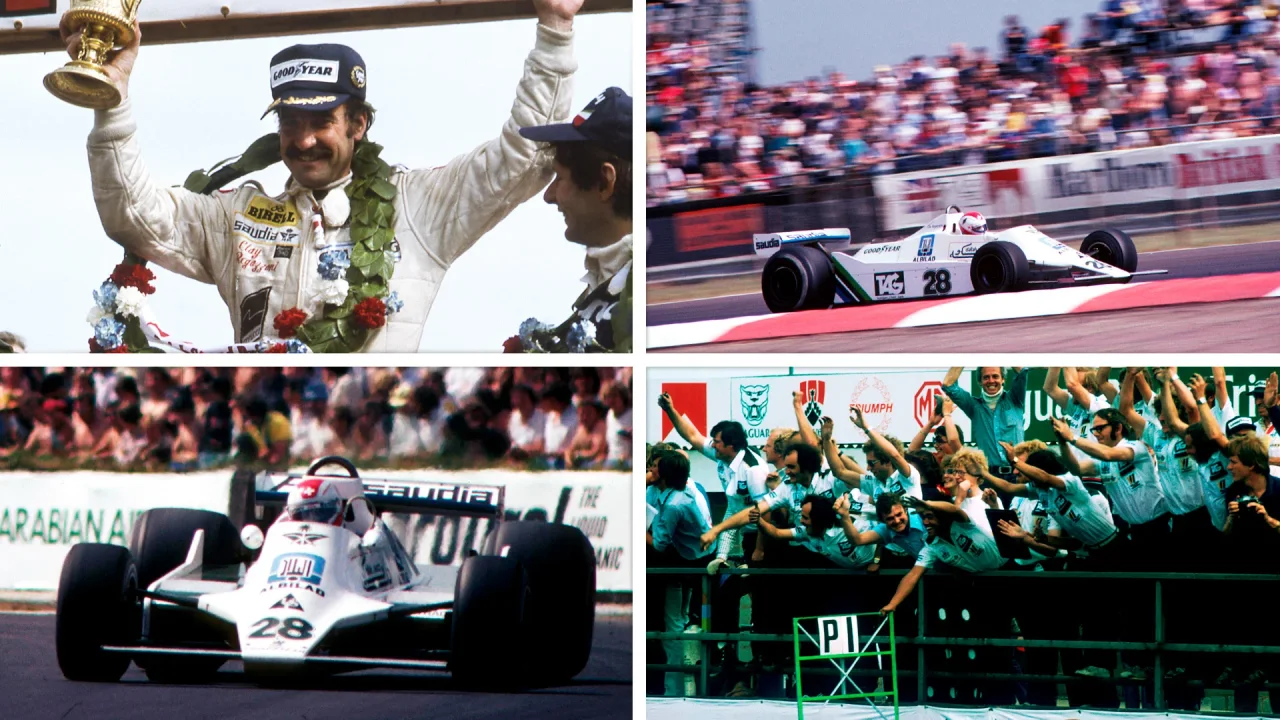 Photo: F1.com
3. 1980: A championship takes an entire season
In 1980 Jones won the drivers' world title and Williams took the constructors' crown. Only a few seasons separated rebuilding from the double. The FW07 and its developments showed that the team had more than one lucky idea: it possessed a technical approach that could keep improving.
The 1980 British round provides a concrete example. Jones and Reutemann started on the second row behind the two Ligiers. Pironi and Laffite both suffered tyre failures caused by cracked wheel rims; Jones won and Reutemann finished third. Williams secured victory and points with its other car. Jones then took five more podiums in the remaining six rounds, turning the British opportunity into a season-long advantage.
Williams retained the constructors' title in 1981, but narrowly missed the drivers' championship. Carlos Reutemann finished just one point behind champion Piquet, with his internal conflict with Jones forming an important backdrop. In Brazil, Reutemann did not hand the lead back as the team's arrangement required, souring relations between the drivers.
The best-performing car can still lose the drivers' title. Two equally competitive machines take points from rivals, but also from each other. Driver management is never merely a question of personal relations to discuss after the season: it enters the championship arithmetic directly. For a team becoming accustomed to winning, success quickly brought a different difficulty.
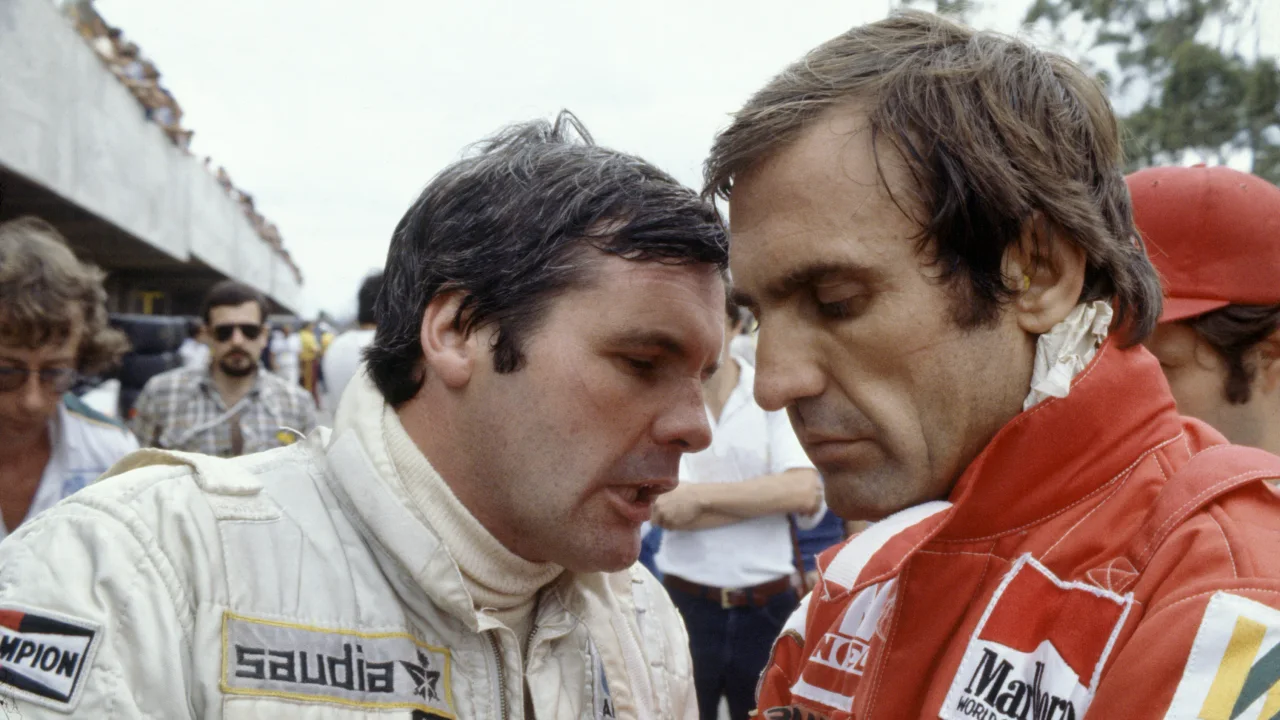 Photo: F1.com
4. One win can still make a champion
In 1982 Keke Rosberg won just one Grand Prix but secured the drivers' world title. Judged only by victories, it hardly resembles a conventional season of dominance. In the context of that year, however, it is one of the results that best reflects the nature of the championship.
It was a season torn apart by accidents, deaths and injuries, driver changes and technical differences. Turbocharged cars had formidable power, while naturally aspirated machinery could still compete on suitable tracks and in suitable conditions. Rosberg's Williams was not fastest every weekend, but he repeatedly brought it into valuable points-paying positions.
On the way to the title, he lost to de Angelis in Austria by just 0.050 seconds, but kept the six points for second. Two weeks later, at the Swiss Grand Prix held at Dijon in France, Rosberg started eighth, passed Prost late in the race and won by 4.440 seconds for his only victory of the year. One pursuit did not erase the earlier narrow defeat, but both results counted towards his title.
Williams learned to contend for titles in different ways during this period. In 1980 a strong team and its leading driver rose together; in 1982 the task was to preserve opportunities in an exceptionally turbulent season. The technical environment kept changing, however. A mature naturally aspirated package could not withstand the turbo era forever. The next championship challenge needed a new engine partner and another reinvention of the team's advantage.
5. Honda power arrived, but the boss was no longer there every day
The Honda partnership carried Williams into the heart of the turbo era. In qualifying at Silverstone in 1985, Rosberg twice completed flying laps at an average speed above 160 miles per hour, roughly 257 kilometres per hour. It was a new F1 lap-average record at the time, giving the British crowd a vivid view of the potential in Honda power combined with a Williams chassis.
Average speed differs from the highest speed on a straight: it includes time spent braking and cornering. To reach that pace across a full lap, the car needed power and the ability to carry its driver through a succession of fast corners. A team still adapting to its new engine partner two years earlier was now at the sharpest edge of turbo-era competition. By 1986 Mansell and Piquet could both win, and Williams had the ingredients for a title double.
That year Frank suffered a severe road accident in France. Spinal injuries left him needing a wheelchair for the rest of his life. A man accustomed to constant travel, pursuing sponsorship and watching over races suddenly had to reorganise his life and work. The team also had to keep operating during his recovery, increasing the responsibilities of Head and others.
The image of Frank's eventual return to the paddock became one of the best-known parts of Williams history. Yet continued competitiveness also depended on something practical: the team already had engineering, management and race staff able to take responsibility independently. The founder's will mattered, but building title-winning cars still required an organisation to do the daily work.
Williams won the constructors' title in 1986, but Prost took the drivers' championship. In the Adelaide finale, Mansell retired after a tyre burst; Piquet then pitted as a precaution against the same risk, allowing McLaren's Prost to seize victory and the title. Williams had two title contenders and a sufficiently fast car, yet still could not keep every risk away from the finish of the final race.
6. The 1987 double, and the car that suddenly slowed afterwards
In 1987 Piquet won the drivers' title and Williams retained the constructors' crown. Mansell's injury at Suzuka ended his challenge early. It was a season shaped by internal rivalry and comparisons between individual pace and consistency across the year, taking Williams to the peak of its Honda era.
Winning did not ensure the partnership would continue. Honda moved to McLaren, while Williams used Judd engines in 1988 and its results fell sharply. The speed of the change was striking: a team contesting both titles one year struggled to approach the same position the next.
This drop exposed a lasting problem for an independent team. It can control its chassis, aerodynamics and race execution, but the engine's technical direction and investment depend on a partnership. An engine also affects weight distribution, cooling, rear-end packaging and reliability. Changing supplier is far more than changing a name on an entry form.
Williams did not abandon building its own cars because of one broken partnership. The Renault relationship that began in 1989 laid the foundation for another rise. A new engine did not immediately bring a new era of dominance, however. Engine, chassis, transmission and aerodynamics still had to be assembled into a coherent whole; the car that truly changed the situation would not arrive until the early 1990s.
7. Why was the FW14B so clearly faster?
After joining, Adrian Newey worked with Head and the existing engineers to develop the FW14. The 1991 car won several races but was constrained by reliability problems. In 1992 the FW14B released the accumulated potential: Mansell won nine Grands Prix, Patrese added one, and the team took both titles.
Active suspension was among the car's best-known technologies. Conventional suspension uses springs and dampers to respond to changes in surface and load; an active system controls the car's attitude through hydraulic actuators. In an F1 car, ride height and changes in pitch can substantially affect underfloor airflow and downforce.
Newey did not invent active suspension, and Williams had experimented with it before he arrived. His important contribution was to use the conditions that attitude control could provide in the aerodynamic design. If the car could work within a narrower range of ride heights, engineers could make its floor more effective within that range.
That is why describing the FW14B merely as "a car with computers" misses the point. Its active systems, Renault V10, semi-automatic gearbox, body design and the driver's input formed the advantage together. A system must cooperate with the rest to carry laboratory capability into a fast corner. The more complex the car, the more valuable integration becomes.
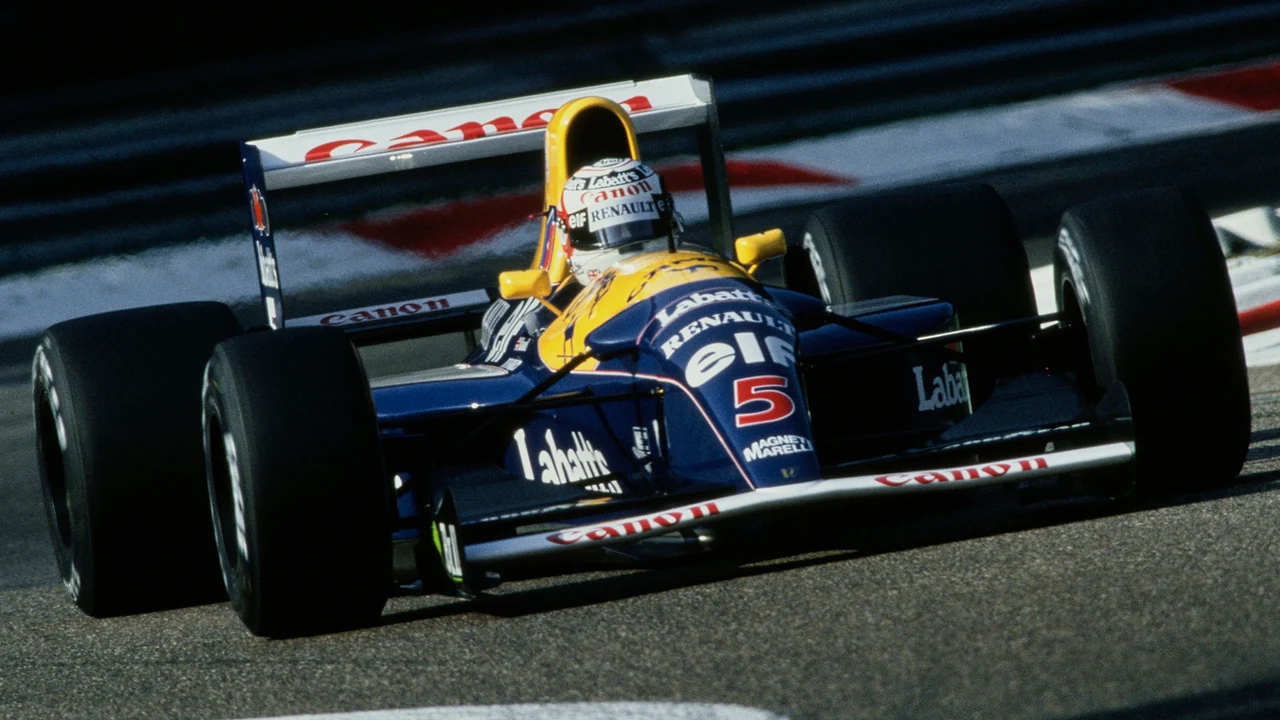 Photo: F1.com
8. The more successful the technology, the more a rule change demands a fresh understanding
The 1993 FW15C was designed still more closely around active suspension, and Prost won his fourth world title that year. Williams's technical capability reached a remarkable level: it could manage the car's attitude more precisely and vary its aerodynamic behaviour according to different conditions.
In 1994, active suspension and other driver aids were banned. Williams had to make the car work on passive suspension again. It would now undergo greater changes of attitude under braking, acceleration and cornering, so the aerodynamics had to tolerate a wider operating range. Problems held tightly in check a year earlier returned to the designers' desks.
A later F1 technical review of Newey's cars noted that the FW16 was difficult to drive early in the season. Major aerodynamic changes were needed before the situation gradually improved. The experience shows how even the most successful design may depend on particular conditions. Once the rules remove those conditions, the old approach may no longer produce the old results.
Williams retained exceptional engineering strength, but its titles could not excuse it from the work demanded by new rules. Technical advantage belongs to its era: that truth runs through the team's history, from ground effect and turbo power to active suspension. The team had to understand why it was fast, and which changing conditions could make that speed disappear.
9. 1994: A year no trophy can sum up
Senna's move to Williams in 1994 had been seen as the union of a leading driver and a champion team. On May 1, he suffered a fatal accident at the San Marino Grand Prix at Imola. Roland Ratzenberger had died in a qualifying accident the day before. That weekend changed all of F1 and left Williams with an enduring grief.
A lengthy investigation and legal proceedings followed Senna's accident, with consequences far beyond that year's championship points. After Imola, safety became a more urgent concern throughout the paddock. Amid the grief of losing a driver, the team still had to face investigations, technical changes and the next race.
Damon Hill took on the competitive burden, fighting Schumacher for the drivers' title. While confronting tragedy, Williams continued to improve the car, organise its line-up and complete each event. Hill ultimately retired after colliding with Schumacher at Adelaide, and their title fight ended with a one-point margin. Williams won the constructors' championship.
A trophy records the sporting result, but cannot record the entire year. The story also includes people who had to keep working after the accidents, drivers who took over seats, and motorsport's more urgent response to safety. Williams still stood on a championship podium, but the loss at Imola became part of the team forever.
10. Hill and Villeneuve carried the 1990s advantage to its final peak
In 1996 Williams won twelve of the sixteen races and Hill became drivers' world champion. New arrival Jacques Villeneuve took pole on his F1 debut and kept the title contest alive deep into the season. The battle between the two FW18s became the defining image of the year.
Villeneuve made his debut in Australia. He had already won the Indianapolis 500 and the CART title but remained an F1 rookie. In Melbourne he not only took pole but led for much of the race, until an oil leak forced him to slow. Hill inherited victory, Villeneuve finished second, and both cars converted speed into points. A new rival already occupied the other side of the garage, and Hill had to take him seriously from the opening round.
The FW18's speed did not depend on one dramatic secret. Driver position, airflow around the cockpit, the floor and rear-end design all reflected continuous refinement. Years of accumulated knowledge went into a more complete car, giving both drivers a competitive edge at most circuits.
Hill left after winning the title, and Villeneuve took over the championship challenge in 1997. At the Jerez finale he collided with Schumacher, then continued to secure the title. Williams also took its ninth constructors' championship. As of the end of the 2025 season, it remained the team's most recent constructors' world title.
The titles looked like an era still extending, but crucial foundations were shifting. Newey left, and Renault ended its then-current works engine programme after the 1997 season. Losing design leadership and engine-partner support cannot simply be added up as a fixed lap-time loss, but both affect how the next car is created. The trophy collection was growing even as the conditions for future competition changed.
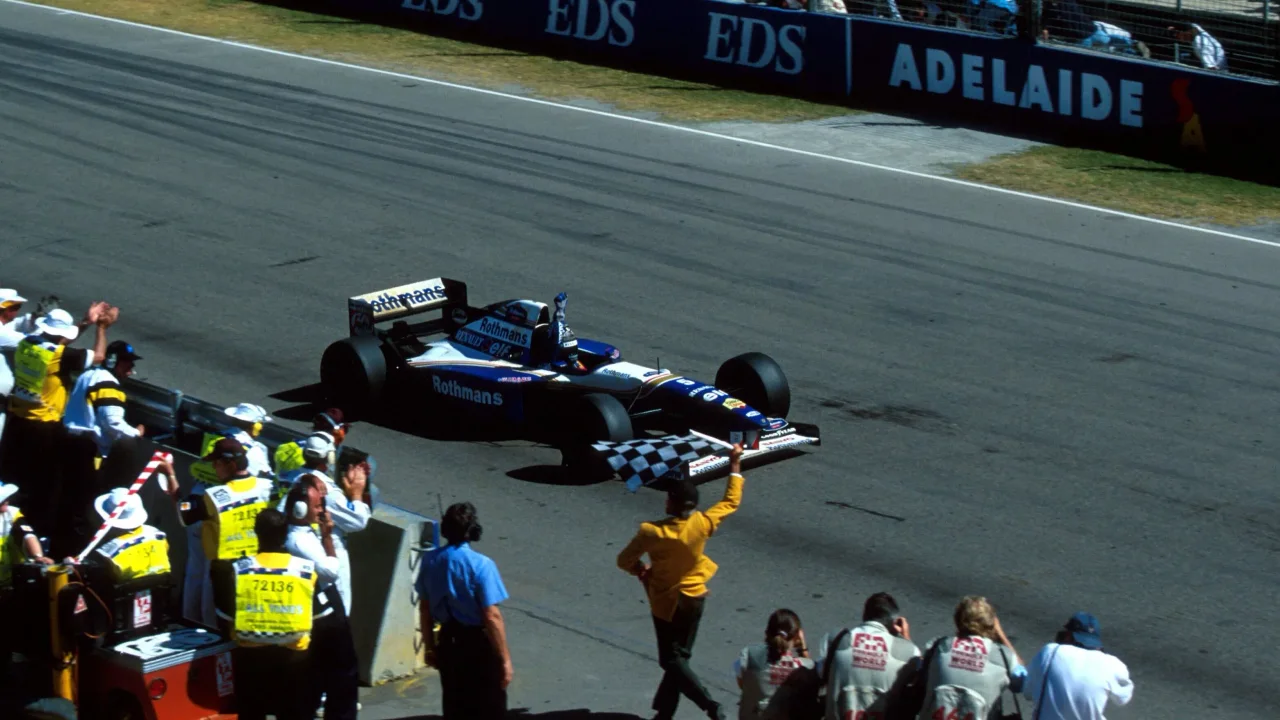 Photo: F1.com
11. The BMW era: The last real approach to a season title
The BMW partnership, beginning in 2000, restored Williams's ability to win. Ralf Schumacher and Juan Pablo Montoya brought victories. Powerful engines and the pace of both drivers put the team back in Ferrari's path, most notably with a genuine championship challenge in 2003.
At Monaco in 2003, Montoya started third and beat Räikkönen by 0.602 seconds for the team's first win of the season. Ralf then led one-two finishes at both the European and French Grands Prix, before Montoya won in Germany. From Monaco to Italy, Montoya took eight consecutive podiums. Williams amassed four wins and twelve podiums that year, finishing second in the constructors' standings. That sustained run of results was the substance of its title challenge.
The 2004 FW26 featured a highly distinctive "walrus" nose, but bold looks did not automatically deliver results. The team changed its front-end design during the season, and Montoya brought home a win only at the Brazilian finale. BMW and Williams ended their partnership after 2005.
A car manufacturer can choose an engine partnership or own a team outright. An independent team must weigh technical support against operational independence and long-term funding. The BMW era proved Williams could still approach the summit, but also showed that an old partnership model does not remain stable forever simply because it once succeeded. By the next rebuild, spending levels and methods of competition in the paddock had become more demanding.
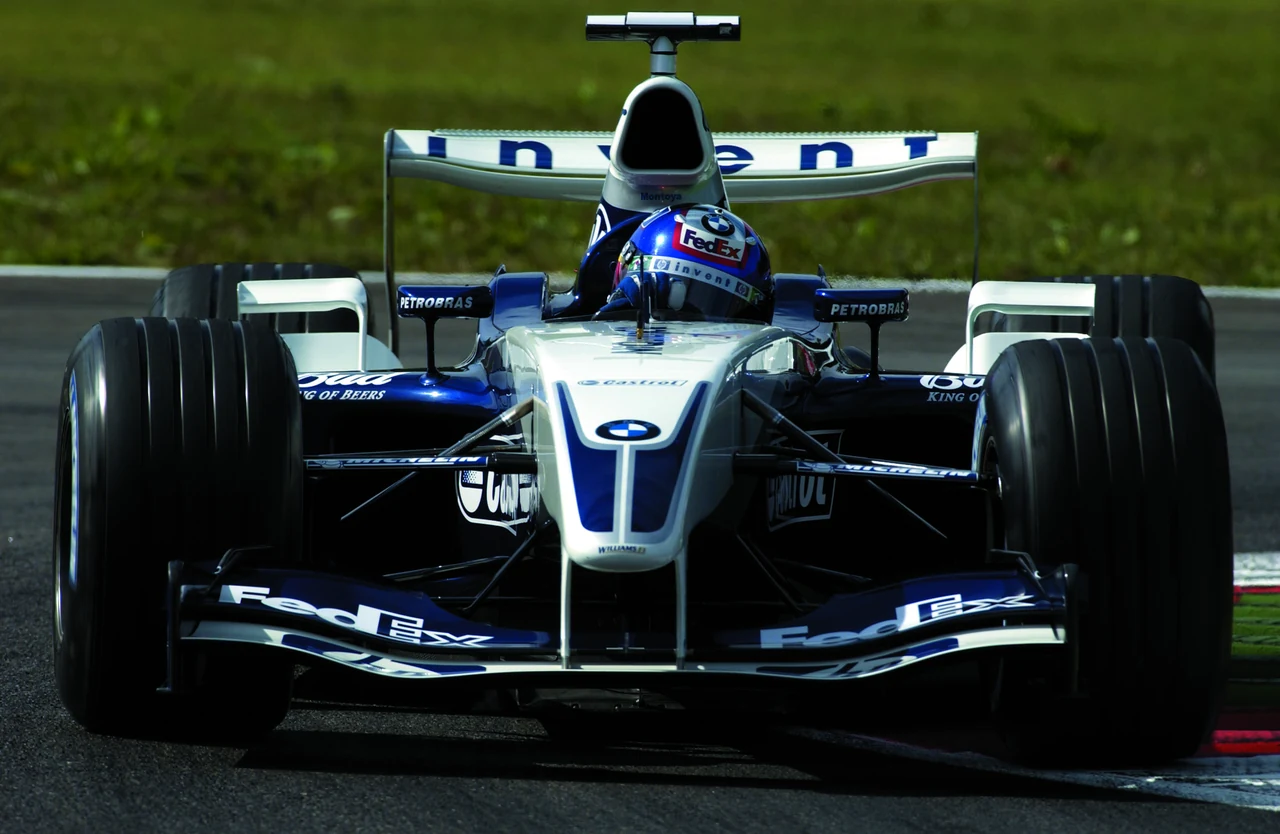 Photo: © BMW AG / press.bmwgroup.com
12. After one victory, an entire season still needs rebuilding
At the 2012 Spanish Grand Prix, Pastor Maldonado withstood Alonso's pressure to give Williams a long-awaited race win. The team could not consistently repeat its Barcelona performance across the season, however, and that victory did not open a new title-challenging era.
After switching to Mercedes power units in 2014, Bottas and Massa took repeated podiums and Williams finished third in both 2014 and 2015. In 2016 the team also recorded the fastest tyre change at fourteen of the twenty-one rounds, including a 1.92-second stop for Massa at Baku. Car performance and pit-lane execution offered different evidence of competitiveness.
Yet in 2018 and 2019 the team fell to the bottom of the standings. Dorilton completed its purchase in 2020, and the Williams family ended its day-to-day management after the Italian Grand Prix. Claire's leadership from 2013 encompassed both two third-place finishes and the later sustained downturn. The sale changed the operating structure while retaining the Williams name.
Frank died in 2021. Rebuilding after that required continued investment by the new owners and continued car development by the engineers. Old trophies could show what the team had achieved, but could not solve the next car's problems.
13. Beyond the trophy room, rebuilding must still answer on track
James Vowles became team principal in 2023 and Williams rose to seventh in the constructors' standings, before slipping to ninth in 2024. In 2025 Albon partnered new arrival Carlos Sainz, the team finished fifth, and Sainz took two Grand Prix podiums in the second half of the season. Rebuilding brought reversals as well as progress visible in the points table.
Those results had not returned Williams to title contention. Their significance was that a team which had endured last place and a change of ownership had rebuilt stronger midfield competitiveness. The next step was to sustain and extend that ability, not to call fifth place the return of a dynasty.
The nine constructors' titles came from combinations suited to different eras: ground-effect chassis, Honda turbo power, Renault engines and active suspension each met the drivers and engineers who could use them. The BMW era and subsequent fluctuations also show that the same answer cannot work forever when partners, regulations and money change.
Williams's trophies make its history worth remembering; repeatedly building new cars keeps that history going. Preserving the name is only a starting point. The next advance must still begin with practical work in the factory and find its answer in results on the track.
Williams championship record
Through the end of the 2025 season: nine constructors' titles and seven drivers' titles, counted separately. A representative model does not mean that only one chassis type was used that season.
| Season | Constructors' title | Drivers' champion (Williams) | Representative model / engine |
|---|---|---|---|
| 1980 | Yes | Alan Jones | FW07B / Ford Cosworth |
| 1981 | Yes | — | FW07C / Ford Cosworth |
| 1982 | No | Keke Rosberg | FW08 / Ford Cosworth |
| 1986 | Yes | — | FW11 / Honda |
| 1987 | Yes | Nelson Piquet | FW11B / Honda |
| 1992 | Yes | Nigel Mansell | FW14B / Renault |
| 1993 | Yes | Alain Prost | FW15C / Renault |
| 1994 | Yes | — | FW16, FW16B / Renault |
| 1996 | Yes | Damon Hill | FW18 / Renault |
| 1997 | Yes | Jacques Villeneuve | FW19 / Renault |
Sources
- Williams at 40 - the essential facts, stats and stand-out moments
- Williams - Year by Year | Formula 1®
- INSIGHT: A closer look at the 12 constructors’ title-winning cars Adrian Newey has designed | Formula 1®
- An innovator and trendsetter – Adrian Newey's greatest F1 contributions | Formula 1®
- Williams family to step aside from running of the team after Italian GP | Formula 1®
- Williams: British Grand Prix victories revisited, 1970s–1980s
- F1: 1982 Austrian Grand Prix results
- F1: 1982 Swiss Grand Prix starting grid
- F1: 1982 Swiss Grand Prix results
- BMW: Official review of the 2003 season
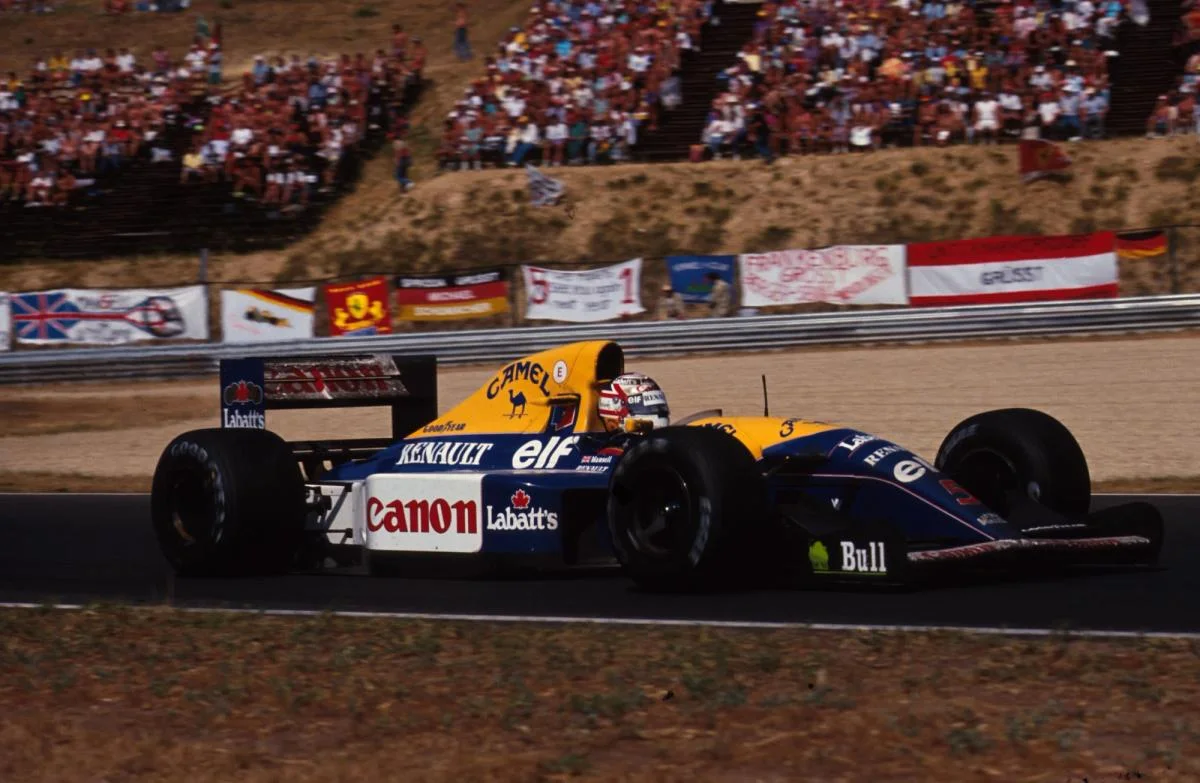 Photo: williamsf1.com
Mansell: After a tyre blew, he chased the world title for six more years
From the team's engineering and rebuilding, continue into Mansell's pursuit of the title.
Continue reading · Approx. 20.6 min →