
Expand chapter list · 17 sections
- Key milestones
- 1. He did not begin at the door of a champion team
- 2. On his F1 debut, pain arrived before results
- 3. 1985: No longer having to explain why he had not won
- 4. Adelaide: The hardest part was having come so close
- 5. Silverstone 1987: How to make up thirty seconds
- 6. The fastest few minutes cannot replace the most complete year
- 7. Winning on his Ferrari debut, then finding victory was still not enough
- 8. Why did the man who announced retirement return to Williams?
- 9. 1992: Even a fast car needs someone to believe in it
- 10. No victory at Monaco, but the title pursuit continued
- 11. Budapest: At last, no need to wait until next year
- 12. A world champion of thirty-nine becomes a rookie again
- 13. Indianapolis: Lessons from the last fifteen laps
- 14. Four oval wins in one summer
- 15. Back to Adelaide: This time he saw the chequered flag
- Mansell's career record
Key milestones
Adelaide, 1986. Nigel Mansell was driving his Williams through the most important race of his life. He did not need to win. Bringing enough points to the finish could make him Formula 1 world champion.
Then the left-rear tyre suddenly burst at high speed. Sparks flew, and Mansell kept control of the car, but he could not continue. An advantage built over a season was severed by a failure before the finish line. Prost won the race and took the world title.
If Mansell's career were a film, this scene would make a fitting ending: a man who had given everything loses his dream at the closest possible moment. The real story did not stop there. Injuries, transfers, a second lost title and an announcement of retirement followed, before he finally won the championship six years later. More surprisingly still, once he had it, he left F1.
1. He did not begin at the door of a champion team
Mansell was born in Britain in 1953. Before reaching F1, he had to support everyday life and raise racing funds at the same time. His early career offered neither a contract guaranteeing success nor a path that led automatically to the top category if he simply followed the steps.
He won the British Formula Ford title in 1977 and suffered a serious accident that same year. Moving on to higher categories required more money and acceptance of the risk of further injury. F1's official biography records that he and his wife Rosanne sold their home to keep his racing career alive. Before results had proved there was a future, the family was already paying the price.
Raising the entry money solved only the problem of reaching the grid. Mansell still had to demonstrate speed in limited appearances and persuade someone to entrust him with the next car. Every accident could damage his body and strain already tight finances. The family's commitment had not yet been underwritten by professional results.
Lotus opened the door. Colin Chapman recognised his potential, and testing and racing opportunities gradually increased. For a driver approaching thirty by the time he reached F1's threshold, time was limited. Those who remember his bold overtakes should also remember that before he could pass champions, he had to earn a place on the same starting straight.
2. On his F1 debut, pain arrived before results
Mansell made his F1 debut at the 1980 Austrian Grand Prix. Leaking fuel burned his body, making his first experience of the top category far from glamorous. During the Lotus years that followed, he established a regular seat and began reaching the podium, but a Grand Prix win remained elusive.
Chapman's death in 1982 was a major blow. The founder who had backed him was gone, and Mansell still had to prove himself in a changed environment. Patience in professional sport always has a limit: a young driver may be given time for potential, but an experienced one increasingly needs results to justify his seat.
Dallas in 1984 left an enduring image of Mansell in F1 history. He took pole, but the race unfolded in extreme heat and on a deteriorating surface. Near the end his car stopped. He tried to push it to the finish himself, only to collapse from exhaustion.
The image is often treated as a symbol of willpower, but first it was a specific response to failure. The car could no longer finish in the usual way, and the driver wanted to salvage something. Mansell already had the speed to challenge for the lead, but had not turned it into victory, nor gained a car that regularly offered the chance.
3. 1985: No longer having to explain why he had not won
Moving to Williams was one of the most important decisions of Mansell's career. In 1985 he partnered Keke Rosberg. The team was turning the potential of Honda's turbo engines into results, and Mansell finally entered an environment increasingly capable of winning.
He took his first F1 victory at the European Grand Prix at Brands Hatch, in front of a British crowd and many years after entering F1. A South African Grand Prix win followed, proving that the breakthrough was not an isolated stroke of fortune.
For a driver, moving from zero wins to one changes more than a statistical table. Every earlier approach to the lead had prompted the question, "Can he do it this time?" Once a win was complete, he could face the next contest with an actual result behind him. The team also had direct evidence that this driver could take a competitive car to victory.
Mansell did not thereby become a perfect, polished, perpetually calm model champion. He remained openly emotional and sensitive to his position and treatment. Those traits later connected him to spectators while straining some partnerships. His speed gained broad recognition, but debate around him never disappeared.
4. Adelaide: The hardest part was having come so close
In 1986 Mansell won five Grands Prix and arrived at the Australian finale leading the championship. His rivals included team-mate Piquet and McLaren's Prost. Unlike a race requiring an all-out pursuit of victory, this presented a different problem: completing the task within what the championship situation allowed.
Not needing to win does not make such a race easy. A driver must maintain pace, avoid falling into more dangerous positions and trust tyres and machinery to last. Rivals' retirements, pit stops and changes of position constantly alter the assessment. At a finale, a title fight often becomes a continuous calculation of driving, strategy and risk.
Mansell's tyre burst shattered that calculation. Williams immediately called Piquet in for fresh tyres to prevent a similar failure. Prost took the opportunity to win the race and the championship by two points. Williams had one of the strongest line-ups of the year, but no drivers' title.
The defeat became unforgettable not because it proved Mansell insufficiently cautious. When the tyre burst, he had already done much of what a title challenge demanded. The cruel truth was that correct driving could not remove every risk, and a season's advantage could not buy immunity from mechanical failure. Mansell controlled a car that had lost its tyre; he could not control the title slipping away.
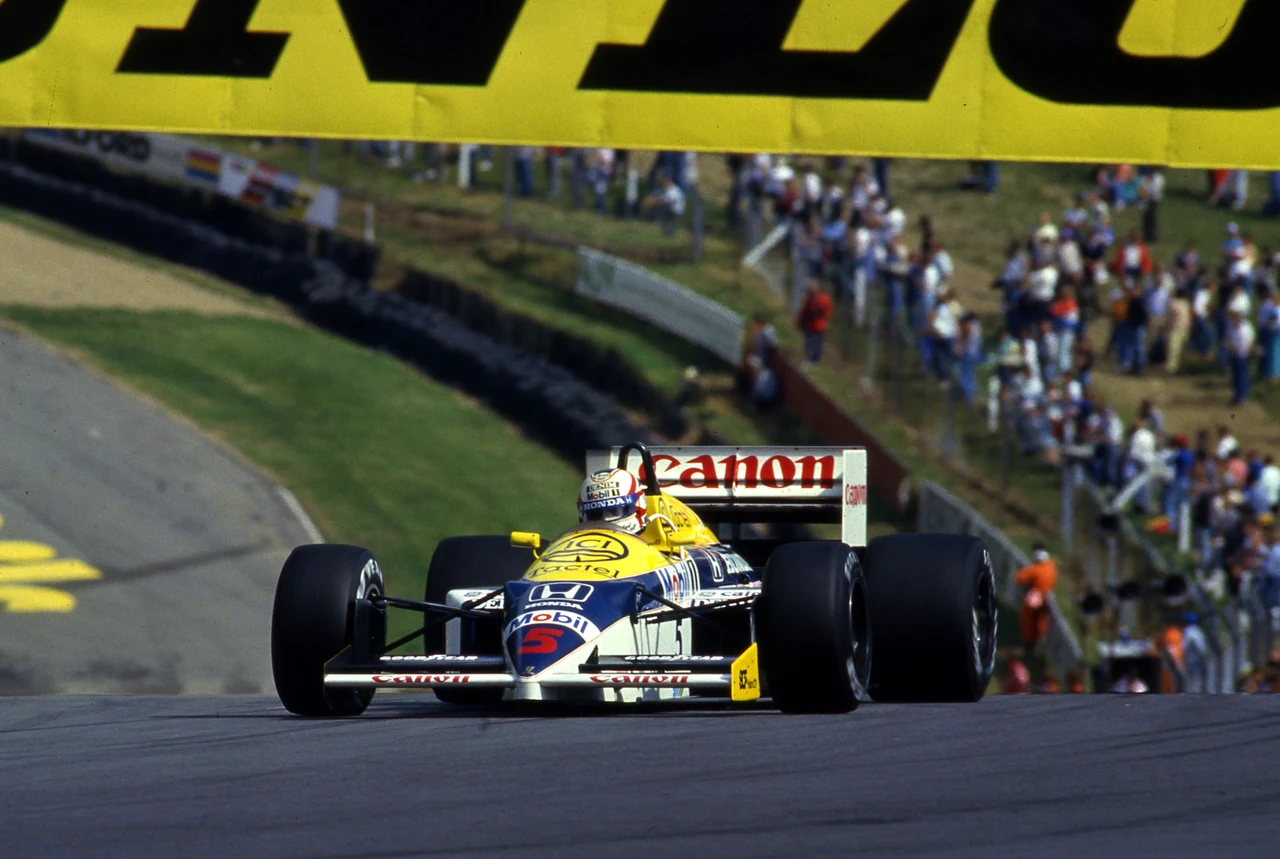 Photo: williamsf1.com
5. Silverstone 1987: How to make up thirty seconds
At the following year's British Grand Prix, Mansell produced a very different scene. After a pit stop he trailed Piquet by around thirty seconds. They drove cars from the same team; there was no obviously slower opponent ahead to make the chase seem inevitable.
Fresh tyres made further attack possible, and Mansell kept extracting speed from the car. The gap shrank lap after lap, turning what had looked like a settled team-mate's lead into a direct contest between two Williams cars. Only in the final laps did he reach a position from which he could attack.
Catching up and passing are different tasks. Consistent lap times can accomplish the first; the second requires making a rival's defensive choice ineffective at the same corner. Mansell feinted with a change of direction, then passed Piquet and went on to win.
This victory explains his appeal. Spectators could see exactly how distant the target was, then watch him consume the gap piece by piece. Technology and tyres mattered, but enjoying the pursuit did not require mastering an engineering vocabulary first. An equally fast car was ahead; Mansell kept chasing until he reached it, then overtook it.
Yet Silverstone did not solve the whole season for him. Piquet ultimately became champion, while a qualifying accident at Suzuka injured Mansell's back and ended his challenge. For the second year running, the title did not go to the man most readily able to ignite a crowd in a highlights reel.
6. The fastest few minutes cannot replace the most complete year
Viewed together, 1986 and 1987 often cast Mansell as a driver denied by luck. Injuries and mechanical problems did change his opportunities, but another point remains: individual races and a world championship do not ask quite the same things of a driver.
An overtake demands judgement of a moment; a title demands many results that may not shine. A driver must decide when to accept second, when to ask for a strategic change and how to protect points on difficult weekends. One fine pursuit can define a year in memory, but cannot automatically cancel losses elsewhere.
Mansell and Piquet did not have a harmonious relationship. Two top drivers with the same equipment compare not only pace but team support and technical resources. Both want to be the centre of a championship campaign, and that rivalry extends well beyond one exchange on track.
His next step therefore could not simply be to drive faster. Williams lost Honda support in 1988 and its competitiveness declined; Mansell had to decide where to seek a new title opportunity. Career turns often arrive before a driver has achieved his goal. Moving can bring a better car, but can also mean rebuilding an entire relationship of trust.
7. Winning on his Ferrari debut, then finding victory was still not enough
Mansell joined Ferrari in 1989. He won the Brazilian opener in a new car with a semi-automatic gearbox. Victory at the first race was a compelling demonstration of a still-novel technology: the driver could shift through paddles near the steering wheel, rather than repeatedly operating a conventional gear lever.
Winning with new technology did not mean all reliability problems were solved. Suspensions from racing, failures and unfinished races could still consume championship opportunities. Mansell's Ferrari years contained brilliant performances and the frustration of failing to turn speed into consistent results.
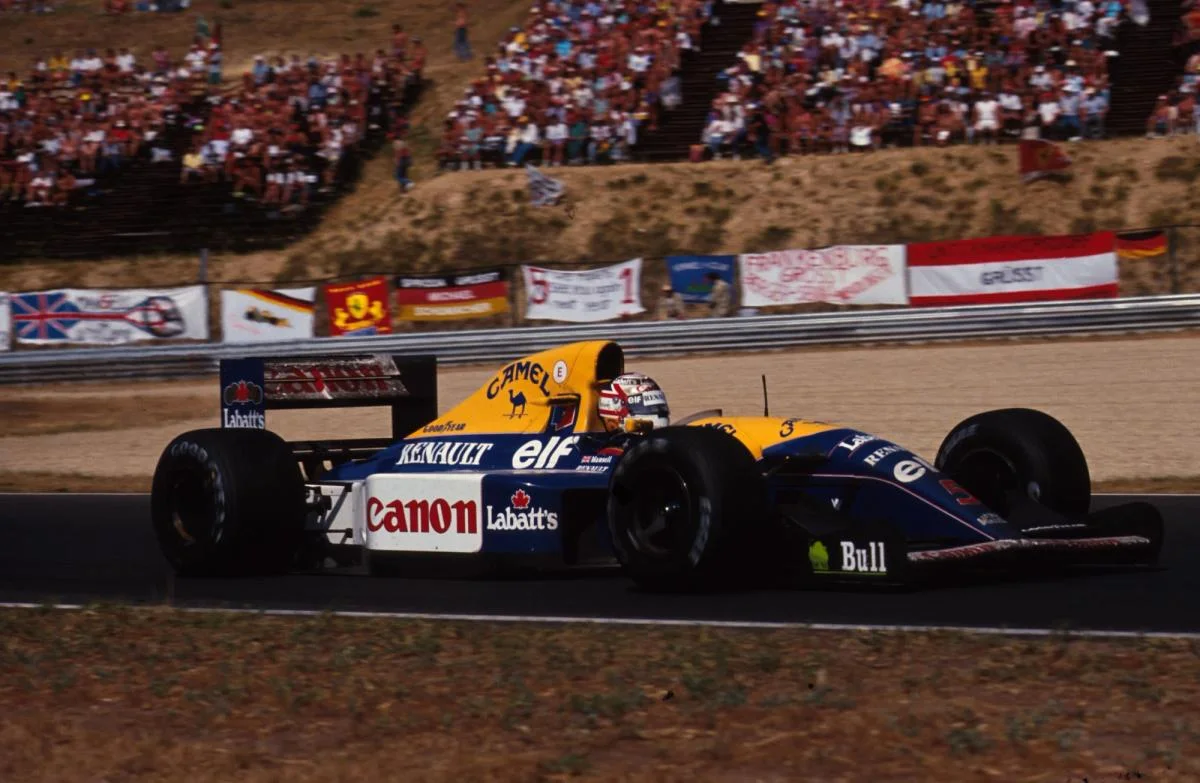
At the 1989 Hungarian Grand Prix he started twelfth and won. On a circuit notorious for difficult overtaking, a low grid position usually promised a long, constrained afternoon. Mansell kept advancing until he reached Senna's McLaren.
The opening came from a slower car ahead. As Senna prepared to pass Stefan Johansson's Onyx, he hesitated briefly; Mansell, close behind, immediately took the gap. F1's official retrospective places the move on lap 58. Once ahead, he continued pulling away and won by more than twenty-five seconds.
The key was having reached a sufficiently close position before the opportunity appeared. A slower car can disrupt the leader's rhythm and force the following driver to choose a line quickly. From several seconds back, the same hesitation would merely be a small incident in the distance. Mansell's pursuit over the preceding dozens of laps earned him the right to exploit that instant.
Brazil and Hungary demonstrated different abilities: delivering on an opportunity in a new car's first race, and reopening a race from an unfavourable grid position. His Ferrari image as "the Lion" needs no eternally correct personality label to explain it. These two races alone show why the grandstands erupted for him.
8. Why did the man who announced retirement return to Williams?
Prost joined Ferrari in 1990, again pairing Mansell with a world champion. The season did not develop as he had hoped, and he announced that he intended to leave F1. For a driver who had lost two title chances and endured sustained physical and competitive pressure, the decision carried real weight.
Retirement did not immediately become the final ending. Williams's new programme drew him back: Renault engines, a developing chassis and an engineering group that would become enormously influential offered reasons to try again. In 1991 Mansell returned to the place that had brought him closest to a title.
The FW14 was already very fast, and Mansell won five races that year. Reliability problems nevertheless kept recurring. The potential of systems such as the semi-automatic gearbox required sufficient development before it could become consistent results. Senna and McLaren ultimately won the championships, leaving Mansell runner-up once more.
The famous FW14B was built on race experience paid for that year. Gearbox and other system failures had to be identified, designs revised and changes tested. Each car delivered to Mansell at a race weekend carried lessons from the previous event, but still had to prove anew that it could reach the finish.
The 1991 Spanish Grand Prix produced another classic duel with Senna. The cars ran side by side at high speed down Barcelona's long straight, sparks streaming underneath and little space between their tyres. Mansell passed and went on to win. Speed, line and braking timing had to be decided in an instant; neither could ask the other to stop and think first.
After winning the British round that year, Mansell also gave Senna a lift back to the pits after the Brazilian had stopped with no fuel. Ferocious rivalry and that image of a shared ride existed in the same season. Mansell did not lack the ability to beat Senna in individual races. He lacked a season-long thread joining those wins without frequent interruption by failures.
9. 1992: Even a fast car needs someone to believe in it
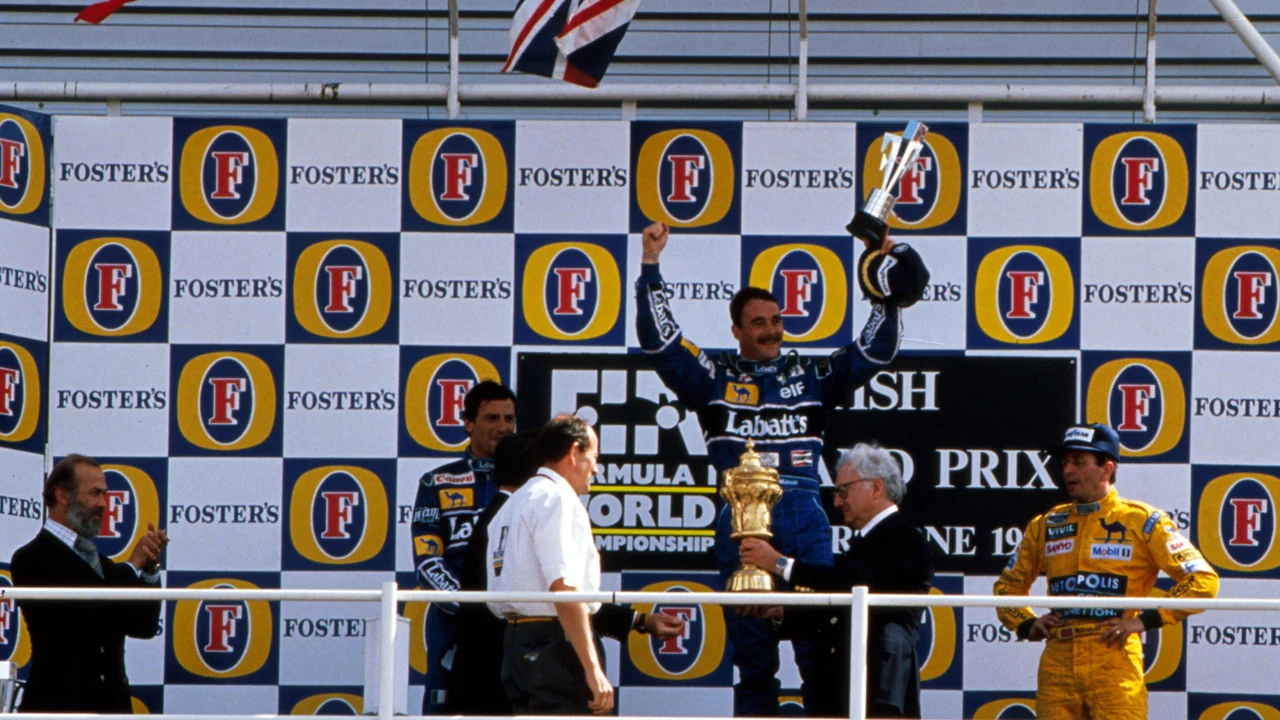 Photo: williamsf1.com
Mansell won the first five races of 1992 consecutively. The FW14B was one of the paddock's strongest cars, with active suspension controlling its attitude more precisely and a Renault V10 and semi-automatic gearbox forming a formidable package. After years of waiting, he finally had a tool capable of winning consistently.
Active suspension did not choose braking points for the driver. It changed the car's working conditions: more stable ride height and pitch let the aerodynamics operate in a narrower range. The driver had to trust the grip available at high speed and turn that capability into actual cornering pace.
Mansell's adaptation to the car allowed him to realise much of that engineering advantage. Nine victories showed he had not squandered the chance on isolated good weekends. Team-mate Patrese also won and scored heavily, helping Williams reach its constructors' championship goal.
There is no need to choose between "all car" and "all driver" when discussing the title. The FW14B provided exceptional conditions, and Mansell did the driving work they required. What matters is that after waiting so long, he was not held back by past failures when the strong car finally came. This time a sufficiently fast machine and a prepared driver arrived together.
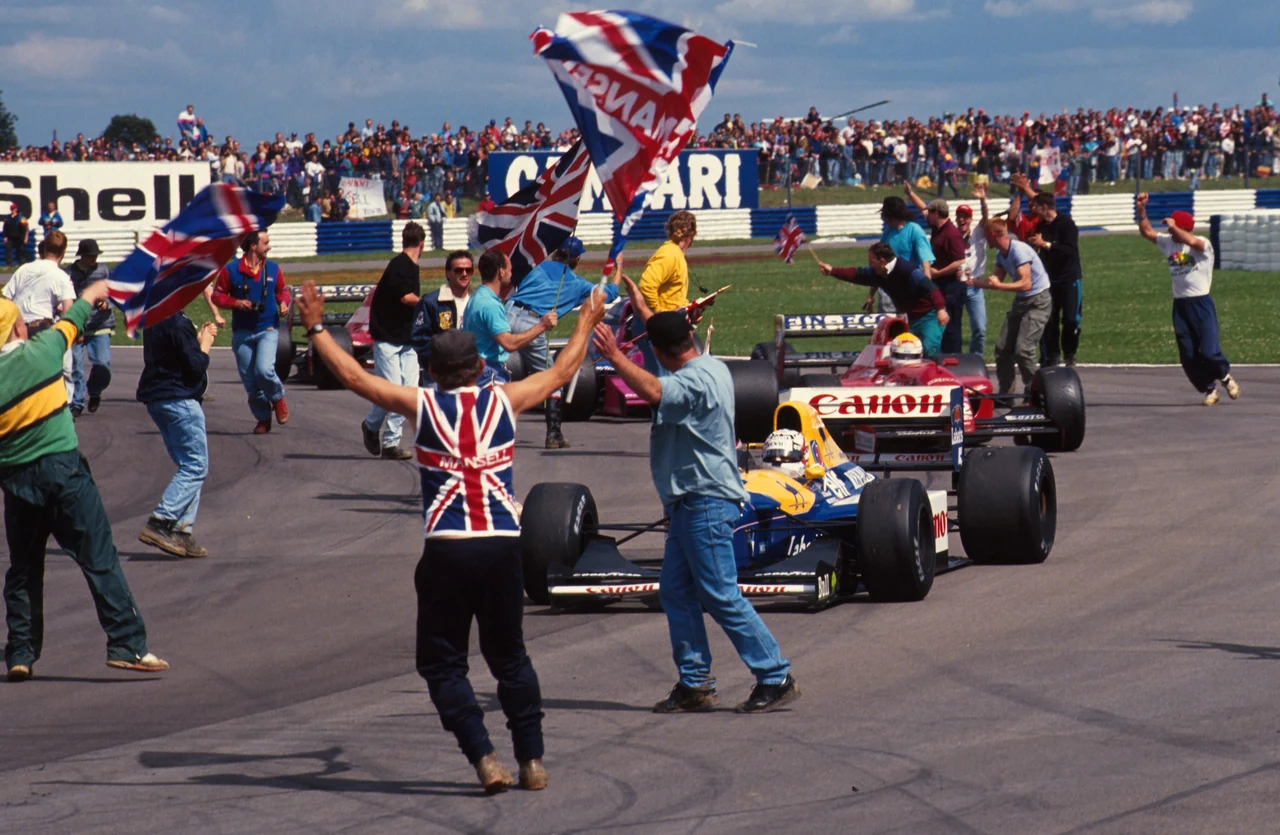 Photo: williamsf1.com
10. No victory at Monaco, but the title pursuit continued
Mansell led the 1992 Monaco Grand Prix but pitted late after suspecting a tyre problem. He rejoined behind Senna. Better tyres let him close rapidly, but the narrow streets made passing exceptionally difficult.
In the final laps the two cars seemed almost joined together. Mansell searched constantly for places to change line and create an opening; Senna kept the road ahead closed. Victory went to Senna. Mansell's greater speed did not change the fact that he finished second.
The race preserved genuine resistance within a championship season that could otherwise look easy. A car's advantage still had to pass through track space, pit timing and an opponent's defence before becoming a position. Monaco showed that a dominant season does not mean every race ends with the same answer.
The bigger change for Mansell was that he could finally place such a defeat within a season still working in his favour. One Adelaide retirement had once destroyed his year's objective; one second place in 1992 no longer meant everything was over. He had enough pace and points to keep moving, rather than needing an infallible chase every weekend.
11. Budapest: At last, no need to wait until next year
At the 1992 Hungarian Grand Prix, tyre concerns returned. Worried about a slow puncture, the team made a cautious pit stop that dropped him from second to sixth. Mansell then passed Häkkinen, Brundle and Berger to recover second. Senna won the race; at the finish, Mansell clinched early the world title he had waited twelve years to claim.
He was already thirty-nine. The 1986 tyre burst, the 1987 back injury, Ferrari's fluctuations and the reliability setbacks of 1991 all preceded this title. Reducing them to "years of effort finally rewarded" can hide the essential point: after each failure, nobody could promise him that this result would ever arrive.
The title changed his professional status without automatically settling his contract or future with the team. Prost was due to join Williams, and Mansell's negotiations did not lead to an extension. The newly crowned world champion decided to race in America, joining Newman-Haas for the CART Indy car series.
The choice took his story off the familiar path again. The obvious expectation was that he would stay in the fastest car and defend his title. Reality brought different cars, tracks and race procedures. The championship did not end the adventure; it made the world watch more closely as he confronted an unfamiliar environment.
12. A world champion of thirty-nine becomes a rookie again
Mansell won his CART debut at Surfers Paradise in 1993. He occupied an unusual position: arriving with the prestige of an F1 world champion while having to learn the detail of another top-level series. Spectators expected immediate proof of speed; neither regulations nor circuits became easier because of that expectation.
Ovals on the American calendar were among the transition's greatest challenges. Cars spent long periods at high speed; traffic, airflow, pit stops and restarts after yellow flags differed from familiar F1 conditions. Judging how a slower car would affect the line ahead could matter as much as ultimate one-lap pace.
A serious practice crash at Phoenix injured Mansell and forced him to miss the race. Learning was not a gentle adjustment to be brushed aside. Even an experienced driver could pay a price in an unfamiliar setting; an F1 title could not make each oval-track judgement for him.
Newman-Haas staff and team-mate Mario Andretti supplied important experience. A driver's adaptability includes using knowledge already in the team, rather than carrying every method from the previous discipline over unchanged. Mansell needed to retain his speed while acknowledging that some things had to be learned from the beginning.
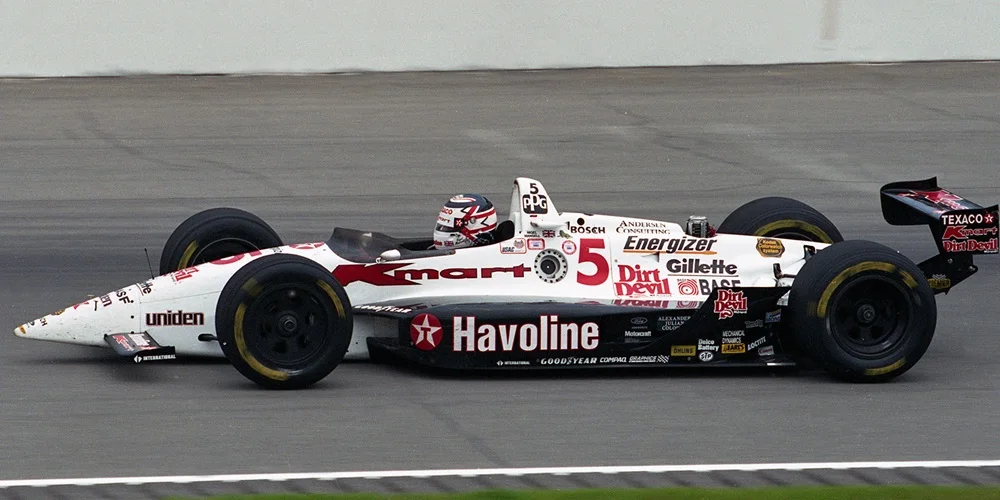 Photo: indianapolismotorspeedway.com
13. Indianapolis: Lessons from the last fifteen laps
Mansell started eighth in the 1993 Indianapolis 500 and led a total of thirty-four laps. With only fifteen laps remaining he still led, tantalisingly close to winning this major race on his first attempt.
A subsequent restart changed the race. Emerson Fittipaldi and Arie Luyendyk passed him, and Mansell finished third. Indianapolis Motor Speedway's official retrospective links the outcome to his limited oval experience: he had proved he could be fast, but still needed to master how a race resumed in particular phases.
Unlike the Adelaide tyre burst, this defeat left a specific direction for improvement: he still needed to master oval restarts.
14. Four oval wins in one summer
After Indianapolis, Mansell won at Milwaukee, then Michigan, New Hampshire and Nazareth. Those four oval victories, together with the opening street-race win, carried him to the 1993 CART championship.
That is more specific than "an F1 champion can win in America too". His new season succeeded not just on road types closest to European experience; he built much of his advantage on the ovals that had been most unfamiliar. The early accident and the gap in experience at Indianapolis did not stop him learning.
From the 1992 F1 title to the 1993 CART crown, Mansell completed a rare sequence of championships across disciplines. The series settled their titles at different times, briefly allowing him to hold both reigning-champion statuses. The important point was not that timing coincidence, but that in successive seasons, with different cars and opponents, he completed the full competitive task in each series.
America did not remain a fairy tale. Penske was stronger in 1994, Mansell's results declined, and relations around him became strained. Champions still endure difficult periods, and a new environment will not accommodate every way they express themselves indefinitely. Cooperation away from the track and adaptation on it are lessons that must be learned together.
15. Back to Adelaide: This time he saw the chequered flag
After Senna's death in 1994, Williams invited Mansell back for selected F1 races. He first appeared in France, then returned for the season's final three rounds. At the Australian finale he took pole and won what became his last F1 Grand Prix.
Eight years earlier Adelaide had meant a burst tyre and a lost title; eight years later it meant victory. This was no reversal of time erasing the old defeat. The 1986 title still belonged to Prost, and the 1994 championship contest belonged to Hill and Schumacher. Mansell finally completed a last victory on those streets, while his own world title had already arrived two years before.
His brief McLaren partnership in 1995 did not become a new peak. His F1 career ended with thirty-one wins and one world title. Championship totals alone barely explain why so many spectators remember him; the answer emerges when the individual races are opened up.
People remember him because they could see the pursuit. The gap at Silverstone shrank; Hungary's grid position was rewritten step by step; every Monaco corner seemed to offer one more possible opening. He made failure tangible too: one tyre, one accident or one restart could alter the direction of years of effort.
Mansell was not someone who always obtained the best ending. His strength was that failure never made the next attempt half-hearted. When the world title finally arrived, the story was already complete enough. Yet he took that title to another continent and became a rookie once again.
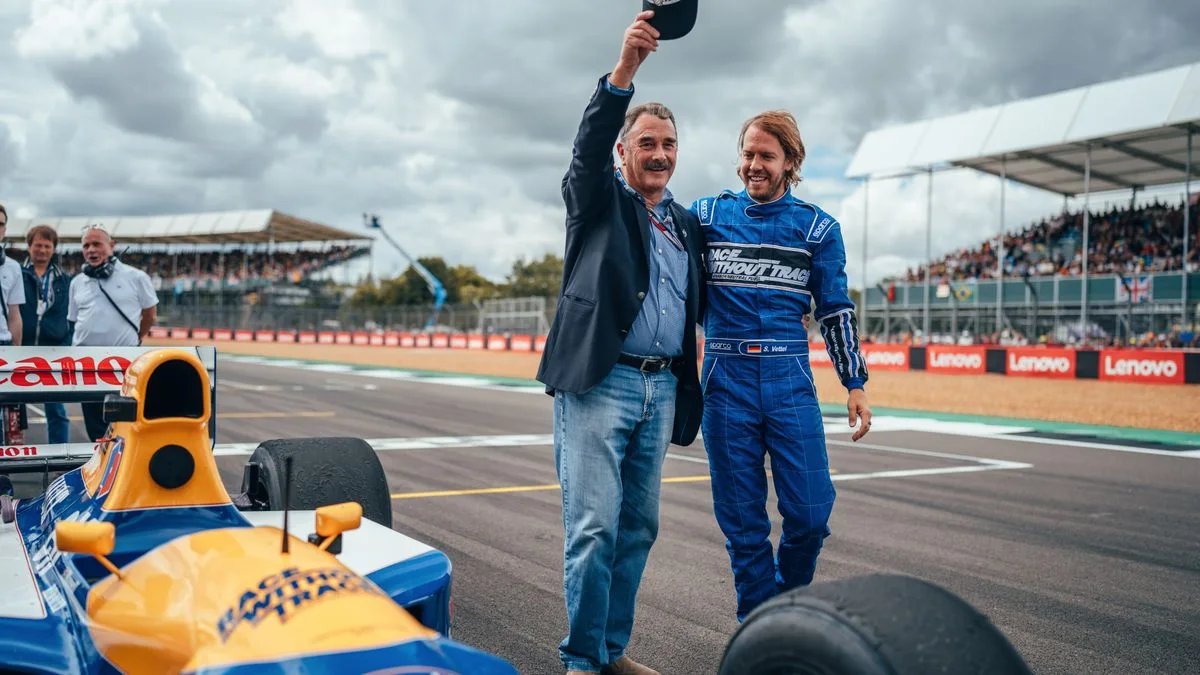 Photo: williamsf1.com
Mansell's career record
As of the end of 2025. F1 and CART season titles are listed separately from the Indianapolis 500, a single race.
| Category | Title / result | Season or explanation |
|---|---|---|
| F1 drivers' world title | 1 title | 1992, Williams |
| F1 Grand Prix wins | 31 wins | First win: 1985 European Grand Prix; last win: 1994 Australian Grand Prix |
| 1992 F1 season | 9 wins | FW14B title-winning season |
| CART season title | 1 title | 1993, Newman-Haas |
| 1993 CART season | 5 wins | Surfers Paradise and four oval victories |
| 1993 Indianapolis 500 | Third place | Result of one race, not a season championship |
Sources
 Photo: F1.com
Williams: After nine world titles, how does the team survive?
From a driver's long wait and title victory, return to Williams's changes in technology and organisation.
Continue reading · Approx. 18.4 min →