
Expand the Chapter List
- Learning to Travel Before Winning in the Big Class
- Barry Sheene: Turning Abrupt Power into Usable Speed
- Why the RG500's Influence Extended Beyond the Factory Team
- From RG to RGV: More Than One Letter Changed
- Kenny Roberts Jr: Suzuki's Final Title of the Two-Stroke Era
- The Four-Stroke Era: When Victory Seemed Far Away
- The 2015 Return: Rebuilding a Combination That Could Last
- Silverstone 2019: Where Thirteen Milliseconds Came From
- 2020: Connecting a Season Rather Than Winning the Most Races
- A Small Team's Strengths, and the Cost of Sustaining Them
- Two More Wins Before Goodbye
- Seven Riders' Titles in a History of Interruptions
- Timeline
- Premier-Class Honours
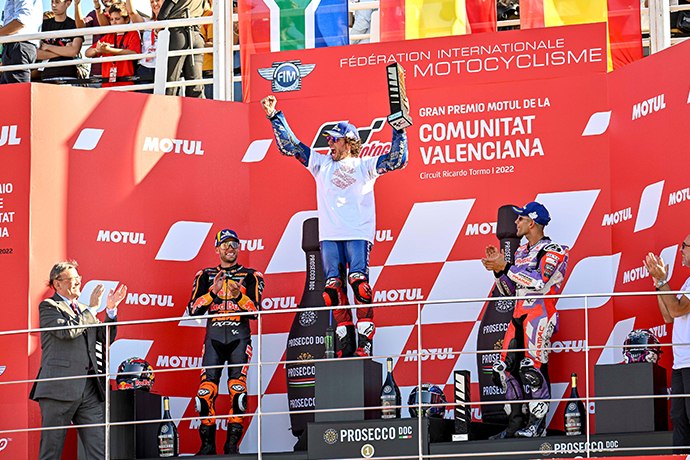
Valencia, November 6, 2022. Álex Rins started fifth and soon took the Suzuki GSX-RR to the front. He never surrendered the lead for the rest of the race. At the finish, neither the KTM nor the Ducati behind him had been able to stop Suzuki from winning the final round of the season.
It was also Suzuki's last race before leaving MotoGP. The finish line became a place of victory and farewell at once: the bike could still win, but the team's future no longer lay on the following year's grid. Just two years earlier, Joan Mir had won Suzuki its first premier-class riders' world championship in twenty years. Results alone could hardly explain why the story was ending this way.
Suzuki's history in top-level motorcycle racing has never been a line rising steadily upwards. It has seven riders' world titles, built two-stroke machines that influenced the entire grid, and experienced withdrawal, waiting and return. Only by bringing those chapters together can we understand how this manufacturer won, and why winning was sometimes still not enough to keep the programme alive.
Learning to Travel Before Winning in the Big Class
Suzuki's early motorcycle business was closely tied to the question of how a Japanese company could enter international markets. It arrived at the Isle of Man TT in 1960; in 1962, Ernst Degner secured an important victory for Suzuki. Those early stories belong to the smaller-capacity classes and cannot simply be added to its later 500cc and MotoGP premier-class title totals. They were, however, the starting point for its technology, people and international racing experience.
For a manufacturer, racing far away in Europe meant more than transporting a bike to the start. Engines had to endure sustained heavy loads, spare parts had to move with the calendar, and mechanics had to solve problems in unfamiliar surroundings while understanding each circuit's demands on gearing, cooling and tyres. A company's racing capability grew through the gradual accumulation of this practical work.
Suzuki later won in many motorcycle disciplines. Road-racing grands prix, off-road racing, endurance events and production-based racing each followed their own technical paths. They could share experience and brand reputation, but their results did not form one common tally. This article follows the premier-class story from 500cc to MotoGP; other disciplines appear only where they help explain that main thread.
In the 1970s, Suzuki turned more of its attention towards 500cc. The class was undergoing a major technical transformation: two-stroke machines were becoming ever more powerful, gradually eroding the advantage of the established four-stroke contenders. The RG500 entered that environment not as a fully developed machine ready to collect trophies, but as a project that riders and engineers needed to refine together.
Barry Sheene: Turning Abrupt Power into Usable Speed
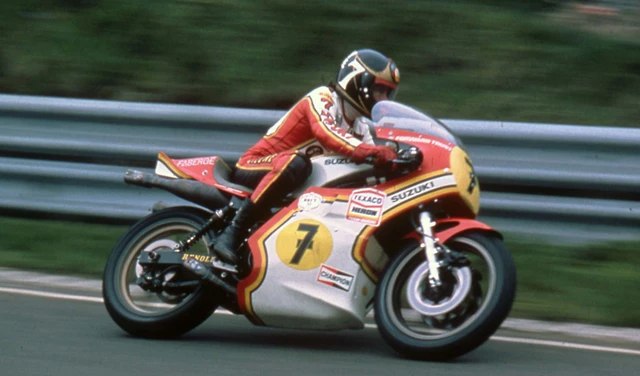 Photo: bikes.suzuki.co.uk
The early RG500 had considerable performance potential, but the engine delivered effective power over a very narrow rev range. Barry Sheene later recalled that if a bike worked only within such a small window, even impressive peak horsepower was hard for a rider to use smoothly through every corner. Improving that situation meant widening the usable range, rather than simply chasing a higher maximum figure.
This was a practical problem in the development of two-stroke racing bikes. On corner exit, the rear tyre had to handle acceleration while maintaining grip with the bike still leaned over. If the power arrived too abruptly, the relationship between throttle movement and rear-wheel response became harder to control. Better manageability could make the same engine faster on a real circuit.
At Assen in 1975, Sheene passed Giacomo Agostini on the final lap to give the Suzuki RG500 its first 500cc grand prix victory. Earlier, he had suffered a serious accident at Daytona, making the return to racing difficult in itself. The Assen win therefore combined physical recovery with progress on the bike, but neither should be reduced to a tale of willpower overcoming everything.
Sheene won the 500cc world championship in 1976 and successfully defended it in 1977. Suzuki went from occasionally threatening the leaders to producing a season-long champion. Cooperation between the British team, rider, mechanics and Japanese factory helped turn competitiveness in individual races into results across an entire season. A truly mature racing programme had to keep effective information flowing between people separated by great distances.
The RG500's name did not reveal its engine layout. A square four can be understood as two twin-cylinder systems arranged alongside each other within a common crankcase. Compared with placing all four cylinders in a single row, this helped Suzuki manage engine width and the layout of the whole motorcycle. The configuration alone could not guarantee a title, but it influenced how the rider changed direction from one lean angle to the other, and where components such as the intake could be positioned.
At the 1976 season opener in France, Sheene injured his leg in practice. Starts in that era required riders to push their bikes before firing the engines, so a leg injury had a direct effect on getting away. He won nonetheless. His five victories and championship that season are often compressed into a single line of figures; the push needed to start a race shows how far the conditions of that era were from those of today.
Why the RG500's Influence Extended Beyond the Factory Team
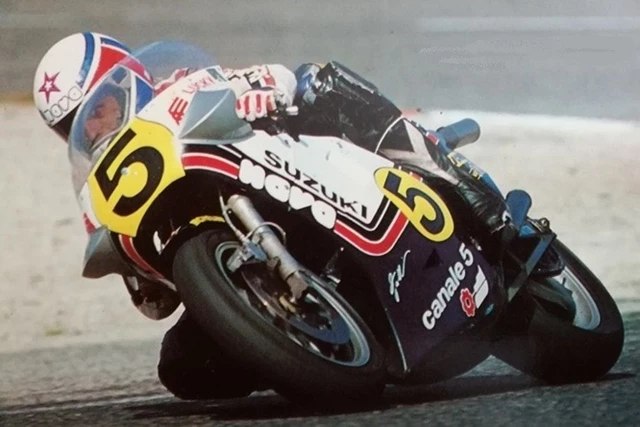 Photo: bikes.suzuki.co.uk
The RG500 mattered in another way: customer machines brought more private riders within reach of high-level four-cylinder two-stroke performance. Previously, the technical gap between the best factory bikes and ordinary entrants was often substantial. When a competitive motorcycle could be bought, maintained and raced in different events, the effect spread across the entire grid.
This did not mean a customer bike was identical to the factory team's latest machine, nor that anyone who bought one could fight for a championship. Factory support, updated parts, set-up and rider ability still made enormous differences. But a relatively mature platform allowed private teams to focus on racing instead of starting from scratch with every engine and chassis problem.
Suzuki's success was therefore visible not only in a star standing on the top step of the podium, but in the many people who chose its bikes as their racing tools. Customers, dealers and the factory team developed a mutually supportive relationship: track results helped sales, wider use increased the brand's influence, and established service and spare-parts support kept the machines racing.
Marco Lucchinelli in 1981 and Franco Uncini in 1982 each won the 500cc world championship on a Suzuki. The title moved from a British rider to Italian riders, showing that the programme could succeed with more than Sheene alone. Yet rivals were also developing rapidly. Yamaha, Honda and other manufacturers kept introducing new machines, and Suzuki did not permanently occupy the strongest position.
The spread of customer bikes also created a flow of people through the sport. Jeremy Burgess, later a celebrated mechanic, raced an RG in Australia when he was young. He recalled its appealing handling, but also that maintenance could not be careless: certain parts needed frequent checks. For a private rider, buying a high-performance bike was only the first step. Recognising wear and fine cracks could be just as important to staying in competition.
Thus, the RG500 broadened competition without putting the factory team's entire capability into a box for sale. Private teams still had to learn maintenance and pay for spare parts. More precisely, it gave more people a strong enough starting point. Turning that starting point into results remained work to be done between garage and circuit.
From RG to RGV: More Than One Letter Changed
The RGV500 that later made Kevin Schwantz famous was not simply Sheene's machine continuing unchanged. Engine layout, frames, suspension and tyres were all developing. A V-four two-stroke design entered Suzuki's premier-class campaign, and riders had to contend with ever greater performance.
Schwantz began his first full 500cc season in 1988 and won the opening race at Suzuka. Such a start made it tempting to imagine that a title would follow quickly, but the battles over the next several years revealed the long distance between winning a race and winning a season. His overtaking and riding at the limit made Suzuki one of the most watched bikes, while crashes and retirements repeatedly eroded his championship chances.
Schwantz finally won the championship in 1993. He placed more emphasis on scoring consistently than in his early years, while Suzuki improved the bike through sustained development. At the same time, Wayne Rainey's serious accident ended their title battle and cast an unavoidable sadness over the season. Schwantz's earlier speed and effort should not be erased, but neither should the accident be treated lightly as an ordinary turn in a championship contest.
That year also illustrates an important distinction in title statistics: Schwantz won the riders' championship, but the 500cc manufacturers' championship belonged to Yamaha. A rider's season points and a manufacturer's points accumulated under its own rules are not the same table. Suzuki's 1993 achievement is clear; it does not need a title it never won added to it to make it important enough.
At the 1993 finale at Jarama, another contest unfolded alongside the riders' championship. Alex Barros won for Suzuki, adding to its manufacturers' points; Yamaha's Bernard Garcia finished seventh, earning enough points for Yamaha to retain the manufacturers' title by five points. Suzuki occupied the top step of the podium while Yamaha headed the season's manufacturers' standings. There was no contradiction.
Races like this show why a manufacturer's season cannot be written solely around its leading star. Another rider's win, or even a finish far from the podium, can alter the manufacturers' standings. Schwantz brought Suzuki its most conspicuous individual honour, while the whole field of its riders was still pursuing a result on another points table.
Kenny Roberts Jr: Suzuki's Final Title of the Two-Stroke Era
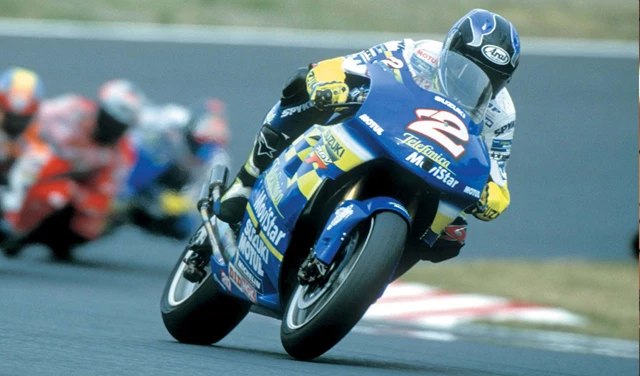 Photo: bikes.suzuki.co.uk
Kenny Roberts Jr joined Suzuki in 1999 and became 500cc world champion in 2000. His father's name had long invited comparisons, but winning the title required his own performance. He had previously raced with Yamaha and his father's team. At Suzuki, he finally found a combination that could turn competitiveness into a season-long result.
In 2000, he won four grands prix and reached the podium nine times. The championship was not a chance wet-weather victory or a gift from one rival's retirement. Across a full season, speed, consistency and the ability to score in different conditions all contributed. For the first time since Schwantz in 1993, Suzuki had taken one of its riders back to the summit.
But this championship arrived near the end of a technical era. From 2002, four-stroke MotoGP machines entered the premier class, with displacement and regulations changing the engineering questions. Familiar two-stroke experience remained valuable, but could not directly replace development of new power units, weight distribution, electronic controls and ways of using the tyres.
Roberts's title therefore carried a double significance: it proved that Suzuki could succeed again within the mature 500cc framework, while becoming a vivid reference point during the difficult years that followed. A manufacturer that had just won a world championship was not necessarily ready for the next regulatory change. Technical knowledge needed to carry forward, but the specific answers had to be found anew.
The Four-Stroke Era: When Victory Seemed Far Away
Suzuki did not immediately reproduce its two-stroke results after entering MotoGP. The new bike had to find its place against strong opposition, and riders had to pursue results on machinery that did not always offer championship-winning performance. Brand retrospectives can easily compress this period into a few dates, yet it is essential to understanding the later return.
At Le Mans in 2007, Chris Vermeulen won in the rain to give Suzuki its first victory of the four-stroke MotoGP era. Wet conditions changed grip and riding demands, creating an opportunity for him and the bike. The win proved that this combination could beat everyone in particular circumstances, but one wet race could not establish that it had the strongest performance all year and at every circuit.
This is a question of scale that racing programmes often face. A single victory has a powerful emotional and public impact, while engineers must determine which factors can be repeated and which depend on weather, circuit characteristics or rivals' mistakes. Only by expanding the repeatable elements can a manufacturer move from occasional success to sustained championship contention.
In 2011, Suzuki announced a temporary withdrawal from MotoGP. The factory's public retrospectives identify the difficult business environment of the time as part of the background. For fans, withdrawal meant losing a familiar sound and colour; for the programme, it meant reorganising development, personnel and racing operations. Returning could never be as simple as wheeling the old bike out of the garage again.
The 2015 Return: Rebuilding a Combination That Could Last
Suzuki returned to MotoGP in 2015 as Team SUZUKI ECSTAR, using the GSX-RR. Different technical choices from its previous bike and a new group of people made the return a rebuilding exercise. Davide Brivio helped lead the team, while engineers, test riders and race riders accumulated experience together.
The GSX-RR used an inline-four engine. Engine layout alone does not define a motorcycle's character, but together with the frame, wheelbase, weight distribution and power delivery it shapes the overall compromises. Suzuki's aim was not to imitate others in every parameter, but to find a solution its riders could use repeatedly and keep competitive over a race distance.
At Silverstone in 2016, Maverick Viñales gave Suzuki its first win since returning. A long time had passed since 2007. This victory mattered because it came within the new programme, proving that the rebuilt bike and team could finally carry their progress to the top step of the podium. It also gave subsequent development a clearer reference point than simply feeling that things had improved.
Yet personnel could still change after a win, and rivals would not stand still. The team needed to embed success in its organisation and machinery rather than attach all its capability to one rider. Rins gradually developed, and Mir began gaining premier-class experience after joining. Only then did a new championship-challenging combination slowly take shape.
Silverstone 2019: Where Thirteen Milliseconds Came From
In 2019, Rins took his first MotoGP win at Austin before confronting Marc Márquez directly at Silverstone. The British race remained undecided into the final lap, with the Suzuki and Honda repeatedly drawing close. The riders had to think not only about passing, but about whether an opponent would have room to attack again after being overtaken.
The decisive move came through the final sequence of corners. Using his line and exit position, Rins squeezed out an advantage alongside Márquez on the run to the finish. The official gap was just 0.013 seconds. The order on the television screen had barely settled before the timing system declared the race over.
A victory like this is often reduced to “Suzuki carries high corner speed”, but the full process is more complex than a label attached to a bike. Maintaining the gap while following, planning the final-lap line, choosing when to release exit speed and denying a counterattack all affect the result. Rins combined the bike's strengths with his position in the race to make a tiny advantage appear in exactly the right place.
He won twice that year and finished fourth in the standings. Suzuki could now compete directly with the strongest rivals in the dry, rather than occasionally winning in unusual weather. But moving from fourth in the championship to first still required more work. Mir's development, continuity within the team and consistent scoring would become particularly important the following year.
There was another rider in the Suzuki garage at Silverstone that day, outside the centre of the cameras' fight-for-victory coverage. Mir was absent through injury, so Sylvain Guintoli stood in and finished twelfth, scoring four points. Rins's win and the substitute rider's finish happened together, reflecting the different tasks a team faces over a race weekend: one bike must turn its available speed into victory, while the other has to complete its work with limited preparation.
Rins started fifth and was already behind Márquez on the second lap. He did not suddenly appear at the last corner; he kept himself in a position to attack throughout the race. Following closely required constant management of front-tyre feel, braking distance and his own rhythm. The final thirteen-millisecond advantage depended on not letting the opportunity slip away over the long period before it.
2020: Connecting a Season Rather Than Winning the Most Races
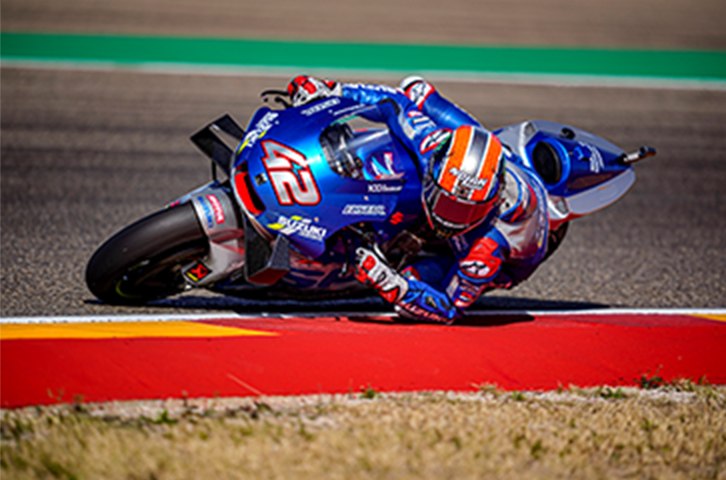 Photo: globalsuzuki.com
The pandemic disrupted the 2020 calendar, leaving the MotoGP premier class with 14 races. An unfamiliar schedule, consecutive events at the same circuits and fluctuations in teams' form made the points battle unusually open. Suzuki had to address not just lap speed, but how to maintain a continuous line of scoring in constantly changing circumstances.
Mir reached the podium seven times that season and won the European Grand Prix. He did not distance his rivals with a large number of wins; instead, he accumulated an advantage through repeated high-quality finishes. For a rider still early in his MotoGP career, knowing when to pursue the maximum result and when to accept the points available was a vital part of becoming a champion.
Rins also made a substantial contribution. He won at Aragon and helped Mir build the team's points total, finishing third in the riders' standings. With both riders regularly running near the front, Suzuki's success was more than an isolated performance by one motorcycle and one person.
At Valencia on November 15, Mir finished seventh and secured the riders' title with one round remaining. Rins was fourth, and Team SUZUKI ECSTAR also clinched the teams' championship. This was Suzuki's “double” that year: rider and team. The manufacturers' title ultimately went to Ducati, and the three standings must be understood separately. Suzuki's achievements were substantial enough without enlarging them through blurred definitions.
The European and Valencia Grands Prix of 2020 took place consecutively at the same circuit, yet produced very different results: Mir first took his maiden MotoGP win, then sealed the championship with seventh place. Those two weekends neatly illustrate the logic of a season-long contest. At the first he needed as many points as possible; at the next he needed to complete the task from the position he had already built. A champion does not have to prove himself with the same finishing position every time.
Elsewhere, Rins's Aragon win and Mir's podium in the same race placed both GSX-RRs near the front. A teams' championship requires both riders to contribute points, whereas a riders' title belongs to only one. Suzuki's two trophies that season reflected the completion of those two kinds of work, giving the rebuilt programme a competitive foundation broader than a single star.
A Small Team's Strengths, and the Cost of Sustaining Them
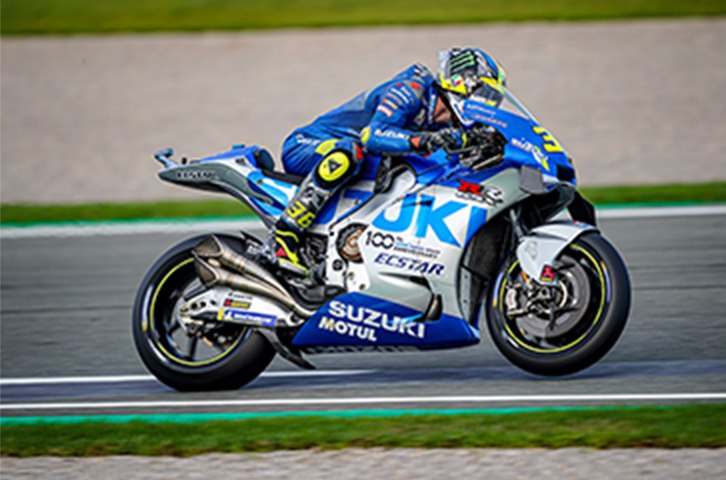 Photo: globalsuzuki.com
Suzuki's success in 2020 renewed attention to how the team worked together. Communication between the two riders, race engineers, Japanese factory and test personnel shortened the distance between identifying a problem and making an adjustment. A relatively compact team may find it easier to keep feedback channels clear, but fewer people do not automatically mean greater efficiency.
Development still required time and resources. The bike's strengths had to be extended, and its weaknesses could not be ignored simply because it had won a title. After a championship, rivals study you, while regulations and tyres may change. A solution that was good enough one year may not remain good enough the next. The team had to keep revising its understanding of the motorcycle while continuing to race.
The 2021 season did not become a second chapter of consecutive titles. Suzuki still took podiums, but could not reproduce the complete outcome of 2020. Personnel management also changed. Attributing all these developments to one person's departure or the shortcomings of one component goes beyond what race results alone can prove.
More fundamentally, a manufacturer's racing programme always exists within a business. The technical progress seen by the racing department and the allocation of resources at company level are connected but distinct questions. An improving motorcycle strengthens the case for continued investment, but cannot make decisions for the entire company. In 2022, that became the central issue in Suzuki's story.
Two More Wins Before Goodbye
In 2022, Suzuki decided to withdraw from MotoGP at the end of the season. An announcement on July 13 confirmed that it had reached an agreement with Dorna to end its participation. President Toshihiro Suzuki publicly explained the decision as a reallocation of resources towards sustainability-related work, redirecting the technology and human expertise accumulated in racing into new motorcycle business. This was the company's explanation of its own decision, not a basis for calculating the MotoGP department's actual profit or loss.
The same announcement included the end of factory participation in EWC, while stating that customer racing would continue to receive support through the dealer network. The change concerned the destination of factory resources; it did not declare that every Suzuki racing motorcycle would stop. Once the news was clear, the team still had to finish the remaining races, riders had to find their futures, and staff had to face their next steps. Outsiders saw the familiar garage each weekend, while those inside knew that its routine would not continue indefinitely.
Rins won in Australia and then again at the Valencia finale. In the last race, he rapidly took the lead from fifth on the grid and held it to the finish. No sequence of racing events can prove a business decision inherently right or wrong, but those two victories at least showed that Suzuki's motorcycle retained real winning ability when it left.
This ending hurt fans because it interrupted a familiar sporting narrative. People are used to believing that results bring investment and investment brings the next challenge. Suzuki's farewell was a reminder that no automatically enforceable contract links competitive performance to a programme's survival. Staff can do their present work extremely well and still be unable to decide the project's future by themselves.
Suzuki's own final-race announcement counted 89 wins in the 500cc era and eight in four-stroke MotoGP, for a total of 97 premier-class grand prix victories. That tally stopped at a genuine win. It was neither an old result repackaged for nostalgia nor a promise of another return.
Seven Riders' Titles in a History of Interruptions
Sheene's two titles, those of Lucchinelli and Uncini, and the championships of Schwantz, Roberts Jr and Mir make up Suzuki's seven premier-class riders' crowns. They span different engine eras, team structures and types of rider. No fixed “Suzuki character” can explain every success, and each generation of motorcycle cannot be treated as the natural growth of the one before it.
What does recur is the ability to find an effective combination within limited conditions. The RG500 brought advanced two-stroke performance to more competitors; the RGV500's long partnership with Schwantz gradually turned speed into a championship; the GSX-RR used a new technical and team combination to rebuild competitiveness after Suzuki's return. Each involved learning and correction, rather than magic inherent in the brand name.
Leaving MotoGP did not mean every Suzuki racing activity stopped on the same day. Production-based racing, endurance competition, customer teams and parts support each had their own arrangements and should not be conflated with the factory premier-class programme. The 2022 decision ended this phase of MotoGP participation. Its significance is clear enough without exaggerating it into the disappearance of the entire brand from racing.
As of the end of the 2025 season, Suzuki had not returned to MotoGP. The final image remained Rins crossing the Valencia finish line before everyone else. It leaves the story with a question worth considering: racing measures who is fastest, but whether a team can continue to exist also depends on a different set of choices beyond the circuit.
Timeline
| Year | Key Milestone |
|---|---|
| 1960、1962 | Entered the Isle of Man TT; achieved early international success in smaller-capacity classes |
| 1974—1977 | RG500 development; first win at Assen in 1975; Sheene's titles in 1976 and 1977 |
| 1981、1982 | Lucchinelli and Uncini won successive 500cc riders' titles |
| 1988、1993 | Schwantz won in his first full season and became champion in 1993 |
| 2000 | Kenny Roberts Jr won the 500cc riders' title |
| 2007 | Vermeulen gave Suzuki its first four-stroke MotoGP win at Le Mans |
| 2011 | Announced a temporary withdrawal from MotoGP |
| 2015、2016 | Returned; Viñales took the first win of the comeback at Silverstone |
| 2019 | Rins won twice, beating Márquez by 0.013 seconds at Silverstone |
| 2020 | Mir won the riders' title; Team SUZUKI ECSTAR won the teams' title |
| 2022 | Announced withdrawal; Rins closed the programme with victory at Valencia |
Premier-Class Honours
| Category | Record and Definition |
|---|---|
| 500cc Riders' World Championships | 6: 1976, 1977, 1981, 1982, 1993, 2000 |
| Four-Stroke MotoGP Riders' World Championships | 1: 2020, Joan Mir |
| Premier-Class Grand Prix Wins | 97: 89 in 500cc and 8 in MotoGP, according to Suzuki's end-of-2022 tally |
| The 2020 Double | Riders' and teams' championships; excludes the manufacturers' title |
| The 1993 Championship | Schwantz won the riders' title; Yamaha won the manufacturers' title |
| Statistical Scope | Excludes titles in smaller-capacity classes such as 50cc and 125cc, WSBK and endurance racing; through the end of the 2025 season |
Sources and Further Reading
- History of Suzuki Motorcycles — Models by Year
- Suzuki RG500: the first modern grand prix bike September 2016 - Motor Sport Magazine
- Total Dominance - FIM Heritage
- Our History | Suzuki Motor de Colombia SA
- Suzuki Official: Rins Wins the 2019 British Grand Prix
- Suzuki Official: Mir Wins the 2020 MotoGP World Championship
- Suzuki’s 100th Anniversary Even More Special With Double MotoGP Championship Titles
- Ending MotoGP™ and EWC factory participation at the end of the 2022 Season | GLOBAL NEWS | Global Suzuki
- Alex Rins Wins at the MotoGP Final Round | GLOBAL NEWS | Global Suzuki
- 1993 - Racing Information | Yamaha Motor Co., Ltd.
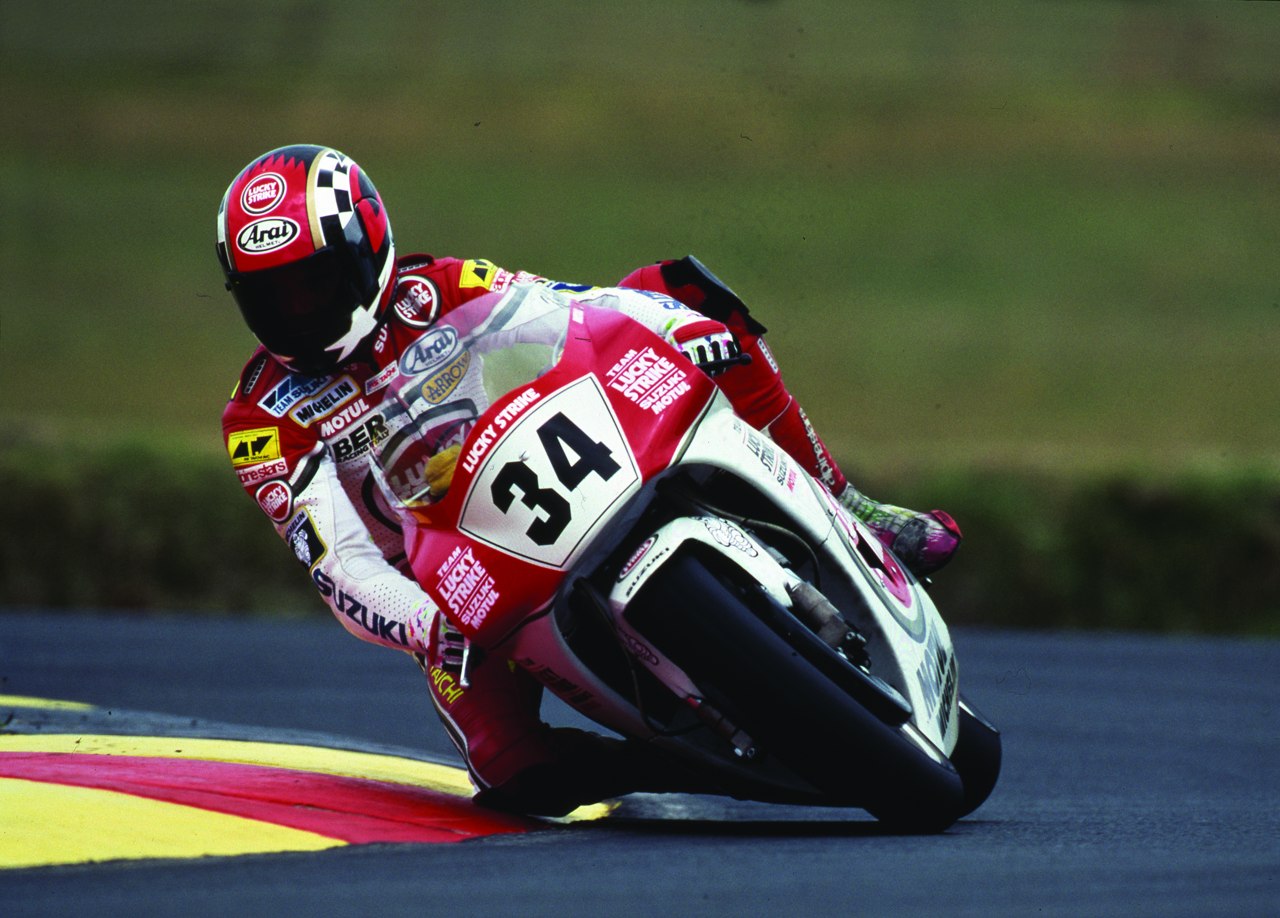 Photo: suzukipress.co.uk
Kevin Schwantz: Beyond That Late-Braking Move, Learning to Win a Whole Season
No. 34's late braking is only the beginning: from American racing to 1993, how an attacking rider learned to win a whole season.
Continue Reading · About 20 Minutes →