
Expand chapter list · 9 chapters
- Subaru, STI and Prodrive: Who built this history?
- The Legacy's long wait came before the Impreza took flight
- 1995: McRae and Ringer carried their speed to the season's end
- Group A, World Rally Car and the 22B: How do they differ?
- Burns and Reid: A different kind of champion in blue
- Solberg and Mills: Another title in 2003
- Withdrawal in 2008: Why can a championship-winning programme come to an end?
- Another line of champions: The legacy of production categories and customer cars
- Why does the blue remain so vivid after the team has gone?
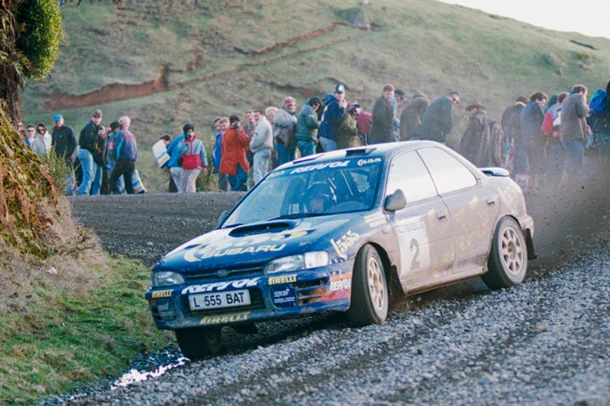
Even people who have never watched an entire rally often recognise the blue saloon with gold wheels and a large rear wing. It travelled from stage photographs into posters, models and video games, binding Subaru closely to the WRC. Yet its appearance is only the doorway to the story. What truly made the Impreza a classic was a way of working that spanned countries, organisations and generations of drivers.
The most compelling part of this works team's history is not that it always won. It endured the wait of the Legacy years, took three consecutive manufacturers' titles and helped three drivers become champions in different eras, before withdrawing as economic conditions changed. Only by placing success and closure on the same timeline can we understand why a team long absent from top-level works competition still has such a distinct presence.
Subaru, STI and Prodrive: Who built this history?
Subaru's World Rally story cannot be told through one team name alone. The brand supplied the products and the direction of its manufacturer campaign; STI, founded in 1988, took responsibility for motorsport and high-performance development; Britain's Prodrive was a long-term partner in car development and team operations. The 2008 withdrawal announcement looked back on 19 years of cooperation between Subaru and Prodrive.
There were practical reasons for this international partnership. A world rally campaign faces events in Europe, the Americas, Oceania and elsewhere. It needs connections to production models and manufacturing resources, alongside specialist race engineering, testing and on-event support. Developing a car and getting it through a year's competition in different weather and on different surfaces are related, but not identical, tasks.
Understanding these three layers also prevents STI from being mistaken for a driver or simply the name of one team. It appears in motorsport history as well as on high-performance road cars, while Prodrive is not the same entity as the Subaru brand. The classic blue car was the product of sustained cooperation; the largest logo on its body cannot explain it on its own.
A long partnership allows experience to survive changes of car and driver. Someone must take a suspension problem discovered on an event back to testing; engineers must decide whether a driver's setup change can work on other surfaces. A championship-winning car is more than an assembly of parts. It also embodies working methods developed through repeated exchanges among many people.
How a works team connects three capabilities
Their roles evolved with the programme. Together they formed the works effort, rather than three unrelated competing teams.
The Legacy's long wait came before the Impreza took flight
Subaru began its WRC works programme with the Legacy in 1990. The familiar Impreza photographs can overshadow these early years, but the preceding Legacy project built practical experience with engines, four-wheel drive and competition organisation. The winless days were not empty ones: every finish, failure and setup change exposed the next problem to solve.
At Rally New Zealand in 1993, McRae and co-driver Derek Ringer won in a Legacy. It was Subaru's first WRC rally victory and McRae's first too. For a programme already several years into its investment, it was more than a trophy: it proved that the car and team could bring an entire winning effort to completion at the highest level of the sport.
The Impreza made its debut at Finland's 1000 Lakes Rally later that year. The more compact model provided a new foundation for the next stage of competition, but changing the body did not automatically eliminate every problem. People and experience from the Legacy years remained, and the new car carried that accumulated knowledge into a phase closer to championship contention.
A change of model also meant rebuilding the driving feel. Body dimensions, weight distribution and chassis layout together shaped the car's reactions on narrow roads. Drivers' pacenote habits and the service team's practical experience had to adapt accordingly. A new car might better suit the development objectives, but stage times and finishing performance still had to prove it.
STI's annual record shows the progress before that first win clearly: the best finish was fourth in 1990, a top-three result followed in 1991, second place came in 1992, and victory finally arrived in 1993. These few lines of numbers attract less attention than a single triumph, but they better reflect the actual pace at which a works programme advances.
Each step up a place could demand a different task. First the car had to reach the finish; then it had to approach the leaders in certain conditions; beyond that, it had to sustain its pace to the end of an entire rally. Looking at the best finishes across those four years alongside the 1993 victory explains why the Legacy deserves a chapter of its own before the Impreza.
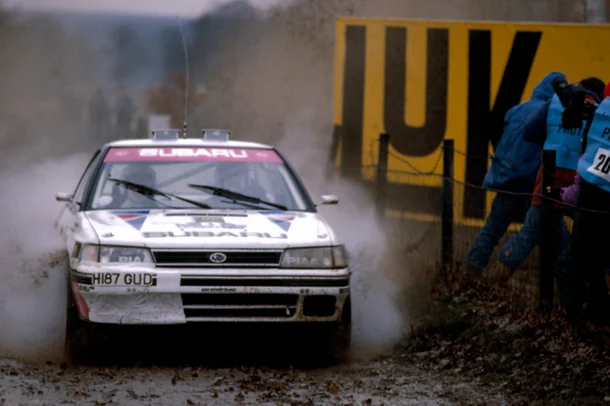 Photo: STI (official)
1995: McRae and Ringer carried their speed to the season's end
By the mid-1990s the Impreza was becoming one of the WRC's most competitive cars. In 1995, McRae and the vastly experienced Carlos Sainz both fought for the drivers' title with Subaru. For the manufacturer it was a formidable line-up; for each driver, the fastest rival might be working out of the same service area.
McRae and Ringer won the season-ending British rally to secure the world title. McRae became the first Briton to win the WRC drivers' world championship, while Subaru took its first manufacturers' world title that same year. Individual and works-team breakthroughs coincided, giving the blue Impreza a championship story that was exceptionally easy to remember.
One crew's title cannot stand for everyone's work. The co-driver turns pacenotes into driving information at the right moment; mechanics and engineers keep the car working between stages; the other works car also contributes to the manufacturers' points. The most persuasive aspect of 1995 was that the efforts of driver, co-driver and manufacturer all reached their goal in the same season.
At the British round, McRae and Ringer completed their title challenge with victory. It brought a British driver, a co-driver, a British operational team and a Japanese brand together in one podium photograph. Subaru gained more than a record: it gained a racing memory that fans in different countries could all feel belonged to them.
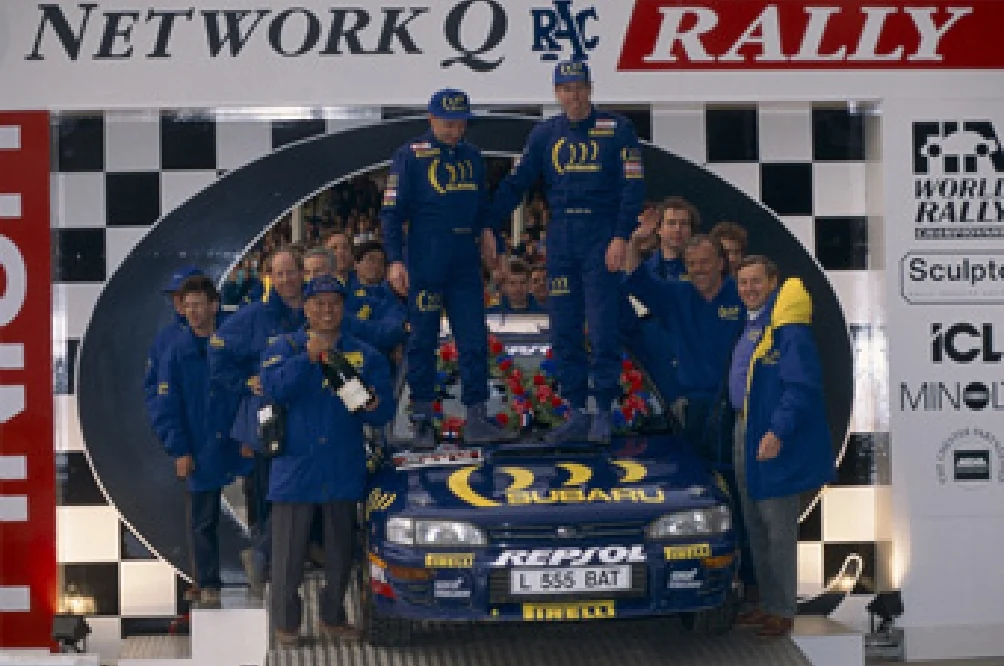 Photo: STI (official)
Group A, World Rally Car and the 22B: How do they differ?
Subaru retained the manufacturers' title in 1996 and 1997. Its three-title run spanned a major change in WRC car regulations, as the Impreza moved from Group A into the World Rally Car era. For readers identifying models from photographs alone, the season and regulations are more reliable guides than the same familiar blue livery.
The relationship between production cars, competition cars and regulations affects what a car can be modified to become. The Impreza developed continuously within competition rules, and its body, suspension and other engineering details differed across periods. Road cars inspired by the rally machine also had to account for everyday use, practicality and reliability. Similar appearances can conceal different purposes.
The introduction of World Rally Car regulations in 1997 gave manufacturers development possibilities different from those of Group A. Subaru introduced the two-door Impreza WRC that year and retained the manufacturers' title. This change is best understood by separating three layers: competition rules, the actual rally car and the road model. Even when all bear the Impreza name, the permitted modifications, installed components and road legality may differ.
The 1998 22B is particularly easy to confuse with the rally cars. Its wide body brought rallying's visual character to a road car, and the model had a commemorative purpose. That does not make it the car McRae drove to the 1995 title. Door count, flared wheel arches and body details provide clues to an era in photographs, but a final identification should still be checked against the year and model information.
In 1997, the first year of the new rules, Subaru won three rounds in succession: Monte Carlo, Sweden and Kenya's Safari Rally. Their roads and climates differed markedly. This opening run offered broader validation than victory on one course: the new car had to make its performance available to the crew in radically different settings.
That also helps explain the third manufacturers' title. The team had done more than reshape the previous year's car into a two-door body: it had stayed competitive through a regulatory transition. For a manufacturer, the most valuable development is not the fastest time in one test, but a new approach that adapts quickly to the real calendar.
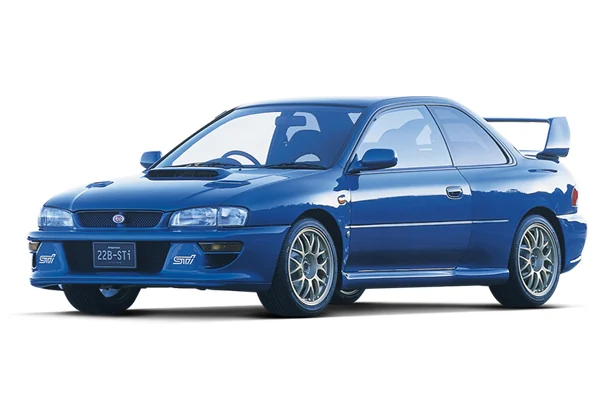 Photo: STI (official)
| Name | Place in the story | What to check in photographs |
|---|---|---|
| Group A Impreza | WRC competition model of the mid-1990s | Exact season, car number and crew |
| Impreza World Rally Car | Later works car under the new regulations | Do not identify the generation by livery alone |
| 22B STI | High-performance road model from 1998 | A road product, not the 1995 title-winning rally car |
Burns and Reid: A different kind of champion in blue
McRae later moved to Ford, but Subaru's story did not end with his departure. In 2001, Richard Burns and co-driver Robert Reid won the world championship. Compared with McRae's fiercely attacking image, their route to the title offers a useful reminder that a season can be won in different ways.
Several drivers still had a chance of the title when Rally Great Britain began in 2001. McRae crashed out while leading, and Mäkinen also retired on the opening day. Burns and Reid brought third place home. Burns finished the year ahead of McRae, 44 points to 42, while that year's manufacturers' title went to Peugeot.
There was no rally victory at the finale, but there was a world title. That illustrates how Burns's task differed from McRae's in 1995. Once his rivals had retired, he needed to protect enough points rather than take fresh risks for first place on the day. The blue car appeared in championship celebrations twice, but the competitive situations behind them were different.
Burns's success also showed that a mature works team's value lies in supporting the next crew's pursuit of victory, rather than relying on one hero forever. The 2001 drivers' title and Subaru's earlier three consecutive manufacturers' titles belonged to different seasons and different statistical categories. Keeping them separate makes the team's ability to sustain its programme clearer.
STI's 2001 record lists just one top-level WRC rally win, in New Zealand, yet the drivers' world title was secured. That offers another way to view Burns's story. Wins certainly matter, but a championship also depends on the points brought home from other rallies and the opportunities lost by direct rivals. A review built only from victory highlights would omit many of the events that decided the outcome.
Solberg and Mills: Another title in 2003
In 2003, Petter Solberg and Phil Mills gave Subaru its third drivers' world champion. McRae, Burns and Solberg differed in personality, era and opposition, yet all linked their greatest honour to the blue car.
The 2003 British showdown produced a different ending. Solberg and Mills won the rally, Loeb finished second, and the world championship was decided by a single point. The stage times reveal more about that performance: Solberg was fastest on 13 of the 18 stages, including all eight on Saturday.
These figures give substance to the phrase "turning it around at the final round". It was not merely a matter of waiting for somebody else's mistake, but of repeatedly delivering the shortest time. For Subaru, a third drivers' world champion also demonstrated that its programme could support crews with different styles in different eras. It did not automatically produce a fourth manufacturers' title, however: that went to Citroën in 2003.
The WRC was moving into a new phase of competition among strong teams. Subaru's accumulated reputation did not exempt it from continuous development. Every generation of car still had to answer the same questions: was it fast enough on different surfaces, reliable across several days, adaptable to a driver's needs, and clear about which problems should take priority in limited testing time?
| Championship category | Year | Driver / co-driver |
|---|---|---|
| Drivers' and co-drivers' world titles | 1995 | Colin McRae / Derek Ringer |
| Drivers' and co-drivers' world titles | 2001 | Richard Burns / Robert Reid |
| Drivers' and co-drivers' world titles | 2003 | Petter Solberg / Phil Mills |
| Manufacturers' world title | 1995、1996、1997 | Combined results of the Subaru works team |
Withdrawal in 2008: Why can a championship-winning programme come to an end?
On December 16, 2008, Subaru announced that its WRC works programme would end after that season. The announcement placed the decision in the context of rapidly deteriorating global economic conditions, while recalling the long partnership with Prodrive and three manufacturers' and three drivers' titles. It was a business decision by the manufacturer, not something that can be explained by the result of one rally.
For fans, racing seems meant to continue from the next round to the next year. For a manufacturer, however, competition spending must coexist with the allocation of resources across the business. Even a newly developed car does not guarantee that a programme can keep running for many more years. When the economic environment changes, motorsport too can face suspension or closure.
Withdrawing from the WRC manufacturer programme did not make every Subaru competition car disappear at once. Private crews, regional events and other motorsport activities continued to carry its technical and cultural influence. When a blue Impreza appears in competition afterwards, the event, class and team identity must be checked before deciding how it relates to the former factory programme.
Another line of champions: The legacy of production categories and customer cars
STI's results also include the name P-WRC, the Production Car World Rally Championship of that period. Toshihiro Arai won it in 2005 and 2007, and Nasser Al-Attiyah in 2006, all in Subaru cars. These annual honours came under a different set of competition regulations and must not be added to the top-level drivers' title record of McRae, Burns and Solberg.
This level of participation widened the connection between the brand and rallying. The top works team pursued results at the highest level, while other classes allowed more crews to compete in cars closer to production foundations. Reading an old results table requires looking beyond the badge to the class in which a title was won. That explains why one brand can have several lines of honours developing at the same time.
After the works withdrawal, this part of the history meant Subaru's connection with rallying was not abruptly severed. Later STI records still list production-category results, while older cars continued to appear in competitions and displays. "The works programme ended in 2008" therefore has a precise organisational meaning, but it is not the final page shared by every Subaru racing story.
Why does the blue remain so vivid after the team has gone?
A team sometimes needs more than the longest list of titles to be remembered. Subaru's cars had a recognisable shape, each of its three champions had a distinct story, and rallying placed the machines in forests, snow and mountain roads. A fan could discover the car in one photograph, then gradually find a whole world behind it.
That memory continued through demonstration events too. At the 2007 Goodwood Festival of Speed, McRae once again appeared before spectators in a blue Impreza. Displays freed the cars from competition for points and times, making them a shared gateway through which different generations of fans could discover an earlier era.
Look again at the blue car from the opening. The questions now reach beyond "Who drove it?" Which regulatory era did it come from? Who developed and operated it? Which co-driver helped complete its rallies? How did it move from professional competition into public memory? Such questions take Subaru's history beyond a livery, and keep a works programme that has ended alive as a racing story worth reading.
View sources · 14 items
- STI: Company and motorsport chronology
- Subaru: Announcement of withdrawal from the WRC works programme at the end of 2008
- Prodrive: Motorsport history
- Goodwood Media Centre: McRae's 30th anniversary tribute and cars
- Scottish Sports Hall of Fame: McRae
- FIA: The McRae legend
- Subaru: Announcement commemorating three consecutive manufacturers' titles in 1997
- Subaru: 1998 launch announcement for the 22B STI
- WRC: History of the World Rally Championship
- FIA: The origins of World Rally Car in historic rally regulations
- FIA: Statement by Robert Reid and British WRC drivers, including details of the 2001 championship partnership
- Pirelli: On-event report from Rally Great Britain 2001 and Burns's title victory
- Subaru Canada: Six Star Review, Summer 2004
- Pirelli: On-event report from Rally Great Britain 2003 and Solberg's title victory
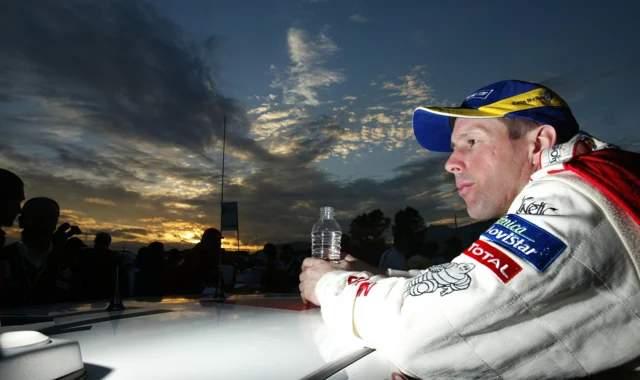 Photo: FIA.com
Colin McRae: Why did one world title leave such a lasting echo?
Continue reading · 12 min →