
Expand chapter contents · 12 chapters
- Why was 2003 a new beginning?
- 2007: One rider, one bike and a perfect meeting
- Why did a long wait follow the title?
- The aim of rebuilding: Speed that more riders could use
- Dovizioso: A chapter that matters, even without a title
- Two Austrian final corners: The same rivals, with their attacking roles reversed
- 2022: A second riders' title, fifteen years later
- Why is Pramac's title also part of Ducati's story?
- 2025: The old rival becomes the red team's champion
- Why does the same badge appear in different garages?
- Three bike photographs: How do they reveal two eras?
- A different way to watch your next MotoGP race
In 2007, Casey Stoner became world champion on a Ducati. For a manufacturer that had entered MotoGP only in 2003, it looked like the beginning of a glorious era. Yet the next rider to become premier-class world champion on a Ducati did not arrive until 2022. Fifteen years separated them.
Those fifteen years make Ducati's story particularly worth reading. It had extraordinary straight-line speed, bikes that even the best riders struggled to adapt to, and low points when even a single victory was hard to obtain. Seeing several Ducatis fight for podiums today should not lead us to imagine that it was always the easiest route to success. That strength was built gradually, later on.
Why was 2003 a new beginning?
Ducati had long established its reputation in motorcycle racing, but MotoGP and WorldSBK do not share a results sheet. The former centres on prototype racing bikes; the latter has a more direct connection with the technical basis of production models. Engine and racing experience gained in one field is valuable, but cannot be exchanged directly for championships in the other.
In 2003, Ducati entered MotoGP with the Desmosedici GP03 and riders Loris Capirossi and Troy Bayliss. The GP03 used a four-cylinder engine, retaining the marque's characteristic approach of mechanically controlling both valve opening and closing. Behind the technical terminology lay a simple task: combine engine performance, chassis, tyres and electronic control into a bike that a rider could repeatedly use at the limit.
Capirossi took the first win at that year's Catalan Grand Prix, only Ducati's sixth MotoGP race. It was an impressive start, showing that the manufacturer had not arrived merely to make up the numbers. Yet a long distance remained between winning one race and fighting for a championship across every kind of circuit. Different combinations of corners and grip conditions continually posed fresh questions to a new bike.
The GP03 also embodied an important choice: Ducati developed a four-cylinder machine for the prototype championship rather than bringing over a lightly modified production-based twin. The engine still carried the marque's identity, but the whole bike had to answer the demands of MotoGP. This distinction helps explain why the same manufacturer follows different technical paths in different championships.
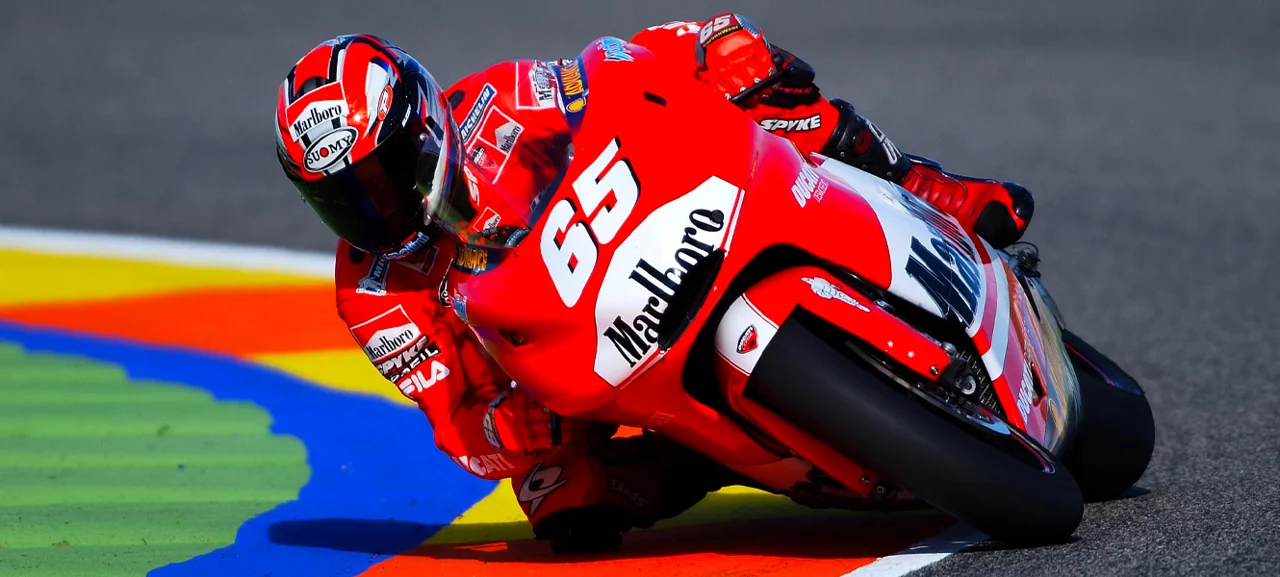 Photo: Ducati.com
2007: One rider, one bike and a perfect meeting
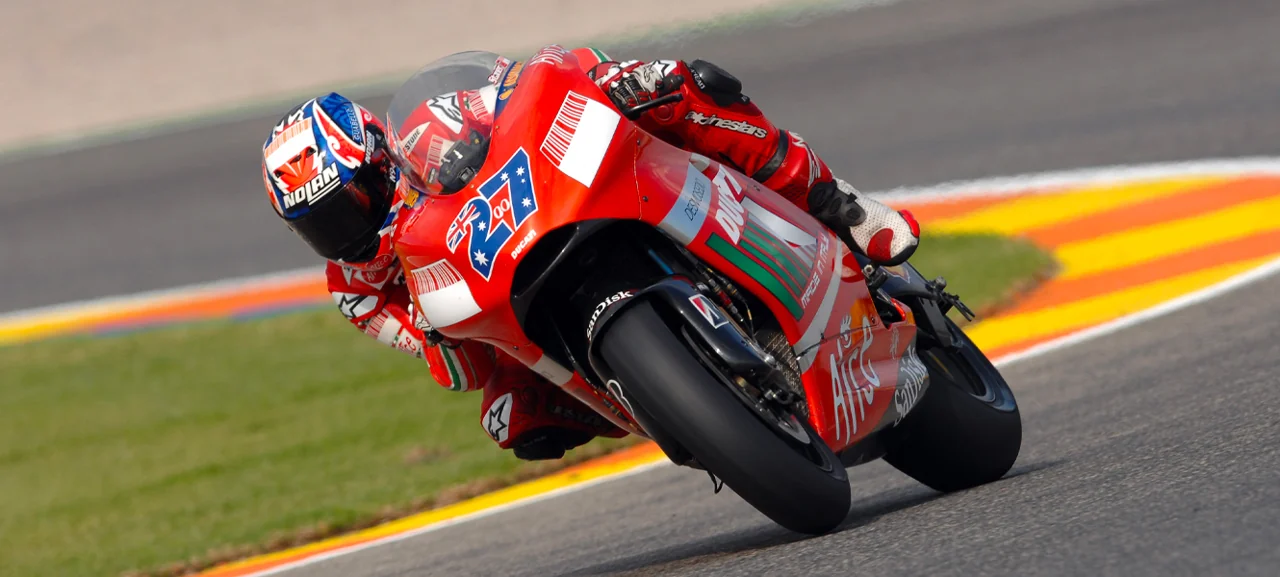
MotoGP entered the 800cc era in 2007. In his first Ducati season, Stoner won ten races on the GP07 and took the riders' world championship. Ducati also won the manufacturers' title. For the Italian marque, Stoner's speed turned an aggressive, distinctive technical concept into a season-long result.
This history is easily reduced to 'Ducati was fast on the straights'. Engine performance was indeed an important feature of the GP07, but a circuit is not a straight line. A rider must manage the continuous relationship between braking, turn-in, the apex and corner exit, while retaining confidence as tyre condition changes. Stoner's ability to turn the bike's strengths into ten wins involved far more than simply opening the throttle all the way.
It also left a more complicated question. When one rider is exceptionally good at using a particular bike, does the manufacturer already possess a broadly applicable formula for success? The years that followed showed that no easy conclusion was possible. A perfect meeting between one rider and one machine is a different level of achievement from a technical system that lets several riders compete consistently.
Ducati's GP07 archive records four further podium finishes in addition to the ten victories. That detail matters. A championship is not won only on the ten most dazzling Sundays; the other races yielding major points also keep restricting the room for rivals to catch up. In the first year of the 800cc regulations, Stoner translated the new bike's performance into the result of a complete season.
The GP07 used a 799cc engine with an officially listed output exceeding 200 horsepower. Reduced displacement did not make the racing gentler. How the power was delivered and how the rider used it still required coordination among frame, tyres and electronics. The specifications identify a technical era; ten wins and four other podiums show how effectively that combination worked in competition.
Why did a long wait follow the title?
One title did not make every problem disappear. After Stoner, Ducati could still show speed in some races, but struggled to sustain the all-round competitiveness required for a title challenge. Valentino Rossi rode for Ducati in 2011 and 2012, and the partnership produced no Grand Prix victories. Even a rider who had enjoyed enormous success with other manufacturers could not change the situation through his record alone.
Explaining that disappointment as 'the rider did not try hard enough' or 'the bike was completely useless' is too simple. A prototype's performance depends on the front-wheel feedback a rider needs, how he enters a corner, how he transfers power to the ground, and whether the technical team can meet those needs within the rules. The hardest situation is one in which a bike has clear strengths that the rider cannot confidently use at crucial moments.
By the end of 2013, Ducati's official description of the season was still one of difficulty. Andrea Dovizioso's and Nicky Hayden's championship positions did not meet the marque's expectations. Against that background, Luigi Dall'Igna began taking on new technical and organizational responsibilities. The long revival that followed began not with victory, but with an honest recognition of the gap.
The aim of rebuilding: Speed that more riders could use
Dall'Igna formally began leading the new Ducati Corse operation at the end of the 2013 season. Improving a prototype is not as simple as adding a little more horsepower. If a rider cannot precisely judge the bike's condition on entry, even the strongest engine may lose its value before the corner exit. The motorcycle has to become an integrated whole.
In the years that followed, Ducati continued adjusting the bike and its racing operations. Engineering leaders, test riders, race riders and garage mechanics needed a continuous feedback loop: at what stage did a problem occur, was it a fundamental characteristic or a setup issue at one track, and did a new solution actually improve performance in racing? Such work rarely occupies the podium cameras, yet determines whether a bike can gradually escape its limitations.
At the 2016 Austrian Grand Prix, Andrea Iannone led Dovizioso home in a Ducati one-two, ending a wait for a Grand Prix win stretching back to 2010. The one-two matters: it indicates collective progress more clearly than a lone bike breaking through by chance. Success in Austria did not mean every circuit had been conquered, of course. The team still had to prove it could compete everywhere.
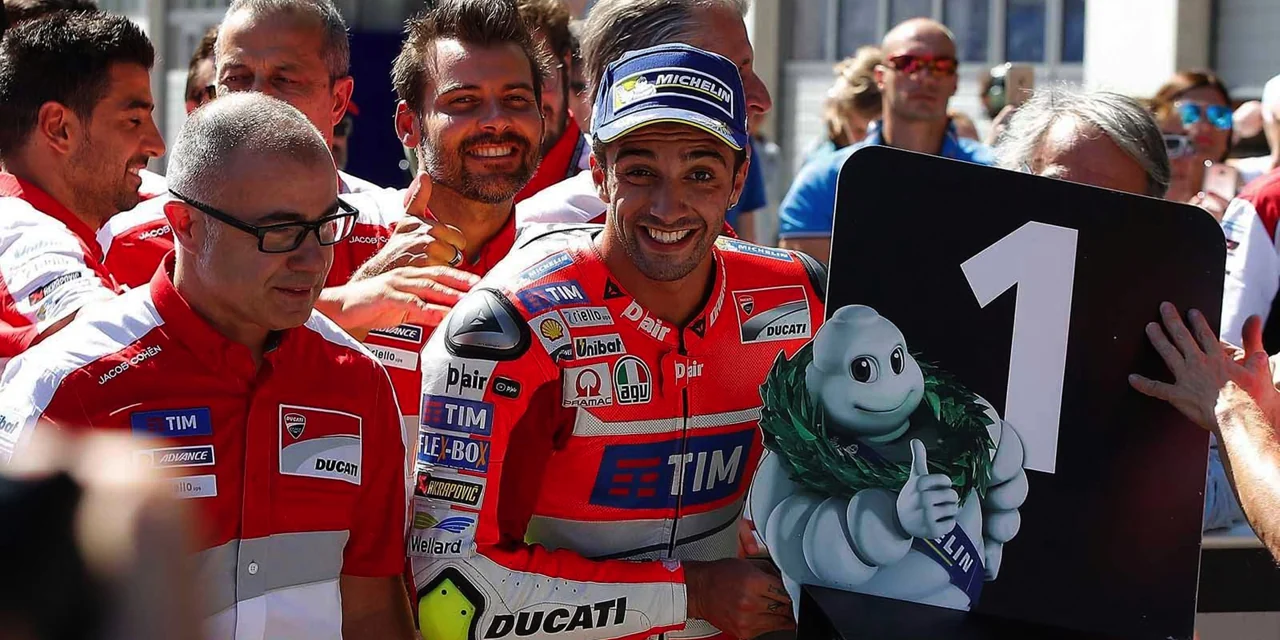 Photo: Ducati.com
Dovizioso: A chapter that matters, even without a title
Dovizioso was central to Ducati's return to championship contention. He finished runner-up in MotoGP in each year from 2017 to 2019 and fought Marc Márquez directly on numerous occasions. The title remained out of reach, but Ducati had moved from an occasional-winning challenger to a position where it could threaten Honda's leading rider.
Yet finishing runner-up also exposed the next threshold in the rebuilding process. Spectacular wins at individual circuits were not enough to outweigh the rival's consistent output across a year. Every unsuitable circuit, every lost point and every stalled phase of development could become part of the final gap. Ducati was getting closer to the championship, while also learning how difficult the last step would be.
Two Austrian final corners: The same rivals, with their attacking roles reversed
At the final corner in Austria in 2017, Márquez tried to snatch victory from Dovizioso, but the Ducati rider held firm and won by 0.176 seconds. Two years later, the same circuit brought them together at the last corner again. This time Dovizioso attacked, completed the pass and beat Márquez by 0.213 seconds.
The two sequences look similar, but the manoeuvre was not the same. In 2017, the task was to respond to the following rider suddenly diving through; in 2019, it was to calculate the final point at which an attack was possible. Late braking explains only part of the process. If the bike cannot turn promptly after entry, the advantage may vanish at the exit. But if the rider remains behind waiting, the finish line will offer no further lap.
This makes Dovizioso's place in Ducati's history more concrete. He not only helped accumulate development feedback, but repeatedly reduced entire races to one final judgement while his championship rival was at his strongest. The annual crown ultimately eluded him, yet these wins record Ducati's recovery of the ability to fight head-on.
2022: A second riders' title, fifteen years later
At one point midway through the 2022 season, Francesco Bagnaia trailed the championship leader by 91 points. By the end, he was world champion, giving Ducati its first premier-class riders' crown since 2007. It was not a procession led from the start, but a comeback demanding sustained pursuit, fewer mistakes and the ability to bear pressure.
The fifteen-year change from Stoner to Bagnaia is especially worth comparing. Stoner represented an intense union between the GP07 and an individual's ability; behind Bagnaia stood a system rebuilt over many years, with several bikes continually accumulating results. That perspective avoids writing the revival as merely 'finally finding another genius'. The rider mattered greatly, but so did the manufacturer's long-term ability to solve problems.
Before the Valencia finale, Bagnaia had transformed the enormous mid-season deficit into a 23-point lead. His task changed with it. He no longer needed to take a pursuer's risks on every lap; he needed to make sure the points advantage became the title. He finished ninth, Quartararo fourth, and Bagnaia became champion.
Ninth place gave the comeback a meaningful ending. The day calling for the biggest celebration did not end with a race win. The victories accumulated earlier allowed him to manage the finale according to the season's objective. From a 91-point deficit to defending the lead at the finish, one season required the rider first to learn how to close the gap, then how to protect the position he had earned.
Bagnaia won again in 2023, carrying the breakthrough forward. Meanwhile, Sprints had entered the schedule, creating more points to pursue each weekend and more occasions to encounter risk. Reading this period's results requires a distinction between Saturday Sprints and Sunday Grands Prix. Their wins cannot be merged into a single historical record.
From one race breakthrough to sustained title contention
This is a framework for reading the team's history, not an internal Ducati technical flowchart.
Why is Pramac's title also part of Ducati's story?
In 2024, Jorge Martín won the riders' world championship for Pramac on a Ducati GP24. Many new viewers ask why Ducati was celebrating when the champion was not a rider in its factory team. The answer lies in two concepts often used interchangeably: team and manufacturer.
The manufacturer supplies the bike; the team competes as a specific racing organization. A manufacturer can supply both its factory team and independent teams. Martín belonged to Pramac, and also to the group of riders using Ducati machinery. In 2024, Martín won the riders' title, Ducati Lenovo Team won the teams' title, and Ducati took the manufacturers' crown. The three trophies need not all belong to exactly the same entrant.
That year, Ducati riders won 19 of the 20 Grands Prix, and the top four riders in the championship all used Ducati bikes. The clearest change was that competitiveness was no longer concentrated in one garage or one individual. For the manufacturer, this was a system succeeding. For the factory team, it still meant fighting for its own position against independent riders on the same marque.
Between 2007 and 2024, Ducati's problem had changed. Earlier, it needed above all to find someone who could exploit a bike's distinctive character. Later, it had to manage several riders capable of winning and multiple racing organizations. Intense title competition within the brand resulted from improved performance, while also bringing new decisions about rider selection and partnerships.
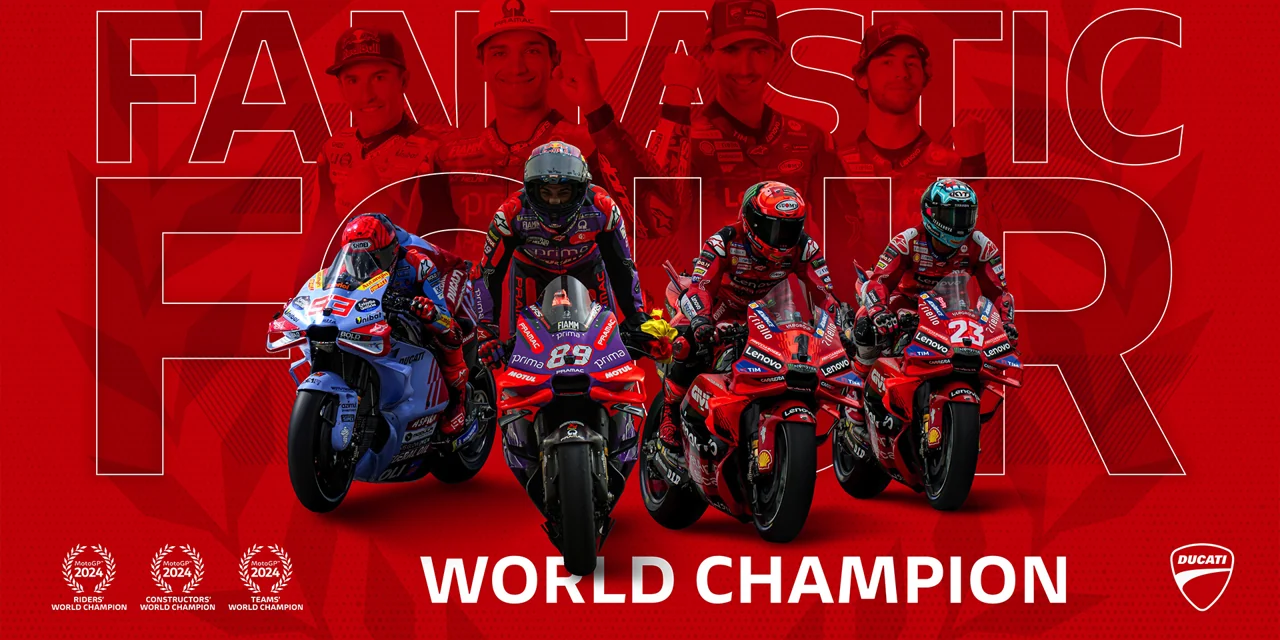 Photo: Ducati.com
| 2024 title | Winner | Statistical category |
|---|---|---|
| Riders’ world championship | Jorge Martín | Individual |
| Teams’ world championship | Ducati Lenovo Team | The specific entered team |
| Manufacturers' world championship | Ducati | Motorcycle manufacturer |
2025: The old rival becomes the red team's champion
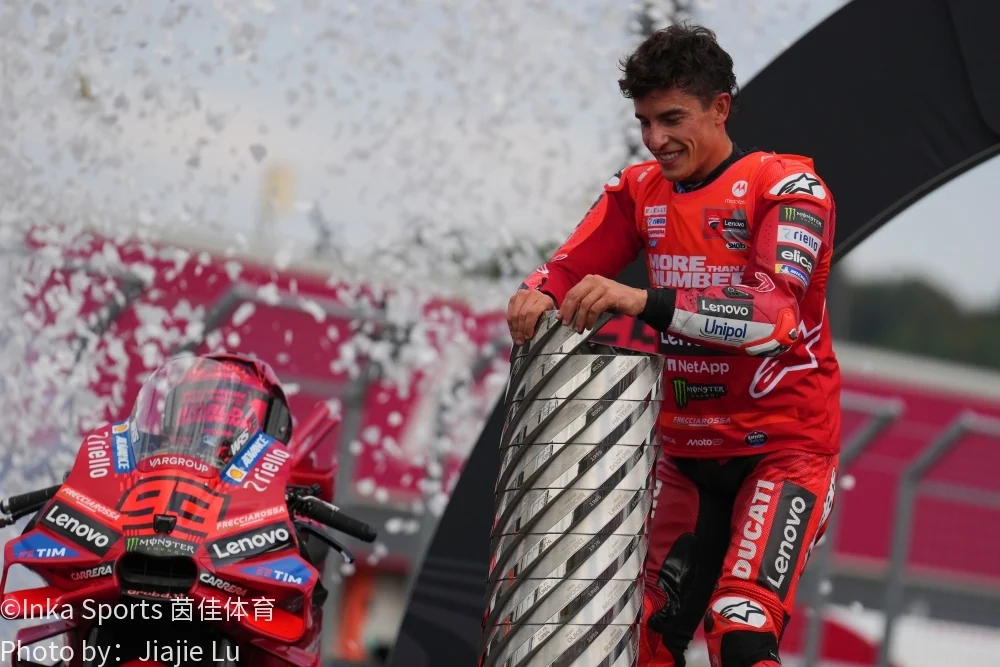
Marc Márquez first joined the Ducati-equipped Gresini team in 2024, then moved to the Ducati factory team in 2025. At that year's Japanese Grand Prix, second place secured him the championship. The scene gave Ducati's history an intriguing loop: the leading rival who had once blocked its path to titles had now become the rider bringing it one.
From an organizational perspective, such a change cannot be understood simply as collecting the strongest names. Riders have their own styles, physical conditions and paths of development. Teams must also remain clear amid different feedback and objectives. Márquez's route from Honda to Gresini and then the factory team shows that adapting to a new bike is itself a career challenge.
Photographs taken by this site at the 2025 Japanese Grand Prix record this new stage. From Stoner's number 27 to Márquez's number 93, the badge is still Ducati, but behind it are two different championship stories. The former opened the door to a premier-class world title for the marque; the latter wrote his own long comeback into a new chapter of the manufacturer's history.
Why does the same badge appear in different garages?
When watching MotoGP, ask three questions at once: who is the rider, which team does he belong to, and which manufacturer's bike is he riding? Riders transfer, teams change manufacturer partners, and one manufacturer can supply several teams. Once those three levels are distinguished, Ducati's history over the past decade and more becomes much easier to understand.
Pramac partnered Ducati for many years and, in 2023, became the first independent team to win the overall MotoGP teams' championship. In 2024, Martín added the riders' title. Those achievements show that independent teams can compete with factory squads under the right conditions, rather than merely making up the field. At the same time, they still compete under their own entry, management and rider line-up.
The partnership ended after the 2024 season. Changing bike supplier does not rewrite Pramac's history as that of another team, nor does it allow the former supplier to take away every honour won in the team's name. The lines of rider, team and manufacturer intersect, but each also continues separately. The distinction applies equally to the history of Gresini and other independent teams.
| Level | Example from Ducati's history | How honours are recorded |
|---|---|---|
| Rider | Stoner, Bagnaia, Martín, Márquez | Individual championships belong to the rider |
| Entered team | Ducati factory team, Pramac, Gresini | Teams' titles belong to the specific team |
| Motorcycle manufacturer | Ducati | Manufacturers' titles are calculated under the manufacturers' rules |
Three bike photographs: How do they reveal two eras?
The GP03, GP07 and the 2025 factory bike all belong to the Desmosedici family, but they are not the same machine with new stickers each year. Changes in rules, tyres, electronics and aerodynamics continually alter how a rider controls the bike. Looking only at the Ducati name makes those underlying conditions easy to overlook.
The GP03's historical significance was that a new prototype project proved it could win in its first season. The GP07 took the title with Stoner in the very first year of the 800cc era. The bikes later ridden by Bagnaia and Márquez belong to a new stage reached after years of rebuilding. Connecting these three moments reveals how Ducati moved from one breakthrough to a broader competitiveness.
Photographs can also help readers ask questions. Why did the fairing shape change? Does the rider's posture under braking look different? At the same circuit, have the places where the bike is fast changed? Such questions are more useful than ranking bikes by their appearance alone. A history feature does not require readers to become engineers first; it lets a photograph become an entrance to understanding racing further.
A different way to watch your next MotoGP race
When a Ducati looks fast, first ask where it is fast. Is it stable at the end of braking? Can it hold its line through a corner? Can the rider use the power promptly on exit? Can it maintain pace after the tyres fade? Top speed is only one part. Moving your attention from the straight to several consecutive corners often makes the bike's real competitiveness easier to understand.
Then watch the Ducati riders in different teams. The same manufacturer does not mean identical bike versions, setups, team experience or performances. One rider may excel at a particular circuit, another may be steadier across the season. Those differences are a reason to watch racing, not exceptions to an assumption that the same bike should make everyone equally fast.
Ducati's story is ultimately a history of turning a distinctive technical character into competitiveness that more riders can use. It did not reject what was unique about the Stoner era. After that success, it learned to let more people share in winning. Follow that line, then watch how Márquez reached the 2025 Japanese Grand Prix, and the rider's story and the team's story meet in a single photograph.
View sources · 21 entries
- Ducati: Desmosedici GP03
- Ducati Media House: A review of 2003–2020
- Ducati: Desmosedici GP07
- MotoGP: Rossi's official career profile
- Ducati: The end of the 2013 season and Dall'Igna's arrival
- Ducati: The 2016 Austrian breakthrough
- Ducati Media House: The 2016 Austrian one-two
- MotoGP: Dovizioso's official profile and three runner-up finishes
- Ducati: Historical results in Austria
- MotoGP: Classic Austrian duels through the years
- Ducati: The final-corner victory in Austria in 2019
- Ducati: Bagnaia, 2022 world champion
- MotoGP: From 91 points behind to the lead
- Ducati: The 2024 riders' championship
- MotoGP: The 2022 Valencia title decider
- MotoGP: Martín and Pramac's 2024 riders' title
- MotoGP: Ducati Lenovo Team's 2024 teams' title
- MotoGP: Marc Márquez's career
- MotoGP: The 2025 Japanese Grand Prix and the championship
- MotoGP: Pramac's overall teams' title in 2023
- Ducati: The end of the Pramac partnership in late 2024
Marc Márquez: From never knowing defeat to learning how to win again
Continue reading · 12 minutes →