
Expand chapter list
- Beyond racing, he had another life
- A small race brought two important people together
- On arriving in F1, he saw its cruelest side
- 1962 and 1963: the same speed, two different endings
- Why would the best driver still race touring cars?
- Indianapolis: an Indy 500 win on his third visit
- Silverstone 1965: the fastest driver can also choose to lift
- How many kinds of car can one man race in a year?
- The wait in 1966, and the new car in 1967
- What made recovering that lap at Monza so difficult?
- After victory No. 25, the story stopped suddenly
- How to read a number that can no longer grow
- Timeline
- Career record
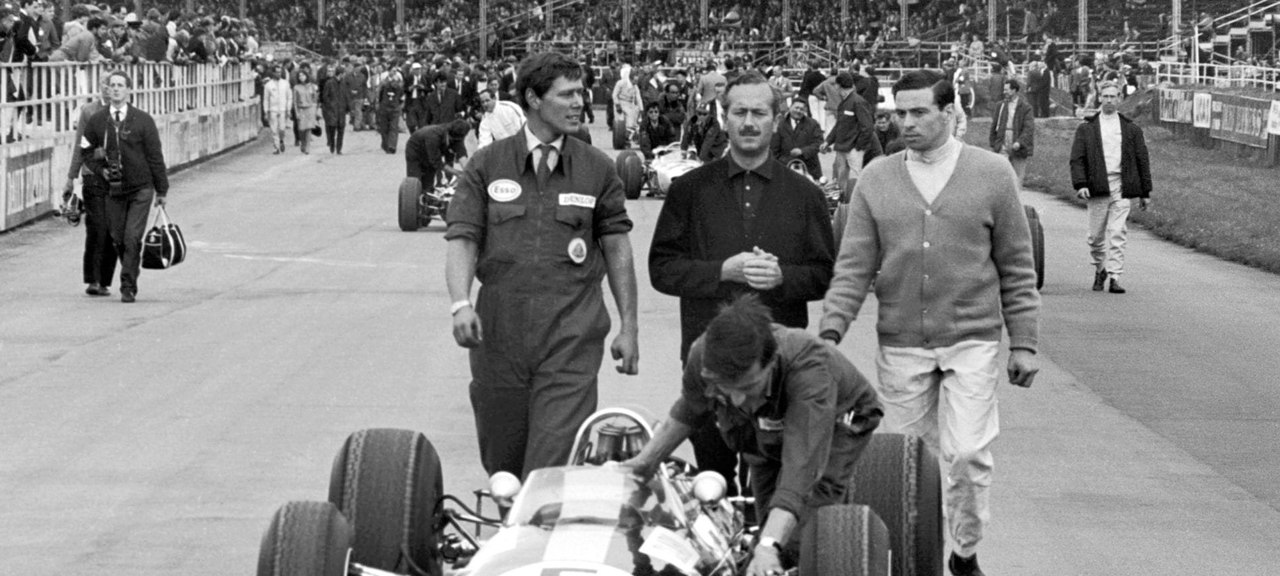
At Monza in 1967, Jim Clark's race seemed to have ended once already. A tire problem brought his Lotus 49 into the pits, and by the time he returned, the leading group had completed a lap more than he had. Gaps on a high-speed circuit can become abstract numbers, but being a whole lap down meant that even catching and passing a car did not truly put him back into the same fight for position.
Clark first recovered that lap, then kept chasing. He returned to the lead, turning a race apparently destined for damage limitation into one he could win. But on the last lap, a fuel-feed problem slowed the Lotus. John Surtees and Jack Brabham went past, leaving Clark third.
It was not one of his twenty-five F1 victories, yet it remains an essential day in any account of him. The results can tell readers who won; the race itself can explain why someone who did not win still deserves to be remembered. Clark's career is full of significance that extends beyond the number of trophies.
Beyond racing, he had another life
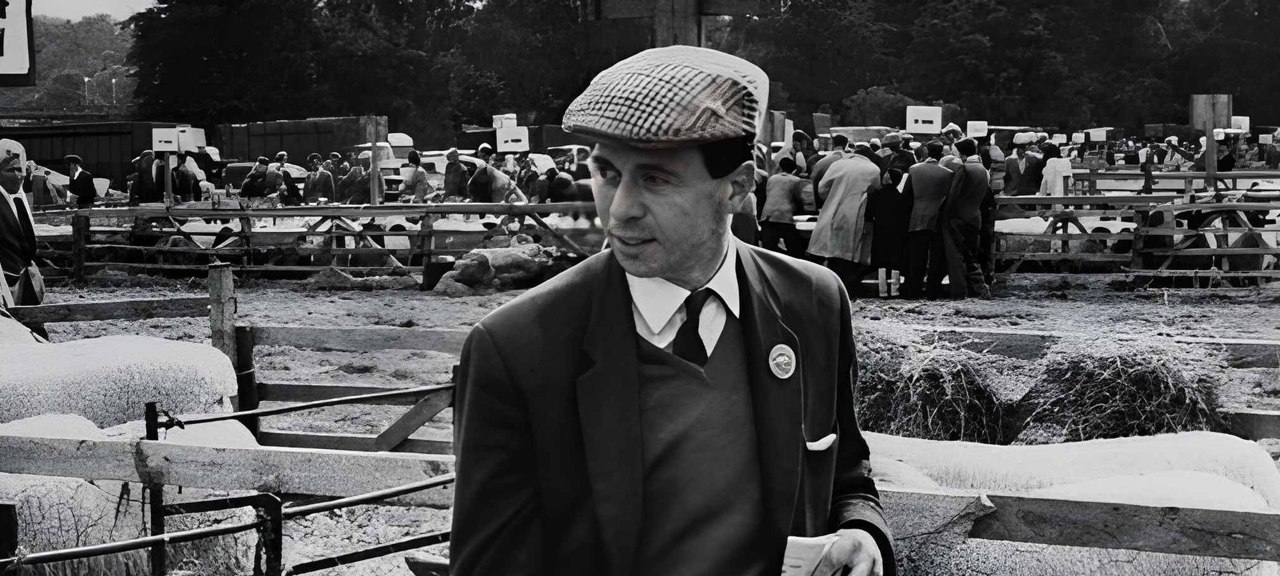 Photo: jimclarktrust.com
Clark was born in Scotland in 1936 and grew up in a farming environment in the Borders. Machinery was part of everyday life before it became a tool for winning world titles. Fields, tractors, family cars and country roads entered his world long before the international paddock. Even after he became a star, the farm was not a background he left entirely behind.
As a young man he approached racing through car-club activities, local rallies and driving tests. Friends and supporters gave him increasingly fast cars and pushed him toward larger events. It was very different from today's professional pathway through junior karting: he was not someone who began with a clear plan to become an F1 world champion.
F1's Hall of Fame biography describes his contradictions: composed at the wheel, uncomfortable with public attention; decisive at high speed, yet sometimes hesitant about everyday details. Such recollections need not be shaped into a mysterious “genius personality.” They simply remind us that decisiveness on track and reserve in daily life can coexist in one person.
He did not build his reputation through grand declarations. People knew him more through lap times, races and the responses of his peers. For today's reader, that distance has its own attraction: Clark left no all-encompassing personal publicity machine. To approach him, one has to return to specific cars, specific circuits and the ways he solved practical problems.
A key figure in bringing him into racing was Ian Scott-Watson, whom he met through the Young Farmers' Club. In 1956 Clark raced a friend's DKW at Crimond. He did not finish near the front, but his speed drew attention. His family had wanted him to remain on the farm; racing began as a local activity and a hobby, far from a career plan with full family backing.
In 1957 Scott-Watson's Porsche offered another opportunity. Clark entered three races at Charterhall, finishing third, second and then first. Those steadily improving results show his growth more clearly than a vague label of “young genius”: his ability needed real races, different cars and supporters willing to lend them before it could become visible.
A small race brought two important people together
In 1958 Clark raced a Lotus Elite at Brands Hatch and impressed Colin Chapman, who was also driving an Elite. Their later partnership did not arrive like a sudden fairy tale. It began with speed being noticed, opportunities offered and ability proved again. Clark gradually entered Lotus's single-seater program and reached F1 in 1960.
Chapman had bold engineering ideas and needed someone to release a new car's potential; Clark could feel changes in the car without having to express them in a designer's structural drawings. A division of labor developed: one described what happened while driving, the other sought mechanical answers. Trust made communication direct and encouraged both to keep investing in ideas not yet fully mature.
That relationship did not make Clark merely a designer's executor. When a car had a problem, the driver had to choose how to adapt, whether to continue, how to protect the machinery and where to find speed. Driving “around a car's faults” did not mean the faults vanished. It meant that sometimes the driver could reduce their cost and buy the team time to improve.
Nor can all Clark's speed be attributed to Lotus always having the best car. There were strong periods, difficult years after engine-rule changes and extremely quick cars unable to finish reliably. Across the whole career, the more interesting question is how he maintained competitiveness when the condition of his machinery changed.
Before Lotus, Border Reivers was another important source of support. Local garage owner Jock McBain, Scott-Watson and others organized resources for competition, and Clark raced sports cars including the Jaguar D-Type. Long before a works contract, the local racing network had already provided substantial training and backing.
At Le Mans in 1959 he and John Whitmore finished second in class and tenth overall in a Lotus Elite. In 1960 he and Roy Salvadori took third overall in a Border Reivers-entered Aston Martin DBR1. A 24-hour race demanded night driving, traffic management, driver changes and mechanical care; those results made “all-rounder” more than a compliment added in hindsight.
He also had links to Aston Martin's grand prix project, but his sustained F1 career ultimately took shape at Lotus. His path was not settled before he reached the top level. The seemingly inseparable Clark-Chapman partnership emerged gradually through several options, different race opportunities and practical collaboration.
On arriving in F1, he saw its cruelest side
The 1960 Belgian Grand Prix was a weekend that would affect Clark for years. The old Spa was a fast circuit through villages and countryside, with barriers, runoff and rescue facilities far removed from today's standards. Chris Bristow and Lotus teammate Alan Stacey died during the race. The young Clark faced the cost of motor racing at close quarters.
A year later at Monza, he was involved in a collision with Wolfgang von Trips. Trips and several spectators died. Such experiences do not fit smoothly into a story of a rookie's steady development. Continuing to race did not mean drivers were insensitive to danger, or that the next start could erase what had happened.
Clark later won at Spa four years running, from 1962 through 1965, bringing his speed to a circuit that had caused him pain. There is no basis for interpreting that as “learning to love danger.” A driver can dislike a circuit and still study it carefully, drive precisely and perform there at the highest level.
That perspective matters when reading racing history. Danger is not decoration for a legend, and death is not material to add drama to victory. Clark's achievements deserve remembrance first because he accomplished difficult things. The drivers who did not return deserve to be remembered as real people, not reduced to background figures on a champion's road.
1962 and 1963: the same speed, two different endings
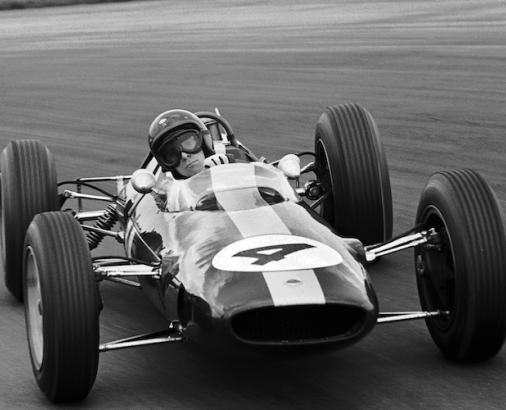 Photo: silverstone.co.uk
The arrival of the Lotus 25 gave Clark a car that could fully express his ability. Its compact, load-bearing aluminum structure clearly distinguished it from traditional spaceframe cars. In 1962 he won in Belgium, Britain and the United States and took the championship fight to the South African finale. An oil leak ultimately forced him out, and Graham Hill became champion.
A lost title is sometimes rewritten as a trial inevitably leading to success, but those involved did not know the following year would be better. Cars could improve or encounter new problems; rivals were developing too. What mattered most in 1962 was the proof that Clark and Lotus could fight for a title, while still needing to carry that ability through an entire season.
The answer in 1963 was emphatic: seven wins in ten grands prix. Such a season demonstrated dominance more clearly than one isolated dramatic victory. The car repeatedly ran at the front across different venues and conditions, and the driver converted opportunities into points. Lotus and Clark won the constructors' and drivers' world titles together for the first time.
That does not make the season an unopposed cruise. Mechanical condition, tires, weather and traffic remained part of racing, and even the leader had to decide when to push harder and when to reduce unnecessary wear. Clark's deceptive quality was that his movements could look small while the gap kept growing. The calm appearance concealed a dense stream of decisions.
Clark's 1963 season also left an easily overlooked detail about reliability. Classic Team Lotus records that he was classified in all ten World Championship rounds. Being classified does not mean completing the full distance in every race, but it prevents a blanket description of every Lotus as “fast but unreliable.” Preparation and maintenance that season genuinely helped turn speed into results repeatedly.
For a driver, that continuity changes the job. Each weekend need not begin with wholly unfamiliar problems; known responses and dependable components give judgments a firmer basis. Clear, repeated feedback also helps engineers distinguish car problems from track conditions. The domination of 1963 rested on that cycle.
Why would the best driver still race touring cars?
Today's F1 drivers devote most of their professional energy to one highly specialized type of car. Clark's era had a different rhythm. One driver might race in F1, F2, sports cars and touring cars; switching categories was not necessarily occasional off-season amusement, but part of normal racing life.
In 1964 he won the British touring-car title in a Lotus Cortina. A car with doors and a roof was a different tool from an open-cockpit F1 machine. Weight, center of gravity, tires and body movement differed, requiring fresh judgments about corner-entry speed, load transfer and exit timing. Mechanically repeating the same inputs would not automatically produce the same result.
Clark's broad success gave “talent” a more specific meaning. He could quickly recognize how a car wanted to turn, what would upset its balance and how to maintain speed under different mechanical conditions. Familiarity with one car can come from sustained practice; staying fast while changing cars frequently requires strong adaptability.
The 1964 F1 title did not arrive alongside the touring-car trophy. Mechanical trouble at the Mexican finale again cost him his chance. The contrast matters: success by the same driver in other categories could not guarantee his F1 car's reliability. Personal ability could cross boundaries; mechanical failure did not yield to it.
Indianapolis: an Indy 500 win on his third visit
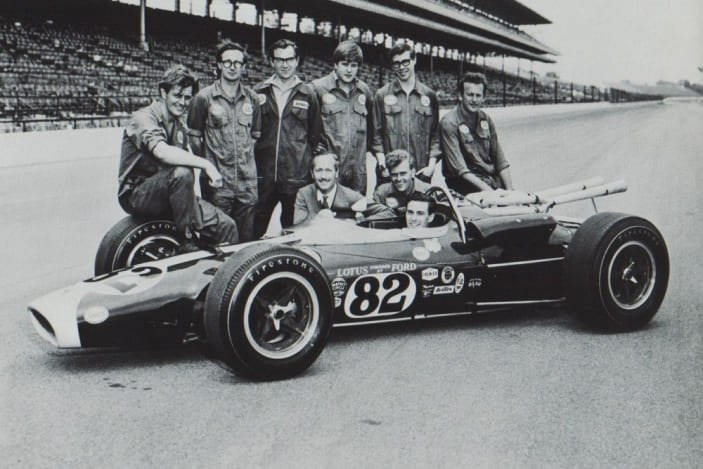 Photo: cloud.updates.lotuscars.com
Clark finished second on his first Indianapolis 500 appearance in 1963. In 1964 he took pole but retired after tire trouble and subsequent car damage. By his 1965 return, Lotus could no longer rely on the appeal of “European drivers challenging American tradition.” It had to answer a more concrete question: how could it sustain its existing speed all the way to the end of 500 miles?
The new Lotus 38 was designed by Len Terry, powered by a Ford V8 and configured for the oval. Chapman's team also brought in the Wood Brothers' pit-stop expertise. A European project needed people who understood the rhythm of American race servicing to connect engineering with operation. A championship never depended solely on who sat behind the wheel.
A. J. Foyt led briefly after the start, but Clark soon regained the position. He led 190 of 200 laps. Rivals' mechanical troubles eased the pressure later, yet the team still had to complete its stops, and Clark still had to deal with slower traffic and negotiate every corner. In a long race, even a huge lead is no reason to stop working early.
The victory marked a decisive step in the Indy 500's transition to mid-engined cars and made Clark a star on both sides of the Atlantic. He missed that year's Monaco Grand Prix for it, yet still won six of the nine F1 grands prix he entered and claimed his second world title. Winning both the F1 championship and the Indy 500 in 1965 became the clearest landmark of his career.
Silverstone 1965: the fastest driver can also choose to lift
To understand Clark's driving, consider a race that did not demand a Monza-style pursuit. In the 1965 British Grand Prix he led in a Lotus 33, with Graham Hill behind. Late in the race, the engine's oil condition posed a threat. Continuing at the same pace could turn a lead into retirement.
Clark changed how he negotiated the corners, coasting through some to limit the problem's impact. Hill was still closing. The objective shifted subtly: no longer to make every lap as fast as possible, but to retain enough speed to reach the finish first within what the machinery could withstand.
The official final margin was just 3.2 seconds. That number makes the tension tangible and turns “protecting the car” into more than abstract praise. Clark did not have an unlimited cushion; he had to persist with his solution as the lead shrank. Too much caution would lose the win, too much aggression might prevent him finishing at all.
This was unlike the heroic images people usually imagine. There was no last-gasp overtake, perhaps no conspicuous correction, but it demanded an integrated judgment of time, distance and mechanical condition. Clark's complete skill lay between chasing very quickly and knowing when not to seek the maximum. Sometimes the highest level of driving meant doing precisely a little less.
How many kinds of car can one man race in a year?
His success in 1965 extended beyond F1 and the Indy 500. Clark also won the Tasman Series and continued racing frequently in F2 and other categories. Circuits in Britain, continental Europe, Australia, New Zealand and the United States formed a vast map of his working life. Switching cars and events was far more complex than the two most famous titles suggest.
At that year's Goodwood Easter meeting, he won touring-car, F1 and sports-car races on the same day. Each type demanded different driving judgments, and race distances varied too. Such a weekend shows his range, but should not be converted into an overall win ranking directly compared with modern drivers: event levels, fields and championship systems were different.
In 1966 he also entered the RAC Rally in a Lotus Cortina, setting fastest stage times before rolling out of the event. Route knowledge, changing surfaces, co-driver coordination and sustained driving differed significantly from the circuits he knew. The attempt showed adaptability while remaining genuinely incomplete: speed did not mean mastery of every demand of another discipline.
Clark's versatility therefore needs no claim that he “always won whatever he drove.” What moves us is his willingness to enter different events and quickly demonstrate competitiveness; what makes the account credible is preserving victories, failures and unfinished attempts together. A legend gains depth precisely because not every page has to be a success.
There was not even a full weekend's rest between Silverstone and the next race. After winning the British Grand Prix on Saturday, Clark hurried to Rouen in France and won an F2 race in a Lotus the next day. The man who had just controlled his F1 pace to protect an engine soon had to understand another car, another circuit and new opponents.
A busy schedule across categories also meant extensive preparation beyond the results. Different cars needed different parts and servicing, and staff had to get them to the venue on time before a driver could climb aboard. Clark's 1965 was both a personal peak and the product of teamwork capable of sustaining constant travel and racing. Without that daily work, one man could not connect so many titles across the calendar.
The wait in 1966, and the new car in 1967
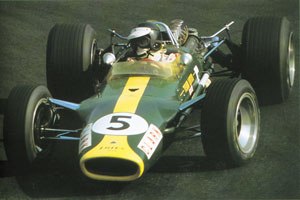 Photo: classicteamlotus.co.uk
F1 entered a new engine-capacity era in 1966, and Lotus's transition was difficult. Clark took only one World Championship win that year, in the United States with the BRM-powered Lotus 43. Earlier dominance did not continue automatically; the new rules put everyone back in front of engineering problems.
In 1967 the Lotus 49 and Cosworth DFV arrived. They were closely integrated structurally: the engine carried important chassis loads rather than merely supplying power inside a frame. The arrangement later influenced many F1 cars, but before its first race it still needed to be tested in reality.
On the Zandvoort debut, Hill took pole but retired from the race. Clark won, opening the new combination's account. He eventually won four grands prix that year without taking the world title. Excellent peak speed and an inability to sustain execution across the whole season once again appeared together in his results.
That is the background to Monza. Clark was not putting on a show in a flawless car that reliably dominated everyone. He was driving a new machine of enormous potential that still needed refinement, and the race would magnify both its strengths and its weaknesses to an unforgettable degree.
What made recovering that lap at Monza so difficult?
After the tire problem, Clark lost more than his stationary time in the pits. The slow trip back also cost him, and rejoining meant dealing with other cars. At a fast circuit such as Monza, slipstreams could help a pursuit while constantly shifting the relationships within the leading group. Recovery required many consecutive fast laps, not one exceptional lap.
First he had to catch the leaders and free himself from being a lap down. Then he had to gain enough physical distance again to recover the loss in timing and position. A pass witnessed by spectators might represent only half the task. That is why “recovering a full lap” is no casual turn of phrase.
Late in the race, Hill's engine failure changed the leading group. Clark kept advancing, passed his rivals and returned to first. What had begun as a salvage operation suddenly looked set to become a complete victory. But on the final lap, a fuel-feed problem slowed the car. Later technical recollections differ over fuel quantity and the feed failure; what is certain is that he could not keep his regained lead to the finish.
Surtees and Brabham fought for victory, with Clark third. The ending did not diminish what came before; it gave the race a distinctive tension. Readers know he accomplished something immensely difficult, yet the race still guaranteed no reward. The distance between legend and results sheet was almost visible that day.
After victory No. 25, the story stopped suddenly
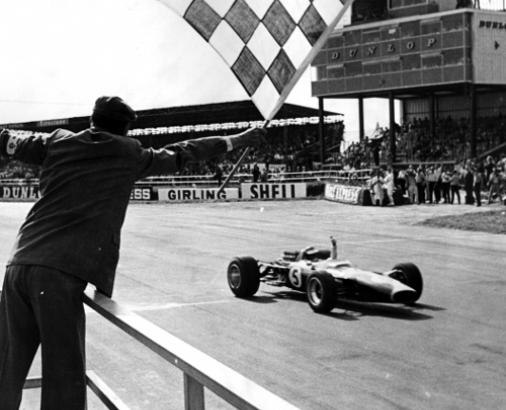 Photo: silverstone.co.uk
On New Year's Day 1968, Clark won the South African Grand Prix. His twenty-fifth F1 victory surpassed Juan Manuel Fangio's previous twenty-four. He then won the Tasman Series again. To people at the time, it looked like the beginning of a new season, not the last chapter before a career ended.
On April 7 he was killed during an F2 race at Hockenheim in Germany, aged just thirty-two. The car left the circuit, and the precise mechanical cause remains disputed. A driver still at his peak did not return.
The loss devastated Lotus and the wider paddock. Beyond his speed lay years of trust. He was not just a name on a results sheet: he was a familiar source of feedback for engineers, the person mechanics prepared cars for, and the colleague rivals met every weekend.
Hill later helped Lotus keep racing and won the 1968 world title. That was not a replacement ending for Clark's story, but the result of those left behind continuing their work. One driver's death does not stop an entire championship, but it changes how many people experience it afterward.
How to read a number that can no longer grow
Clark's F1 record stopped at twenty-five wins, thirty-three poles and two world titles. Modern seasons have more races and careers can be longer, so absolute win totals can easily understate his standing in his own era. Seven wins from ten rounds in 1963 and six from nine starts in 1965 come closer to the true shape of his competitiveness.
His achievements already establish his stature: he could move between different types of car, protect machinery while holding a huge advantage and return to the fight for victory from a lap down. Beyond twenty-five wins, his choices in those different situations form the clearest outline of him as a driver.
His partnership with Chapman also clarifies the relationship between individual talent and engineering. A car offers possibilities; its driver turns them into information and results, driving the next improvement. Without any one part of that cycle, impressive technical terms might never become a lead in a race.
That makes third place at Monza a fitting way to understand him. It did not turn every problem into a happy ending, but it revealed his finest qualities fully: after a setback, keep driving accurately, keep gaining time and bring an almost impossible task within reach, lap by lap. He did not win in the end. It remains worth remembering for a very long time.
Timeline
| Year | Key milestones |
|---|---|
| 1936 | Born in Scotland |
| 1950s | Progressed from local motoring activities and club races to higher-level competition |
| 1958 | Caught Chapman's attention while racing a Lotus Elite |
| 1960 | Entered F1 and began his Lotus works career |
| 1962 | First F1 victory; championship runner-up |
| 1963 | Seven wins from ten races and a first F1 title; second in the Indy 500 |
| 1964 | British touring-car champion; mechanical trouble at the F1 finale cost the title |
| 1965 | Second F1 title, Indy 500 victory and Tasman Series title |
| 1967 | Won on the Lotus 49's debut; recovered a lap at Monza and finished third |
| 1968 | Victory No. 25 in South Africa; third Tasman title; killed at Hockenheim on April 7 |
Career record
| Category | Record and scope |
|---|---|
| F1 world champion | 2, in 1963 and 1965 |
| F1 grand prix victories | 25, all in Lotus cars |
| F1 pole positions | 33 |
| Indianapolis 500 | Winner in 1965; runner-up in 1963 and 1966; separate from F1 statistics |
| British Touring Car Championship | 1964 champion, Lotus Cortina |
| Tasman Series | Champion in 1965, 1967 and 1968 |
| Statistical scope | F1 World Championship wins exclude F2, non-championship F1, touring-car and sports-car results; figures through the end of the 2025 season |
Sources and further reading
- The Early Years | The Jim Clark Trust
- Young Farmers | The Jim Clark Trust
- The Border Reivers | The Jim Clark Trust
- Jim Clark — Formula 1 Hall of Fame
- Lotus Grand Prix Team | The Jim Clark Trust
- Jim Clark's 1965 diary: his greatest year in racing, August 2015 — Motor Sport Magazine
- 1965 British Grand Prix — Race Result | Formula 1
- Moments in time — the Italian Grand Prix | Formula 1
- Did you know? – Classic Team Lotus
 Photo: media.lotuscars.com
Lotus: why rewriting the rules of racing could not make victory last
From the monocoque and the Cosworth DFV to ground effect, how innovation became championships—and why it could not guarantee a team's survival.
Continue reading · About 20 min →